los conquistadores •
the conquerors
130
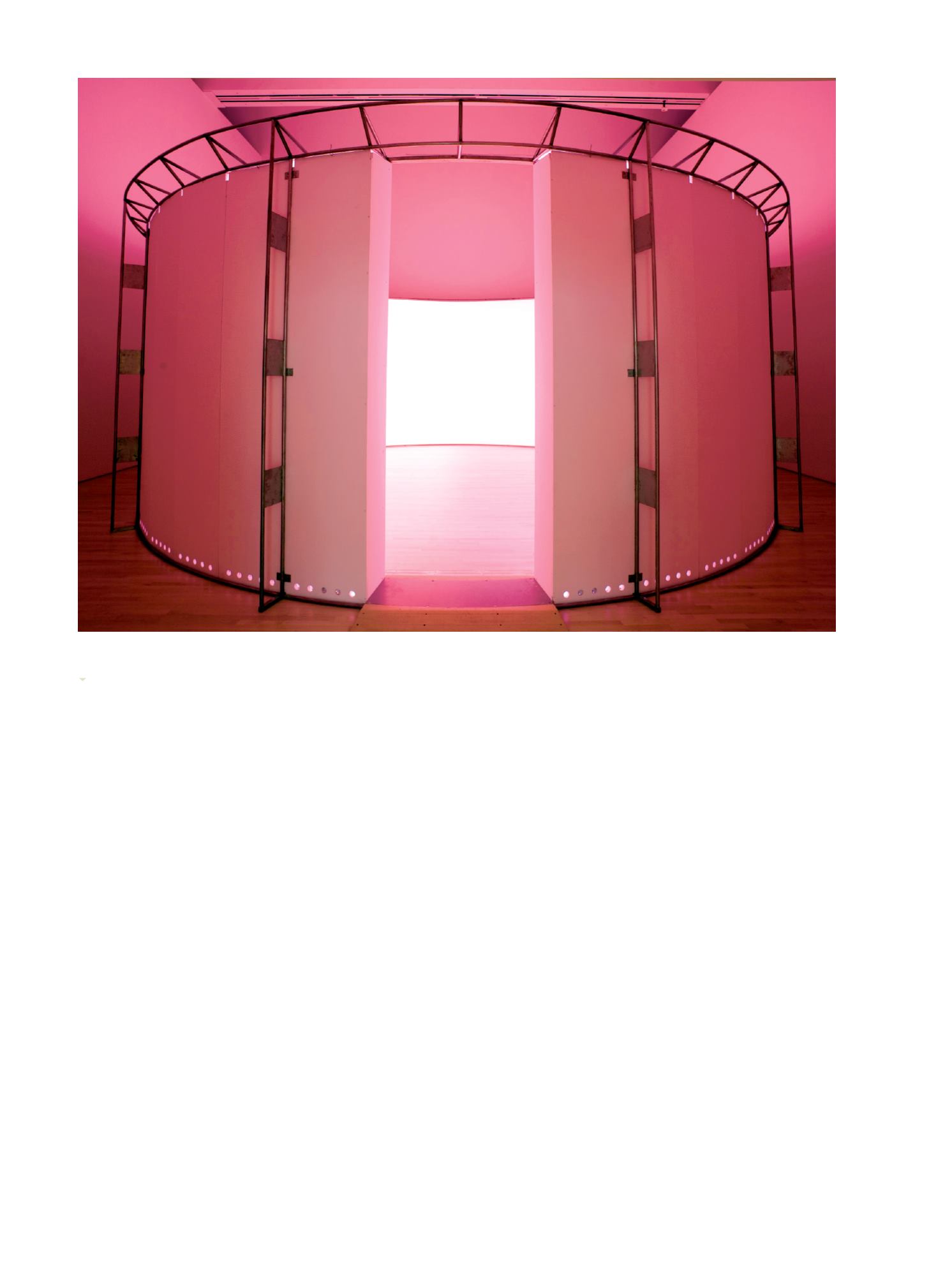
·amura·
360° Room for all colours
2002
Acero inoxidable, madera pantalla de proyec-
ción, luces fluorescentes y unidad de control
Stainless steel, projection foil,
fluorescent lights, wood,
and control unit 126 x 321 x 321 in.
(320 x 815.3 x 815.3 cm)
Take your time: Olafur Eliasson,
installation view at San Francisco Museum
of Modern Art
© 2007 Olafur Eliasson;
photo: Ian Reeves
contemporáneo solicita cada vez más un espectador
activo, un sujeto que active la experiencia artística.
En detrimento de la objetualidad se gana terreno en
la vivencia y la experiencia estética. La percepción
del espectador se convierte en operaria de la pieza,
forma parte fundamental de ella.
Éstas son las coordenadas con las cuales se plan-
tea el trabajo de Olafur Eliasson (Copenhague,
Dinamarca, 1967). Explora la experiencia subjetiva
de nuestras percepciones, culturalmente mediatiza-
das, ante fenómenos naturales primarios como el
agua, la luz, el calor. Causa un efecto entre misterio-
so y sublime, pone en juego, principalmente, nuestro
cuerpo. Su trabajo nos suma algo. Le suma a nuestra
corporeidad la conciencia de ser. Nos obliga a atender
mediante todos nuestros sentidos, ya sea el olfato,
la vista, el tacto, a recreaciones artificiales de la
experiencia sensible de la naturaleza. La brisa, la
bruma, el fango, el moho, el sonido del agua, el olor
de la humedad elementos primarios adquiridos del
paisaje islandés son transportados al museo.
Desde el principio del recorrido nos damos cuenta
de lo que nos espera.
Room for one colour
(1997) avi-
zora el experimento perceptual al que seremos some-
tidos en adelante. La blanca sala del museo se
encuentra bañada por una intensa luz amarilla. Al
acceder a la siguiente sala, la subsecuente imagen
compensatoria que desarrolla neurálgicamente nues-
tra retina es de un violeta intenso. Aunque las paredes
del museo sigan permaneciendo blancas. Estos juegos
de la visión obedecen a la apuesta artística de Olafur
Eliasson. El proceso estético de la percepción deviene
an obedient object of contemplation disposed to
the contact of the glance of a subject. The contem-
porary art each time requires more of an active
spectator, a subject that activates the artistic
experience. In detriment of the objectivity, gains
ground in the personal and artistic experience. The
perception of the spectator turns to the operator of
the piece, is a fundamental part of it.
These are the coordinates under which the work
of Olafur Eliasson is set forth (Copenhagen, Denmark,
1967). Explores the subjective experience of our per-
ceptions -culturally mediatized- in the presence of
some primary natural phenomenons: the water, the
light, the heat. Causing an effect among mysterious
and sublime, mainly, putting at work, our body. The
work, adds something tous. It addsupour corporeity,
the conscience of being. It compels to attend,
through all of our senses–either the smell, the sight,
the touch- to artificial recreations of the sensible
experience of the nature. The breeze, the mist, the
slush, themildew, thesoundof thewater, the smell of
the dampness… primary elements acquired of the
Icelandic landscape is transported to themuseum.
Since thebeginningof the tour,we realizewhat is
waiting for us.
Room for one color
(1997) watches the
perceptual experiment inwhichwewill be put under,
from here on. The white lounge of the museum is
bathed by an intense yellow light. Entering the next
room, the subsequent compensatory image thatneu-
rologicallydevelops our retina, is of an intense violet.
Even though the walls in the museum, still remain
white. These games of the vision obey to the artistic


