




 122 / 148

·amura·
120
.eet tIe mVTic • .|TicB
&O
VO DoNQoTJtoS QoMBDo OoT QSFTFOtB VOB WJ-
TJwO FTQFMV[OBOtF EF MB FSBODJB EF
$oO
Los Diablos
de Loudun
EF AMEoVT )VYMFZ OBDF FO SFBMJEBE VO OVFWo
DoODFQto EF MB wQFSB 5FNB RVF tBNCJnO TF BQSoWFDIw FO
MB ToCFSCJB QFMrDVMB
Madre Juana de los Ángeles
/o QVFEF
VOo EFKBS EF QFOTBS RVF FM DoNQoTJtoS ,S[ZT[toG 1FOEF-
SFDLJ SFDJCJw tBM JNQSFTJwO BOtF FTtB KoZB DJOFNBtoHSg¬-
DB RVF EFDJEJw QoOFSMF N|TJDB &M tFNB SFMJHJoTo IB TJEo
TJFNQSF VOo EF TVT GBWoSJtoT &O -oVEVO FSBODJB MBESF
+VBOB EF MoT µOHFMFT EFTFB GFSWJFOtFNFOtF BM TBDFSEotF
(SBOEJFS VO IoNCSF EF NVOEo RVF IB tFOJEo NVDIoT
EFTMJDFT DoO MBT NVKFSFT EFM QVFCMo $oNo Oo MoHSB TVT
QSoQwTJtoT MBNoOKB KoSoCBEB BDVTB B(SBOEJFS EF FNCSV-
KBSMB EFTQVnT EF VO JOGBNBOtF KVJDJo Z MB EoMoSoTB toStV-
SB RVF TJHOJ¬DB MB FYtSBDDJwO EF MBT VvBT TF MF DoOEFOB B
NoSJS FO MB IoHVFSB $VBOEo MB oCSB TF FTtSFOw FO 4tVtt-
HBSt DBVTw TFOTBDJwO QoS FM SFBMJTNo EF MB EJSFDDJwO Z MBT
FTDFOBT JNQSFTJoOBOtFT tBM DoNo MB EF MBT EFTOVEBT
NoOKBT RVF TF QBTFBCBO QoTFrEBT QoS FM EFNoOJo AVO-
RVF TF tSBtBNgT CJFOEF tFBtSo DoON|TJDB
LosDiablos de
Loudun
FTNgT RVF VOB oCSBNFSBNFOtF TFOTBDJoOBMJTtB
-oT FGFDtoT oSRVFTtBMFT NVFTtSBO MB FOoSNF FGFDtJWJEBE
EF VO tBMFOto BStrTtJDo RVF CVTDB DSFBS FTtBEoT EF gOJNo
B tSBWnT EF SFDVSToT OVODB BOtFT VtJMJ[BEoT FO MBN|TJDB
5FNB QBSFDJEo FT FM EFM ESBNB EF 4FSHF 1SoLoWJFW
El Ángel de Fuego
EoOEF MB QSotBHoOJTtB tBNCJnO TV-
GSF VOB QoTFTJwO TBtgOJDB -B oCSB EFCJw FTtBS MJTtB FO
QBSB TFS FTtSFOBEB FO FSBODJB &M tFNB BtSFWJEo
Z FM tSBtBNJFOto NVTJDBM FYQMJDBO tBM IFDIo $oO NF-
EJoT NVZ EJGFSFOtFT B MoT EF 1FOEFSFDLJ 1SoLoWJFW
OoT EB VOB WJTJwO EFM NBM EF tSFNFOEB FGFDtJWJEBE
&O FM JOTtBOtF FO RVF RFOBtB MB QSotBHoOJTtB SFDJCF
BM EFNoOJo MB oSRVFTtB MoHSB EBSOoT MB TBtgOJDB tSBOT-
GoSNBDJwO DoO VO BDJFSto FTDBMoGSJBOtF -B IJTtoSJB
tSBOTDVSSF FO FM 4JHMo 97* RFOBtB CVTDB BM µOHFM DoO
FM RVF KVHBCB FO TV JOGBODJB &O TV C|TRVFEB DoOoDF
B RVQSFDIt RVF MB tSBtB EF TBMWBS EF Tr NJTNB BVORVF
FT JNQoTJCMF
In 1969 a Polish composer gives a a horrifying
vision of France during 1634. With The Devils of
Loudun, a new operatic concept is born. Based on
The Devils by Aldous Huxley, its theme was also
used for the superb film Mother Joan of the An-
gels. It is impossible to conceive that this great
movie was something Penderecki could ignore, so
he channeld it to music. In Loudun, France, Moth-
er Joan of the Angeles desires to seduce Father
Grandier, their priest. The worldly man has had
many encounters with the village women. As she
is denied her wishes, she accuses Grandier of be-
witching her. After an infamous trial and torture
in which the priest’s fingernails are extracted, he
his condemned to die at the stake. When the work
was premiered in Stuttgart is was a sensation for
its realistic direction and horrific drama. As is the
finale where the nude nuns disrobe and dance
as if possessed. Although it is basically theater
with music, The Devils of Loudun is much more
than something sensational. The orchestral ef-
fects are enormously effective. Here we find tal-
ent that transmits feelings and reaction applying
resources never used before in music.
Sergei Prokoviev uses a similar theme for his
drama The Angel of Fire, where the main character
is possessed. The work had to wait until 1854 to be
staged in France. The daring story and the musical
treatment explain the reasons for such delay. With
a style quite different from Penderecki, Prokoviev
presents a vision of evil that is shattering. When
Renata, the heroine receives the devil, the orchestra
describes a horrible transformation that is totally
realistic. The story takes place in the XVI Century.
Renata seeks the Angel who played with her during
her childhood. Amid her search, she meets Ruprecht,
a knight, who tries to save her from herself. Even
though this is impossible.
1
2
ElÁngeldeFuego
Prokoviev(Óperade
,JSoW FTDFOB¬OBM /
The Angel of Fire,
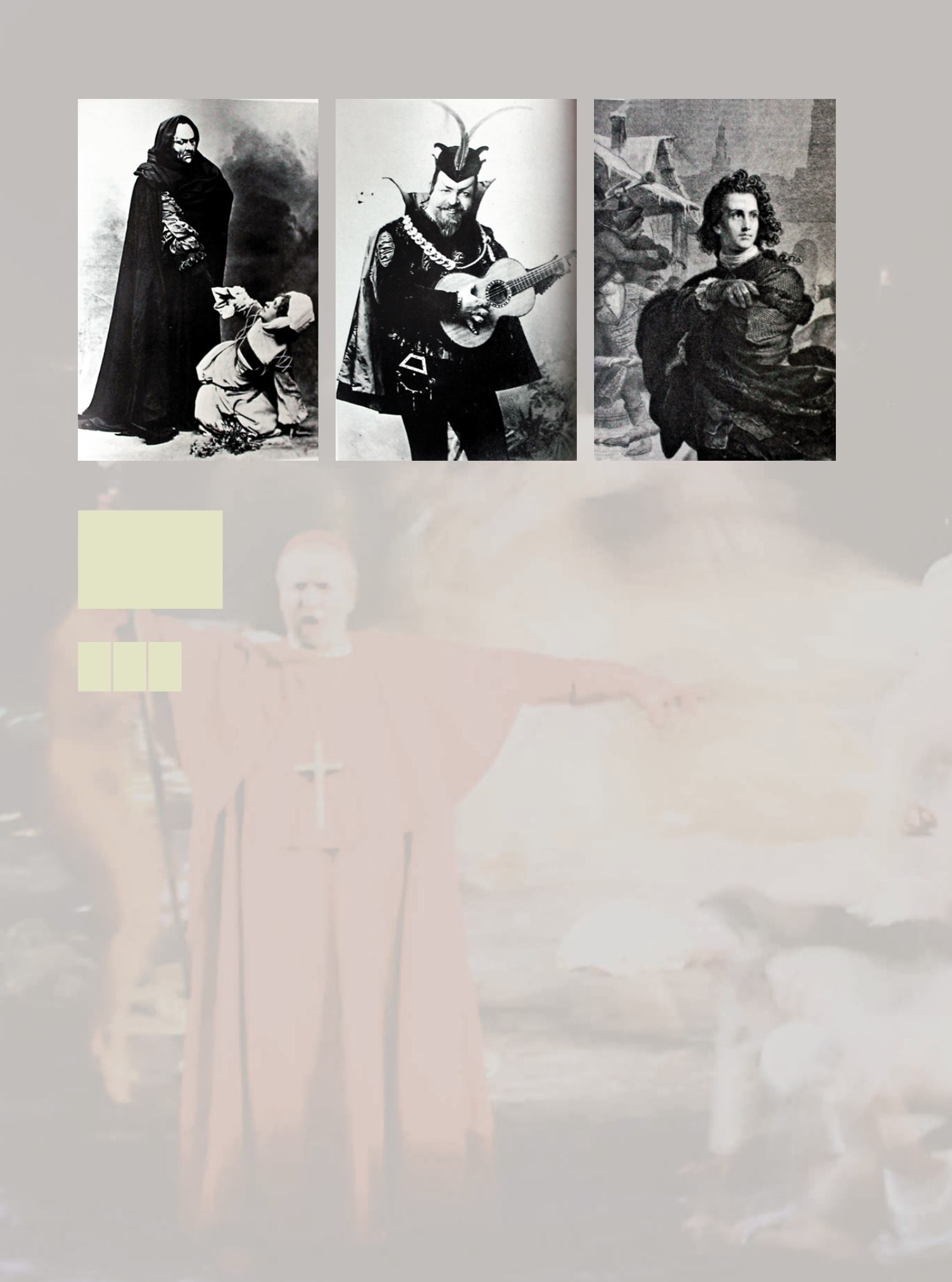
Prokoviev (Kirov
Opera) final scene.
FFoEoS$IBMJBQJO
ZRoTJOB4toSDIJo
DoNoMF¬TtwGFMFTZ
MBSHBSJtBFOFMFBVTto
EF(oVOoE /
Feodor Chaliapin
and Rosina Storchio
andMefistofeles
andMargarita in
Gounod’s Fausto.
&EoVBSEEFRFT[LF
CBKo
QoMBDoZFTtSFMMBEF
MB¼QFSBEF1BSrTZ
EFMMFt/
Edouard de
Reszke (1853-1917)
star of the Paris and
Met Opera.
+oIBOO8oMGHBOH
(oFtIF QoFtBRVF
influenciótanto
MBN|TJDBDoNo
MB MJtFSBtVSB /
JohannWolfgang
Goethe (poet who
influenced inmusic
and literature).