



 126 / 156

·amura·
124
de polo a polo •
from polo to polo
El polo tiene profundas raíces en la historia depor-
tiva mexicana. Fue introducido al país por la Familia
Escandón-Barrón a finales del siglo XIX, cuando uno
de sus miembros, Manuel Escandón y Barrón, Mar-
qués de Villavieja, vio el juego en Newport, Estados
Unidos de Norteamérica. En su primera etapa el de-
porte fue practicado exclusivamente por deportis-
tas civiles, siendo el primer Club del país la sección
de Polo del Jockey Club Mexicano, fundado en 1881.
Entre los jugadores pioneros debemos mencionar a
Carlos Rincón-Gallardo y Romero de Terreros, Duque
de Regla y Marqués de Villahermosa de Alfaro, lla-
mado también el Padre de la Charrería. En México
las primeras canchas estuvieron en la propiedad
de la Familia Escandón-Barrón en Tacubaya, y en el
Hipódromo de la Condesa. Desde aquellos primeros
años polistas europeos jugaron en México, entre
ellos el español Luis de Errazu. La mejor actuación
de México fue en el Campeonato Mundial de Polo de
1987 donde ganaron el subcampeonato. El equipo
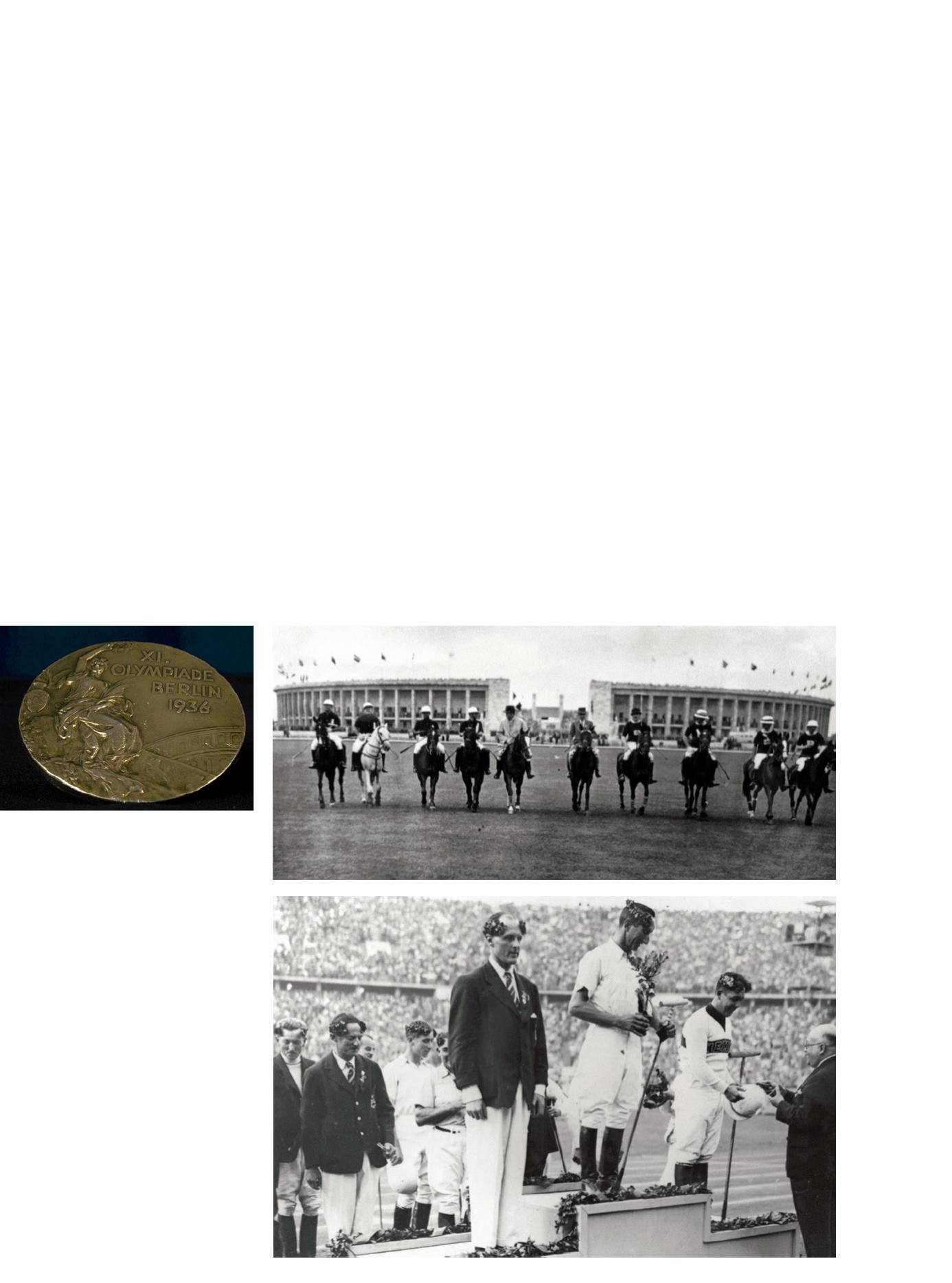
mexicano de Polo obtuvo la medalla de bronce en
los Juegos Olímpicos de París 1900 y Berlín en 1936.
México contó con un gran polista, referente
indiscutible de este deporte: Carlos Gracida, con-
siderado uno de los mejores polistas del mundo,
quien desafortunadamente falleció el 25 de Febre-
ro de 2014.
Polo has deep roots in the history of Mexican
sports. It was introduced in the country by the
Escandon-Barron family at the end of the 19th
century, after one of its members, Manuel Escan-
don y Barron, Marquis of Villavieja, saw a match
in Newport, United States. In 1881, the first polo
club was formed in the Mexican Jockey Club, and,
at the time, the sport was exclusively played by
civilian sportsmen. Amongst the pioneering
players we must mention Carlos Rincon-Gallardo
y Romero de Terreros, Duke of Regla and Marquis
of Villahermosa of Alfaro, also known as the Fa-
ther of the Mexican Rodeo. The Escandon-Barron
family owned the first polo fields in Tacubaya,
at the Condesa Racecourse. Back then, Euro-
pean polo players came to Mexico to compete in
matches, most notably Spanish player Luis de Er-
razu. Mexico’s finest hour came during the World
Polo Championship in 1987, where they won the
sub-championship. The Mexican polo team also
won the Bronze medal at the 1900 Paris Olympic
Games and the 1936 Berlin Olympic Games.
The Mexican team boasted a great player, un-
doubtedly associated to the history of the sport:
Carlos Gracida, considered one of the finest players
in the world, and who unfortunately passed away
on February 25th, 2014.