93
equitación • horseback riding
·amura·
lately because of the great peak and economic
development in Europe, we have lingered behind a
little, but with the youngsters that are coming
strong I think that in a short term we may recover
our place worldwide.
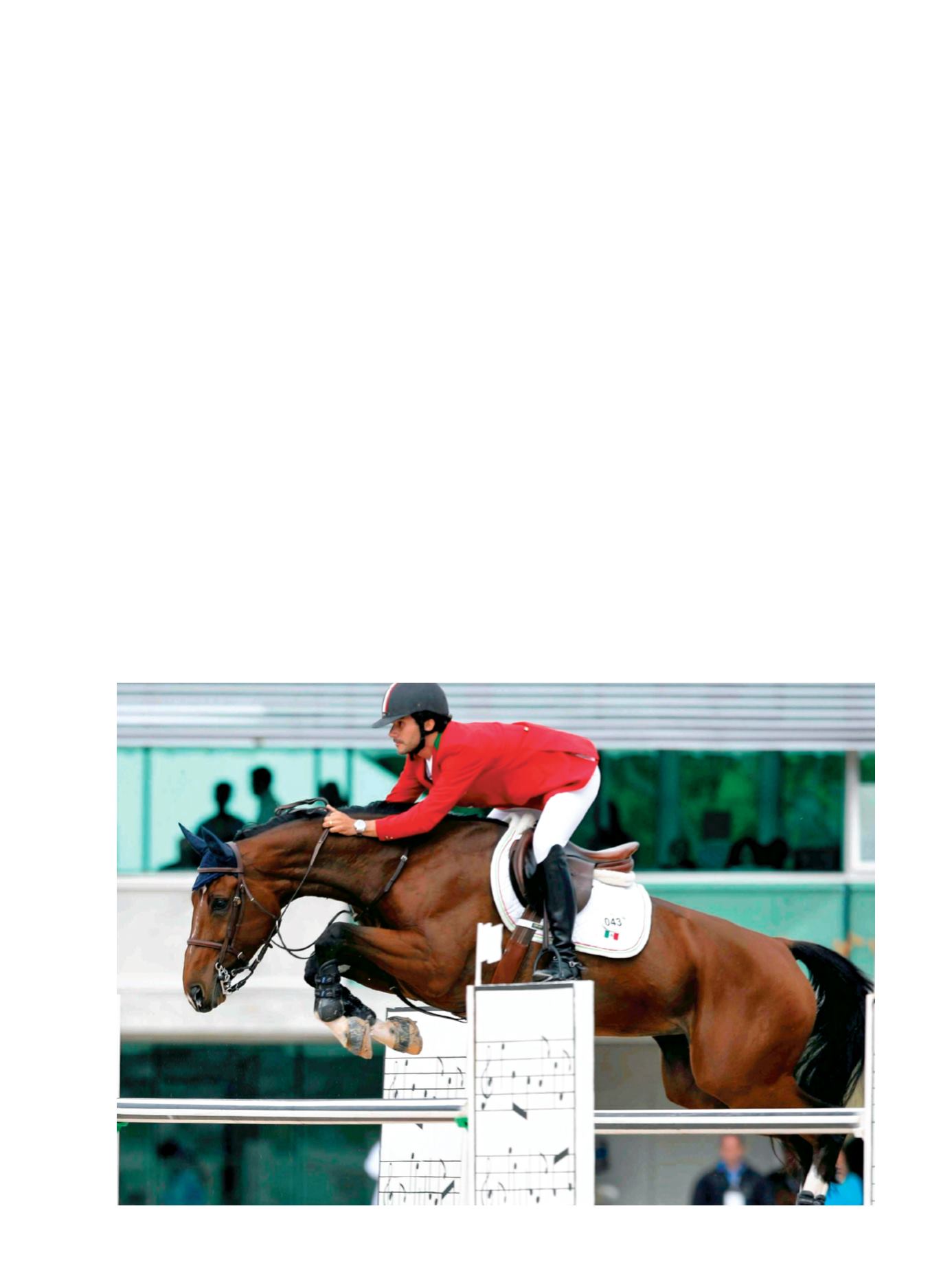
The horseback riding, mistakenly cataloged as
elitist, is a sport that when you practice it as a
hobby or in the week-ends is accessible in many
riding clubs within the city, nevertheless, when it
turns into a competition sport the requirements
increase, where the first and most difficult is the
discipline that it requires, unlike other sports or
hobbies, this one is practiced with a living being
(horse), which needs daily exercise, athlete’s diet
and princess cares.
That is there is no need to use a racquet or a
bicycle that after using them you put them away
and you take themout the next time you play, here
you have to have special attention in each detail
on what’s happening to the horse, they have to
work-out daily, if we just imagine what would be
like to be inside a stable of (3x3 m) 24 hours we
would understand what they feel. There is also the
talent part which it is born with but you have to
work on it, because if you don’t it runs out or it get
lost and the only way to improve, learn and get to
know better the horse is to train every day, which
makes that this sport requires a lot of sacrifice.
But also the rewards are huge, for example the
satisfaction of jumping a tour with no faults in a
competition, it does not matter the height, is some-
thing indescribable, like reaching a goal, and this is a
feeling aroused for the fact that you control a 500 kg
animal. Which is noble but at the same time it has it
tradición muy grande en este deporte, aunque última-
mente por el gran auge y desarrollo económico que ha
tenido en Europa, nos hemos rezagado un poco, pero
con la gente joven que viene empujando fuerte creo
que en un lapso no muy lejano podremos recuperar
nuestro lugar a nivel mundial.
La equitación, erróneamente catalogada como eli-
tista, es un deporte que al practicarlo como pasatiem-
po o de fin de semana es accesible en muchos de los
clubes hípicos dentro de la ciudad, no obstante, cuan-
do se convierte en un deporte de competencia las exi-
gencias aumentan, donde la primera y más difícil es la
disciplina que requiere, ya que a diferencia de otros
deportes o pasatiempos, esta se practica con un ser
vivo (caballo), el cual necesita de ejercicio diario, ali-
mentación de atleta y cuidados de princesa.
Es decir no se utiliza una raqueta o una bicicleta
que después de usarse se guarda y no se vuelve a
sacar hasta la próxima vez, aquí hay que tener espe-
cial atención en cada detalle de lo que pasa con el
caballo, tienen que trabajar diario, con sólo imaginar-
nos lo que seria estar dentro de una caballeriza 24
horas (3x3 m) entenderíamos lo que ellos sienten.
También está la parte del talento con el cual se nace
pero hay que trabajarlo, sino se acaba o se pierde y la
única forma de mejorar, aprender y conocer mejor al
caballo es entrenando todos los días, lo cual hace que
este deporte sea de mucho sacrificio.
Pero también las recompensas son enormes, por
ejemplo la satisfacción de saltar un recorrido sin fal-
tas en una competencia, no importa la altura, es algo
indescriptible, como alcanzar una meta, y esto es un
sentimiento provocado por el hecho de dominar a un
animal de 500 kg. Que es noble pero a su vez con


