
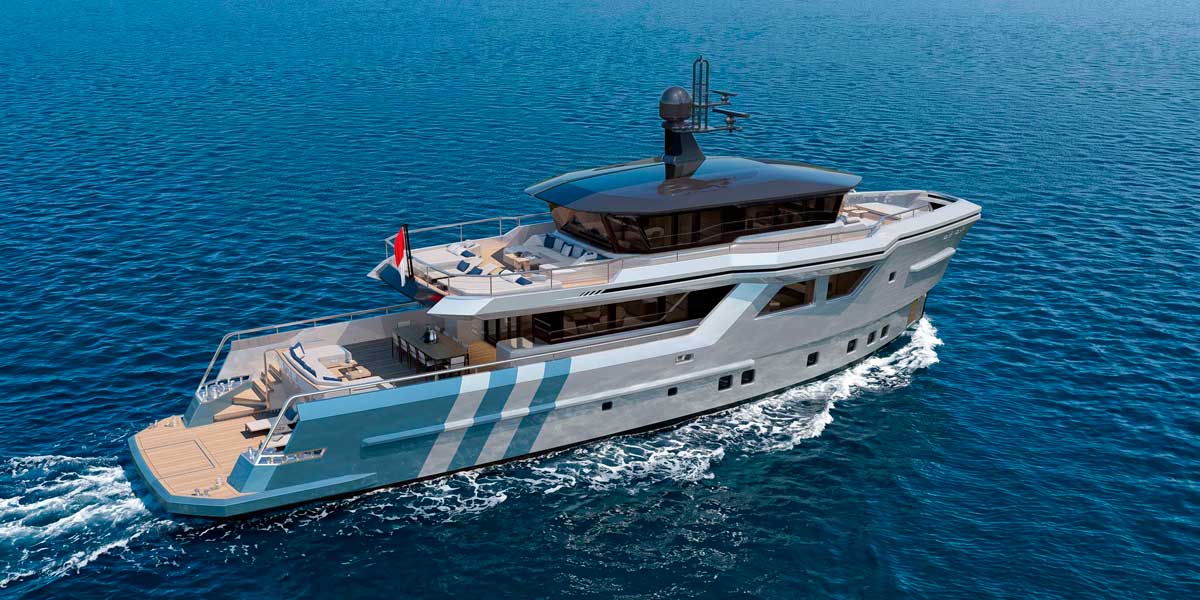
The keel has been laid for the first XPD95—a project whose expedition-yacht DNA has shaped it from the very beginning and which has now been reinterpreted through a comprehensive, bespoke development process.
The XPD95’s long-range DNA is evident in its steel hull and aluminum superstructure, as well as its robust construction, practical solutions, and naval design language—reinterpreted here for primary use in the Mediterranean. A direct connection to the sea, owner privacy, spacious outdoor areas, and ease of handling are the key features of a motor yacht designed for maximum enjoyment.
The exterior lines, designed by Sculli & Covini, draw inspiration from professional offshore vessels, translating that influence into a contemporary and unmistakable silhouette. The imposing, raised bow conveys a sense of protection and solidity, while the volumes become progressively lighter towards the stern, opening up to the spacious waterside platform.
The helm station—inspired by the bridges of ocean-going tugboats—and the use of polished stainless steel in operational areas further define the XPD95’s identity.
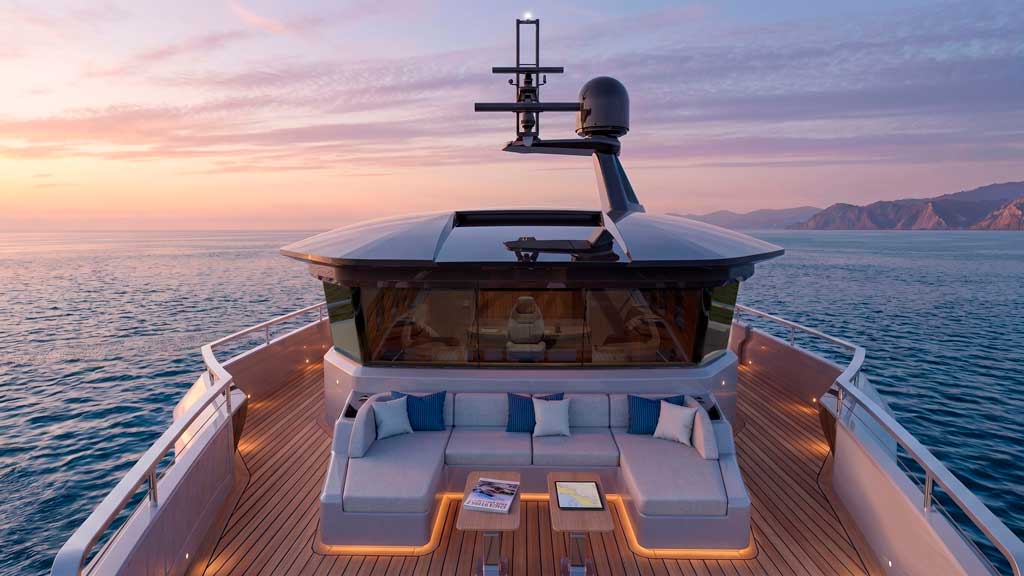 The helm station of the Antonini Navi XPD95 is inspired by the bridges of ocean-going tugboats.
The interior design, created by Hot Lab, focuses on reflecting the owner's tastes through welcoming, light-filled spaces characterized by a warm, refined, and understated style. Eucalyptus wood will be the dominant material, combined with lacquered finishes, leather, fabrics, metal accents, and natural stone. The furnishings feature soft, fluid lines, with particular attention paid to visual continuity between the interior and exterior spaces. The XPD95 features a predominantly horizontal architecture with a low, aerodynamic profile, designed to keep gross tonnage under 199 GT while concentrating functions without resorting to the multi-deck configurations typical of larger yachts: the stern combines technical functionality with areas for socializing at sea; the owner has a full private deck at their disposal; main outdoor areas are easily accessible; and the crew benefits from well-organized, independent passageways for living and working.
A central design feature is the multifunctional beach area, spanning approximately 35 m². When the yacht is underway, it can accommodate a five-meter tender while leaving space for guests; once the tender is launched, the area transforms into a spacious private terrace overlooking the sea. A convertible platform completes the zone, facilitating launching and hauling operations while providing water access and a base for aquatic activities.
An exclusive private deck for the owner—approximately 60 m² in total, comprising 25 m² of interior space and an integrated 35 m² terrace—ensures complete privacy. Designed like a private apartment with sea views, this space allows the owner to choose at any time whether to share life on board with guests or enjoy their privacy.
The decision to omit a dedicated sun deck was also a deliberate design choice. Outdoor areas consist of a 44 m² cockpit on the main deck and a 33 m² bow lounge on the upper deck, creating two spacious open-air areas while maintaining the yacht's elegant, low-profile aesthetic.