
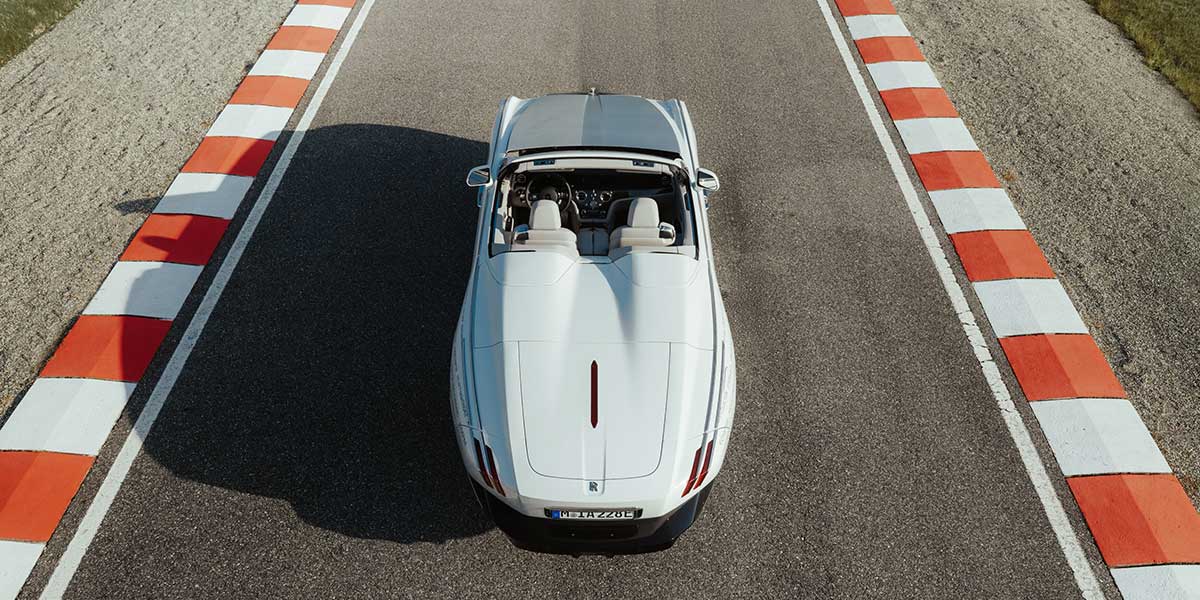
Rolls-Royce Motor Cars announced the Nightingale Project, a limited edition of just 100 bespoke coachbuilding cars.
Combining the complete design freedom inherent in coachbuilding with the brand's all-electric propulsion system, the Nightingale Project represents the pinnacle of Rolls-Royce's current capabilities and a fascinating glimpse into its future. From its unveiling, customers were unequivocal: these cars would be driven and enjoyed all over the world. Preparing the Nightingale Project for such journeys required an extraordinary effort from Rolls-Royce, subjecting the prototypes to one of the most rigorous testing programs in the brand's history.
Rolls-Royce engineers will dedicate a total of 350 weeks to testing the Nightingale Project under the most extreme conditions, just as its customers envision it. The prototypes will travel from the Mediterranean coast and the Arctic Circle to the deserts of the Arabian Peninsula, enduring extreme temperatures and altitudes of up to 2,750 meters.
The program begins in southern Europe, bringing the Nightingale Project back to the roads where Rolls-Royce established its meticulous approach to car development more than 100 years ago. In southern France, the connection is particularly strong: the Nightingale Project takes its name from Le Rossignol—French for “the nightingale”—the name of the house Henry Royce built for his designers and engineers near his winter residence on the French Riviera.
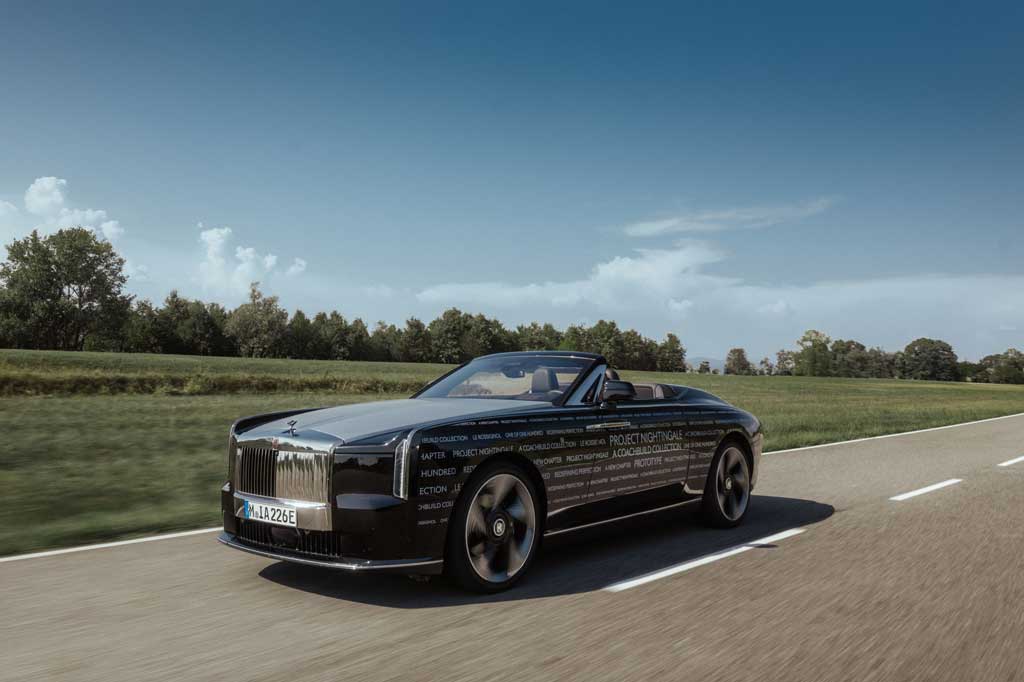 Each Nightingale Project model will undergo rigorous road tests.
The road testing program marks the final phase of a development process that began almost three years ago. The static prototypes have already completed more than 1,430 hours of aerodynamic modeling, including advanced digital simulations and wind tunnel testing.
The results of this exhaustive laboratory work will be validated at a private high-speed test facility, where the Nightingale Project will reach speeds of up to 250 km/h. There, the vehicles will also undergo extensive analysis to suppress wind noise until it is virtually imperceptible, preserving the unparalleled combination of power, serenity, and absolute ease of handling that defines this Coachbuilding Collection.
The same meticulous attention extends to the airflow within the car. Rolls-Royce has developed a fully electric wind deflector specifically for the Nightingale Project, exquisitely engineered and flawlessly designed to prevent high-pressure air from leaking forward into the passenger compartment from the rear. During the program, the roof will be tested at various speeds to further reduce the already minimal levels of turbulence inside the cabin, while also helping to retain heat when the car is driven in cold climates with the top down.
This determination to preserve the car's exceptional refinement in virtually any environment extends to the roof itself. Lined with a unique sound-absorbing material that combines cashmere, fabric, and high-performance composites, the roof will undergo 10 independent tests of its weave, closing mechanism, and operation at temperatures up to 80°C.
Elsewhere in the program, the focus is on the extraordinary engineering details that distinguish the Nightingale Project. Among these is the piano-style trunk, a feature never before seen on a Rolls-Royce. This trunk, which opens laterally via a cantilevered mechanism, will withstand up to 15,000 opening and closing cycles, ensuring that repeated use will never disrupt the perfect presentation or flawless operation of this iconic gesture for generations to come.