
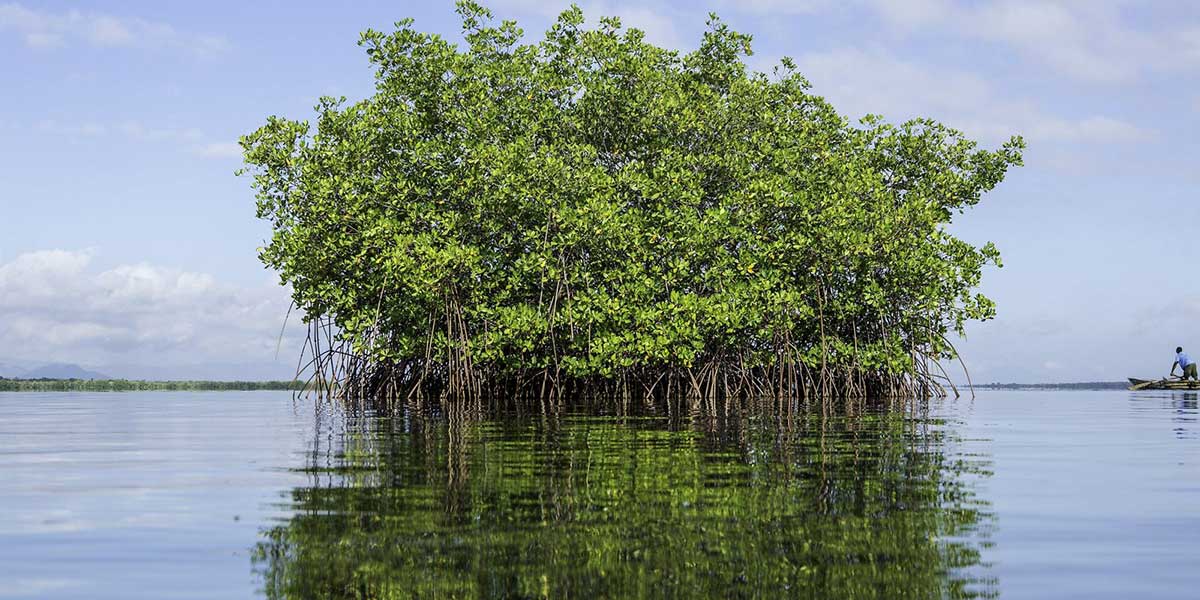
Mangroves are a critical resource for climate resilience, biodiversity, and livelihoods.
The 15 million hectares of mangroves worldwide provide communities with essential services, income, and protection. Coastal wetlands reduce the impact of flooding for nearly half a million people and prevent losses worth approximately $2 billion annually. They are also among the most productive ecosystems in the world. They are fish nurseries, carbon sinks, and crucial coastal defenses.
The State of the World’s Mangroves 2026 report offers an inspiring vision of hope and collaboration. Based on the latest scientific findings from leading experts, this comprehensive report shows that mangrove cover is no longer declining but is, in fact, increasing in many areas. This gives us reason to be optimistic, but, as Mark Spalding points out, it doesn't mean the work is finished.
With the participation of more than 190 government, community, professional, and scientific representatives from 30 countries, the report highlights the importance of collaboration as a catalyst for change. Coordinated conservation efforts, such as those of the Global Mangrove Partnership (GMA), are critical to reducing mangrove loss and degradation while accelerating restoration. This organization, with more than 100 members and led by The Nature Conservancy, Conservation International, IUCN, Wetlands International, and WWF, demonstrates the power of global partnerships that prioritize best practices for the flourishing of existing mangroves.
Ecuador. The Ecuador national section has played a significant role in expanding community-based conservation, promoting more than 45 sustainable use agreements for mangroves and supporting the consolidation of more than 100,000 hectares of mangroves under community management.
Guinea-Bissau. The Guinea-Bissau national section has developed a public data platform to support the monitoring, decision-making, and tracking of restoration efforts. These collaborative initiatives strengthen the work of all partners, fostering greater collaboration and scaling up results.
Philippines. The Philippines has lost two-thirds of its mangroves in the last century. The national section works to connect best practices with work on the ground. They are driving policy changes through advocacy, resource mobilization, and collaboration.
Mangrove Mapping
Mapping is fundamental to much of our knowledge about mangroves. It not only allows us to know where they are being lost or expanding, but also where they provide benefits, protect people, store carbon, and support fishers.
This year, Global Mangrove Watch v4.1, the world’s leading mangrove mapping and monitoring platform, and research recently published in the journal Science, have shown that we have reached a crucial tipping point for mangrove forests. Using mangrove data from 1985 to 2025, the new maps highlight the gradual slowdown in losses over the past 40 years and, roughly ten years ago, a shift toward a positive balance.
These advances are good news, but they don't directly offset the enormous loss of old-growth forests over the past century. Around 65% of the new mangroves are located in areas where they didn't previously grow, and in many cases, they thrive on sediment deposited in coastal waters as a result of deforestation and inland erosion. We cannot allow these new forests to mask the ongoing loss of old-growth mangroves. The benefits of these new forests will outweigh the significant losses from the continued degradation of primary forests, from carbon storage and biodiversity habitat to flood protection.
When losses persist, understanding the causes is crucial. Sometimes the impact is clearly attributable, and the report includes accounts and images: direct deforestation and land conversion to urban areas in Guinea, India, Bahrain, and Bali; aquaculture and illegal logging in Senegal; poorly planned mining that isolates mangroves from the ocean in Mozambique; and oil pollution in Nigeria.
2030 and Beyond
To be effective, community partnerships are essential. The report “The State of the World’s Mangroves 2026” delves into these partnerships through regional case studies of community-led restoration initiatives in Ghana, Brazil, Mexico, Qatar, Tanzania, and the Philippines.