
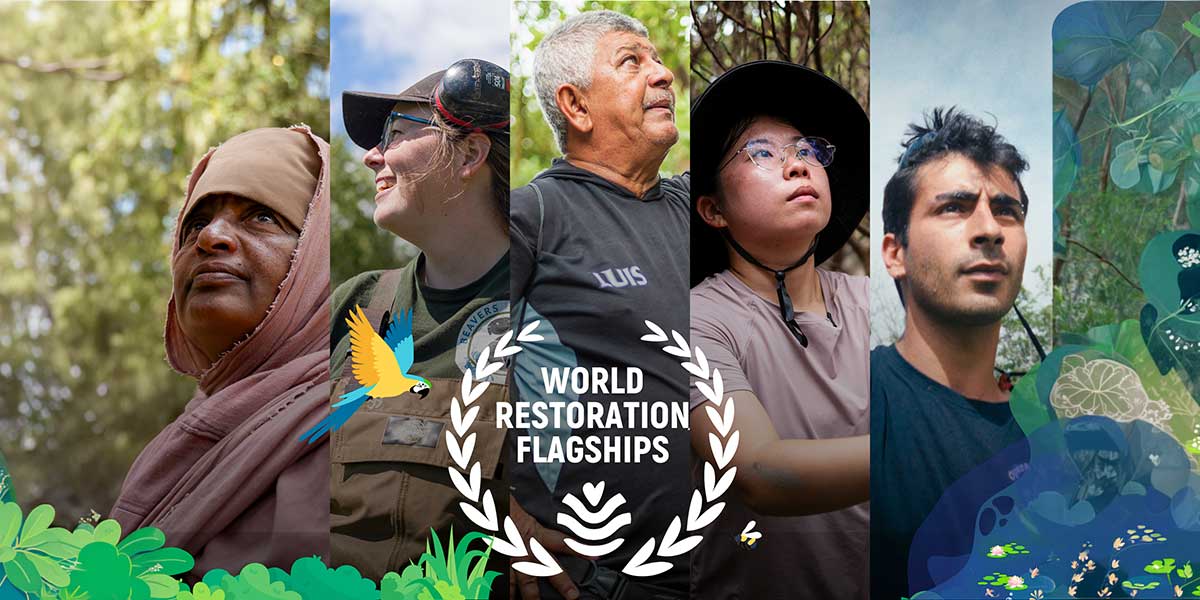
Between 2022 and 2025, 27 large-scale restoration initiatives were recognized as Global Flagship Restoration Projects under the United Nations Decade on Ecosystem Restoration.
Together, they represent a diverse global portfolio encompassing terrestrial, freshwater, coastal, and marine ecosystems. Their restoration commitments, reported progress, and broader ecological and socioeconomic contributions are presented in the StoryMap “From Commitment to Impact,” which compiles monitoring information from the first 27 Global Flagship Restoration Projects.
In August 2026, three additional global flagship restoration projects were recognized at UNCCD COP17. On October 29, five more flagship projects from 2026 were awarded during the Gala of Hope: Nature Edition, held on Restoration Day at the CBD COP17 in Yerevan, Armenia.
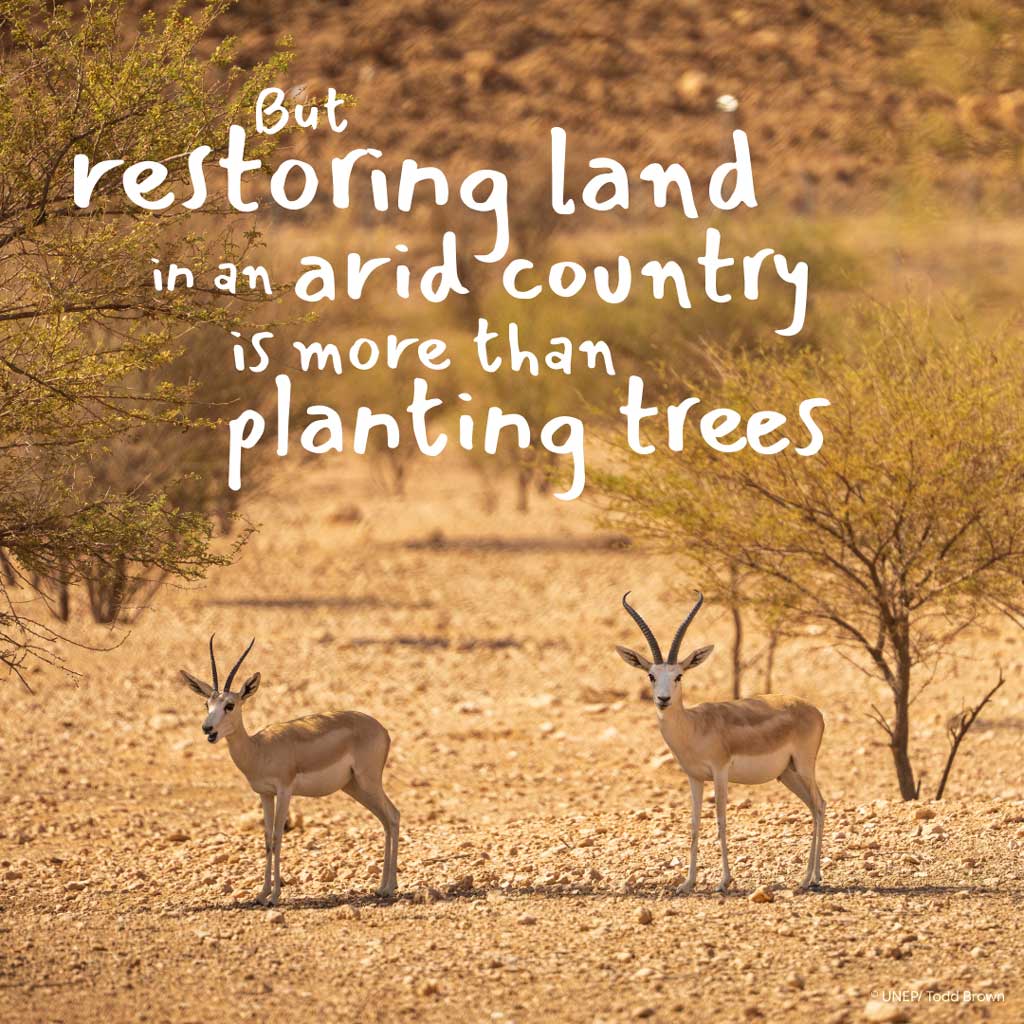
- Ethiopia’s Great Rift Valley Renaissance. Desa’a, in Tigray, and Dat’Garab, in Afar, covering approximately 154,000 hectares, constitute one of Ethiopia’s most irreplaceable dry Afromontane ecosystems and a key element of the Great Rift Valley Renaissance flagship project. With altitudes ranging from 900 to 3,100 meters, they form a crucial segment of Africa’s Great Green Wall and are the biodiversity hotspot of the Eastern Afromontane, where almost a third of the species are endemic. The forest is home to rare and endangered species. Despite its ecological and cultural importance, over 70% of Desa’a has already been lost, and the remaining forest is severely degraded.
- Forestami – Milan Urban Forest. Forestami aims to increase the natural capital of the Milan Metropolitan Area to mitigate the effects of climate change in one of the most densely urbanized areas in Europe. The project seeks to map, design, maintain, and improve the natural capital of the Milan Metropolitan Area by promoting tree planting throughout the region and involving the city of Milan and the 133 municipalities of the Milan Metropolitan Area, with the goal of planting 3 million trees by 2030.
- Urban Nature Reborn in Colombia. Urban Nature Reborn is restoring the Mallorquín Marsh, an urban wetland in Barranquilla threatened by mangrove loss, pollution, erosion, and pressure from nearby development. The initiative combines mangrove restoration and water quality improvement with an ecopark and community engagement, including local employment and ecotourism. Their restoration plan covers 740 hectares, with the overall goal of recovering biodiversity and strengthening the wetland and surrounding communities.
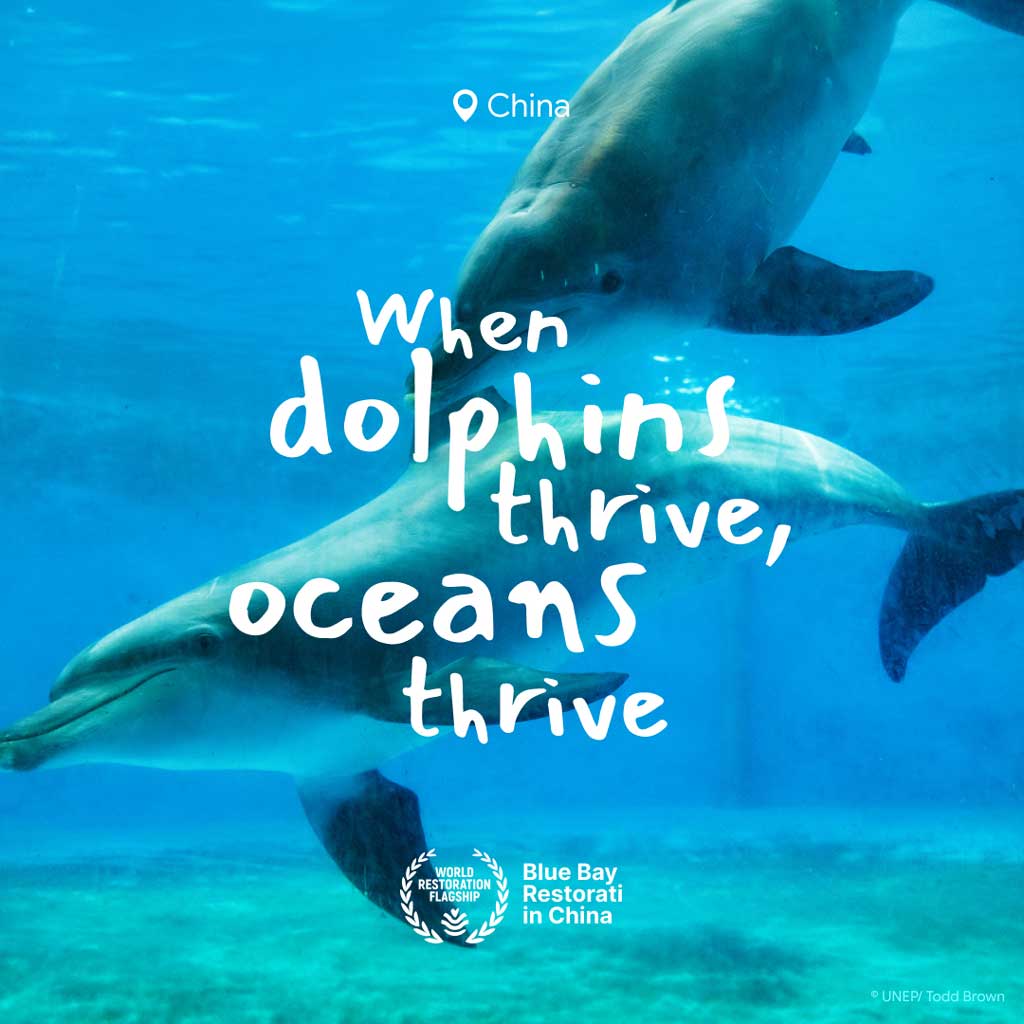
- Blue Bay Restoration, China. The Blue Bay Initiative was launched by the Chinese government in 2016 to foster resilient coastal areas characterized by ecological integrity, safety, and vitality through systematic restoration. Over the past eight years, the Chinese central government has invested $4 billion and mobilized more than $2.8 billion from local authorities and the private sector, implementing a total of 174 marine ecological restoration projects in 52 densely populated and heavily exploited coastal cities with serious ecological problems.
- Seattle Green Alliance, United States. The Seattle Green Alliance is a community-based initiative of the city of Seattle. It brings together community groups, city departments, volunteers, and restoration professionals to restore and care for urban forests, grasslands, streams, and coastlines. Their work includes removing invasive species, promoting the growth of native plants, and maintaining restored areas over time. The partnership aims to strengthen urban forests and wildlife habitats, build climate resilience, and connect residents with nature.
Together, these five UN flagship restoration programs demonstrate restoration in diverse environments, from urban forests and wetlands to tropical forests and coastal ecosystems. Between 2021 and 2026, a total of 35 UN Flagship Global Restoration Projects were documented in FERM, and their restoration progress continues to be monitored and updated through 2030.