
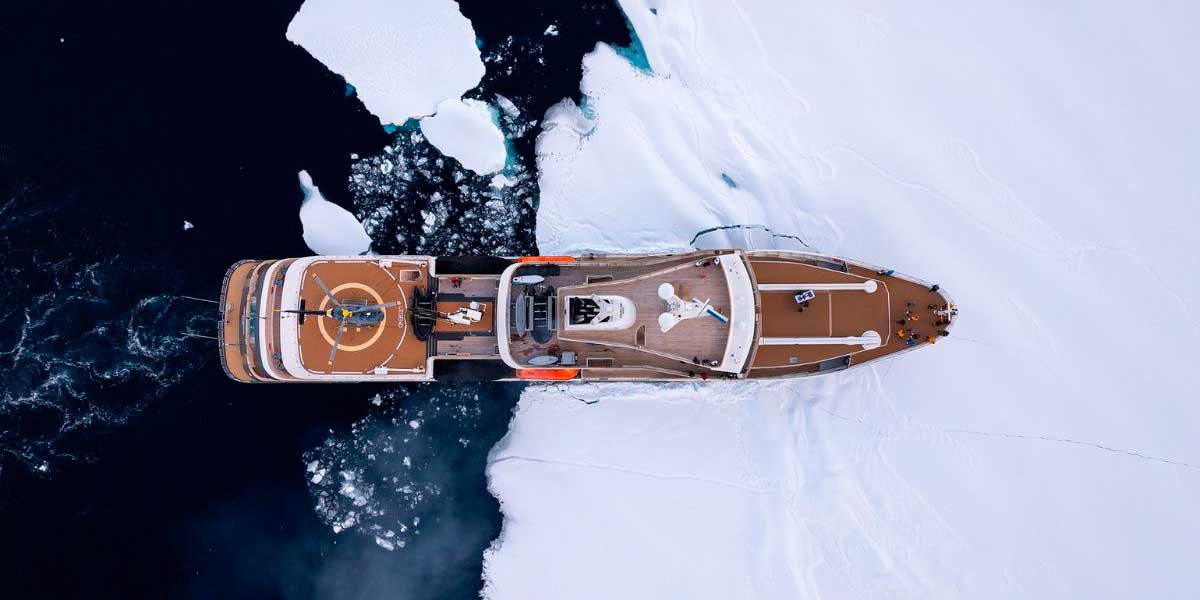
Pelorus led a pioneering expedition to the remote Antarctic Peninsula, with more than twenty passengers aboard a first-class yacht and marine scientists on a specialized support vessel.
Both vessels were equipped with helicopters and guided by polar experts. The groundbreaking research conducted during this voyage resulted in a scientific breakthrough that will transform the understanding and conservation of marine ecosystems for decades to come.
Navigating a continent characterized by extreme and unpredictable weather, constantly shifting glaciers, and enormous floating ice shelves requires extensive logistical preparation.
More than a year before departure, Pelorus chartered the Legend, a 77-meter luxury exploration yacht and first-class icebreaker with over five years of polar experience. Its Balinese spa, cinema room, sauna, and classically designed suites ensured a comfortable journey for the twenty-two guests on board, with easy access to the helicopter located on its upper deck.
 “What truly distinguished this voyage was the fusion of exploration and purpose: tracking migratory whales with polar scientists, supporting vital conservation efforts, and witnessing a fragile ecosystem on the brink of collapse.” Jimmy Carroll, Pelorus Co-founder
The Argus [first photo], a purpose-built expedition yacht carrying another helicopter, served as the support vessel and housed the extended crew. Among them were the experienced Pelorus co-founders and hosts, Jimmy and Geordie, and the expedition’s deputy director, Lana. Equipped with an onboard laboratory, the Argus also functioned as a research vessel, hosting a team of marine biologists from UCLA Santa Cruz, led by renowned marine scientist Dr. Ari Friedlaender. The crew consisted of numerous Antarctic specialists, including an expedition physician, a naturalist, an ice pilot, four heli-ski operators, and an expedition leader with more than three decades of experience in polar regions.
To document the expedition, two Photographers, whose portfolios include the BBC and National Geographic, arrived equipped with photographic gear for freezing conditions.
Departing from King George Island, known as the gateway to the Antarctic Peninsula, the crew embarked on a journey south, anticipating a window of good weather ideal for heli-skiing and wildlife viewing. With miles of polar ocean to cover, both yachts repositioned themselves for a 14-hour overnight crossing, navigating with great skill through ice floes, dense fog, and narrow, winding fjords. Below deck, the guests settled into their spacious suites and unwinded at the end of the day with aromatherapy massages in the Legend's Balinese spa.
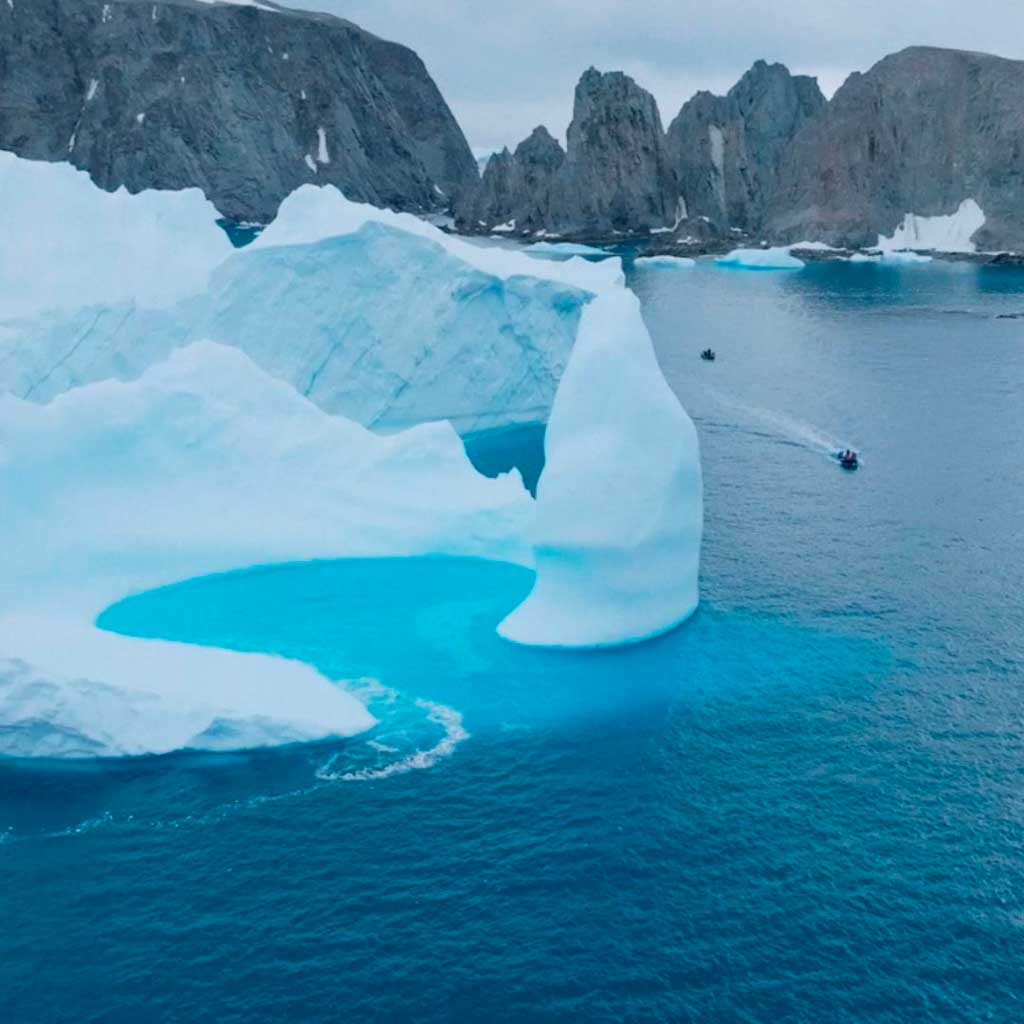
Waking the next morning to a magnificent breakfast, the guests were delighted to discover they had arrived at their first destination: Hunt Island. The horizon revealed countless dazzling white mountains and a crystal-blue sky, with ancient glaciers descending into the ocean. Soon after, the heli-skiing activities began. Guests soaring over snow-capped peaks and alpine valleys. Each descent down the slopes that day was a unique experience, and each new mountain face an opportunity to break new ground on virgin snow. Few experiences compare to the thrill of exploring this continent from both the sea and the air.
Life in Antarctica thrives primarily beneath the icy surface of the ocean. While many species of penguins, seals, and seabirds can be observed on land, their survival depends on nutrient-rich bacteria and krill that live below the surface. Dr. Ari Friedlaender's extraordinary team of marine biologists managed to image krill swarms, algal blooms, starfish, and rare invertebrates by sending ROVs (remotely operated vehicles) deep into the underwater walls.
The scientists also successfully attached a series of satellite tags to minke and humpback whales, which was crucial in determining their behavior and any changes in their movements. In particular, they successfully attached the first monitor tag to a Heart rate data from a humpback whale in Antarctica provided the most accurate and comprehensive heart rate data ever recorded for a marine mammal. This represents a significant advance in the field of marine conservation, providing unprecedented information on whale behavior, social structures, and interactions with the environment.
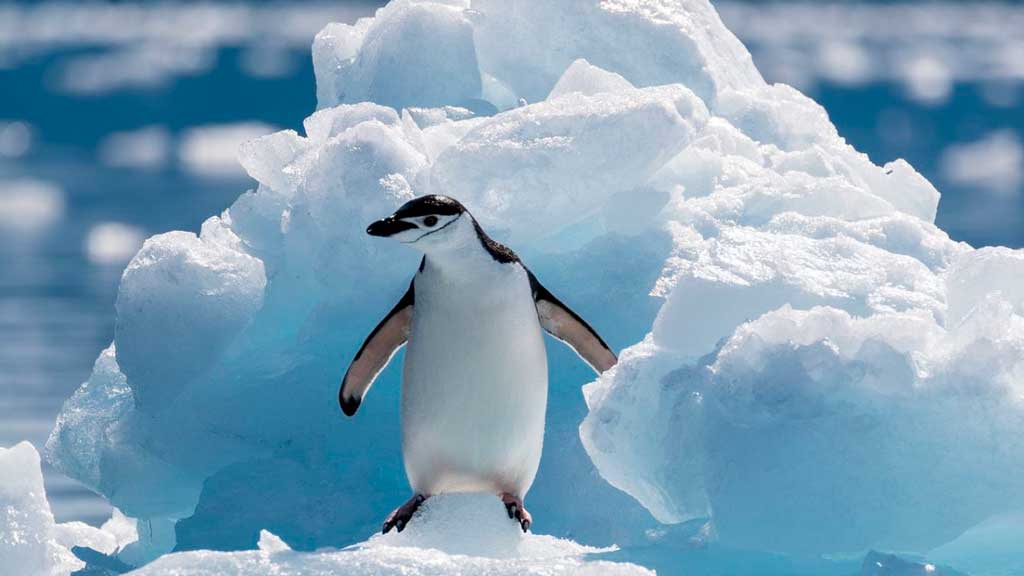
The collected data are crucial for identifying critical areas of conservation. Feeding patterns and migratory routes allow for the development of conservation strategies to protect these species and their habitats. Elsewhere, they were outnumbered by minke whales, Weddell seals, leopard seals, and various penguin species, from Adélie to chinstrap and gentoo.
Each day was filled with excitement and a myriad of activities. Wildlife tracking, ice climbing, and countless water activities, from kayaking to diving into icy waters, guaranteed endless entertainment. Après-ski capped off a long day on the slopes with champagne and gin and tonics chilled by the glacial ice, or a themed party in the spacious Legend lounge.
The Ukrainian Vernadsky Research Station, famous for discovering the hole in the ozone layer, proved to be a particularly eye-opening experience. As ardent conservationists, the group felt a connection to the environmental studies the station conducts to monitor the effects of climate change on Antarctic ecosystems. The scientific data collected on this expedition will provide essential information for conservation over the next decade, serving as a basis for industry and governments to address the impact of human intervention on delicate ecosystems. Travel can be a platform for positive change, and exploring these lesser-known areas of the world by yacht makes it infinitely possible and, undoubtedly, a luxurious experience.