
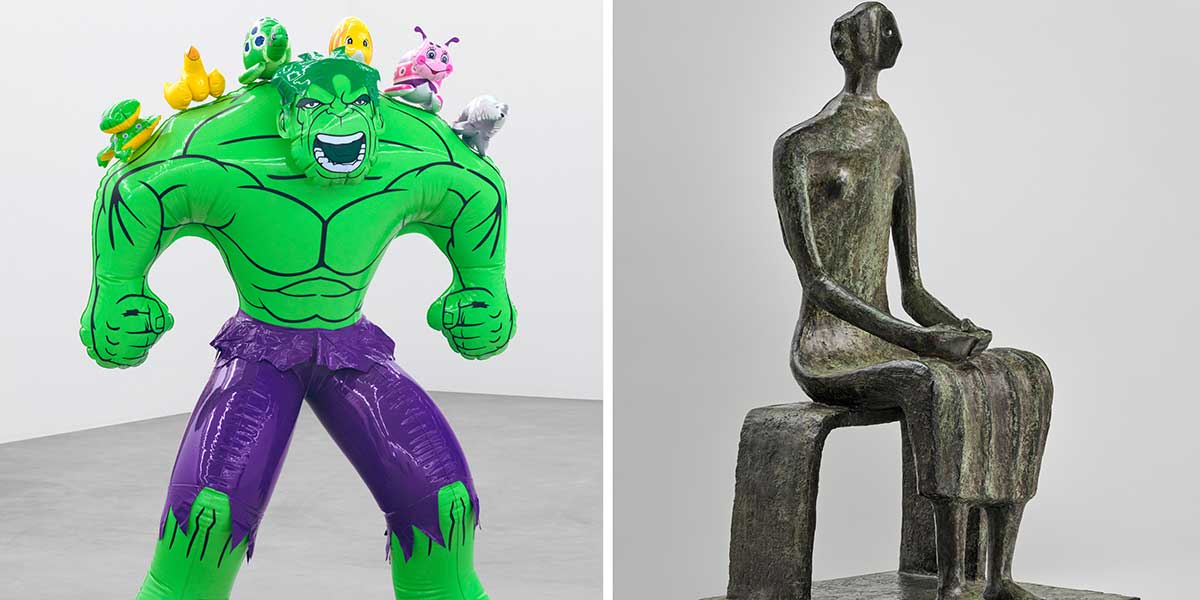
An essential guide to the revolutionary approaches used by 20th- and 21st-century artists in redefining sculpture in our time, illustrated with lots offered at Christie's this November.
- Reinterpreting the figure. Considered the father of modern sculpture, Auguste Rodin created vigorously modeled works that were seen as a radical break with academic conventions and classical idealism. Rodin introduced a new, highly expressive, three-dimensional art form that has influenced generations of artists. Whether experimenting with movement, abstraction, or fragmentation in their explorations of the corporeal form, artists such as Constantin Brancusi and Pablo Picasso opened new avenues for expressing psychological depth, emotional resonance, and modern social themes.
Names to know: Constantin Brancusi, Pablo Picasso, Auguste Rodin, Edgar Degas, Fernando Botero, Alberto Giacometti, Henry Moore, Henri Matisse, Amedeo Modigliani
Names you should know: Roy Lichtenstein, Marcel Duchamp, Pablo Picasso, Man Ray, Robert Rauschenberg, Jeff Koons, Damien Hirst, Sherrie Levine
- Idea over object. Everyday objects first appeared in Pablo Picasso's Cubist assemblages in the early 20th century and were soon incorporated into sculpture. In 1915, Marcel Duchamp made one of the most innovative gestures in art history by designating common, relatively unaltered objects as sculptures.
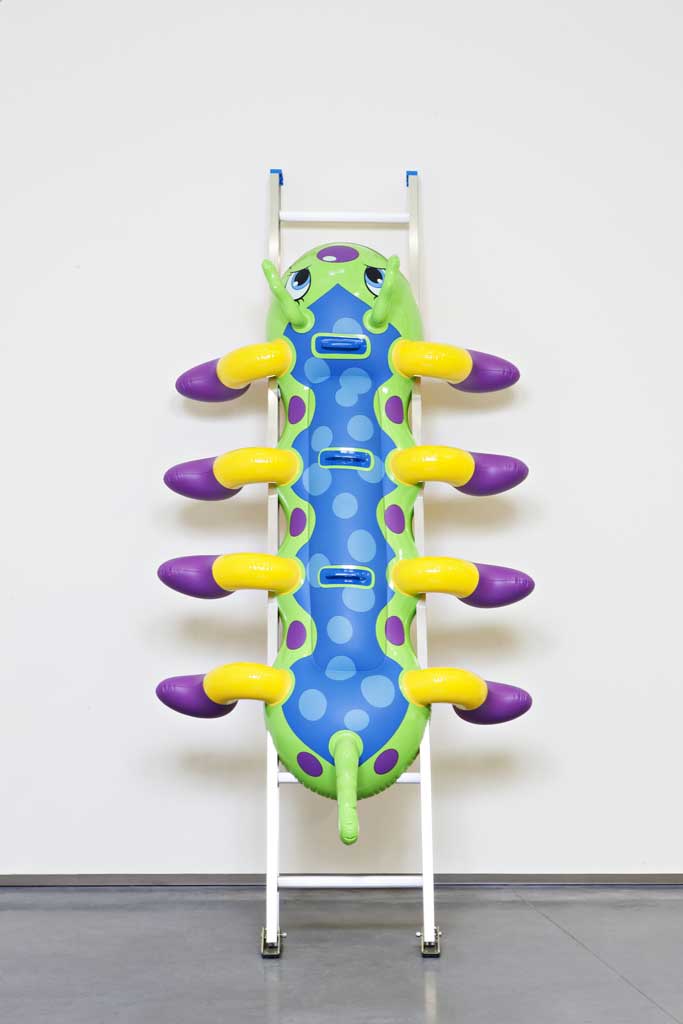 Jeff Koons (b. 1955), Caterpillar Ladder (wall), 2007-2011. Polychrome aluminum and aluminum. 237.2×105.3×111.6 cm.
- Movement in space
Since the beginning of the 20th century, artists have incorporated movement into sculpture, with precedents in the optical and mechanical works of Dadaism and Constructivism. In the 1950s, movement became the fundamental principle of kinetic art. Kinetic sculptors incorporated natural or mechanical movement into their works to explore the passage of time, reflect on the importance of the machine in the modern world, and examine the dynamics of perception.
Names to know: Alexander Calder, Isamu Noguchi, Marcel Duchamp, Naum Gabo, Jean Tingley, Lygia Clark.
Names to watch: Henry Moore, Fernando Botero, David Smith, Richard Serra, Mark di Suvero, Anthony Caro, Isamu Noguchi.
- The great outdoors. As artists broke free from the confines of traditional art spaces throughout the 20th century, outdoor sculpture evolved beyond its origins in public monuments and memorials. Without the restrictions of galleries, sculptors began creating monumental, often abstract, works. They used voids or barriers to frame or reshape the surrounding landscape, which became an integral part of the work.
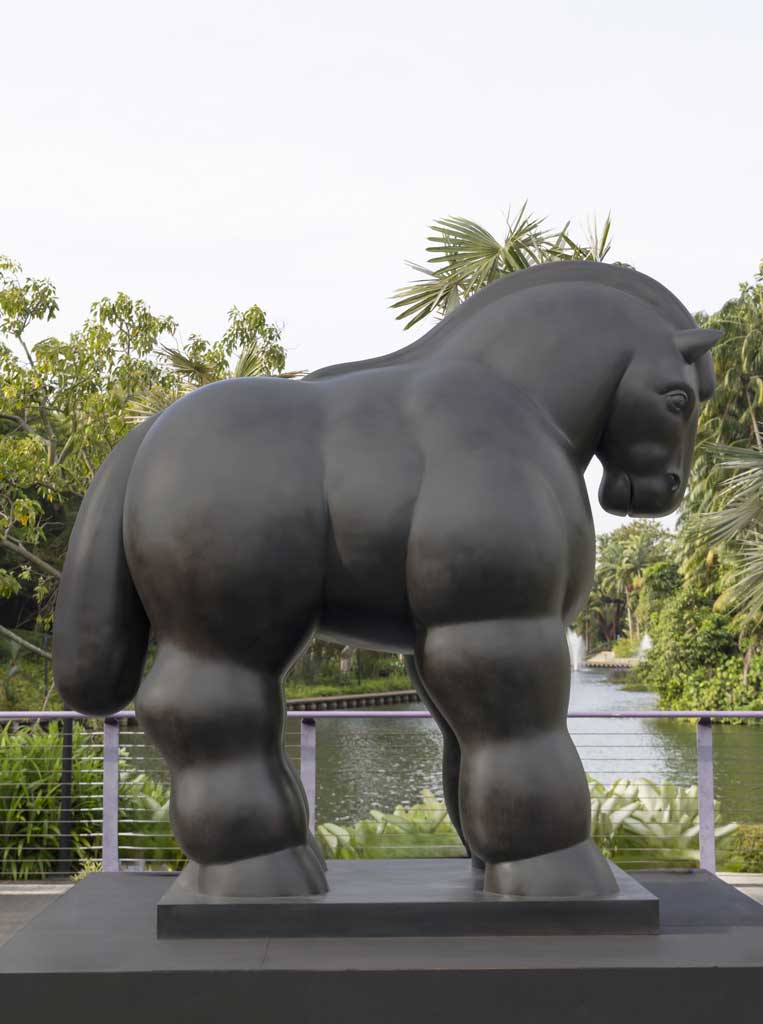 Fernando Botero (1932-2023), Horse, 2006. Bronze. 334.7×299.7×190.5 cm. This work is number two in an edition of three.
- Meditations on Minimalism. Minimalism emerged in the 1960s with the premise that art should possess an intrinsic reality, independent of imitation or representation. Defined by clean lines, simple geometric forms, and the absence of ornamentation, minimalists sought to reduce art to its essence, focusing on the purity of form and the inherent qualities of the chosen materials.
Names to watch: Donald Judd, Carl Andre, John McCracken, Dan Flavin, Robert Morrison, Joel Shapiro, Sol LeWitt, James Turrell.
- Return to Nature
Land art, also known as earth art or environmental art, emerged in the late 1960s when artists began using landscapes as their material. While most land art was created directly on the ground—sculpting site-specific earthworks or constructing structures with natural materials such as rocks, soil, or branches—some artists also brought their work indoors, creating sculptures and installations accessible to a wider audience.
Names to watch: Ugo Rondinone, Deborah Butterfield, Ana Mendieta, Robert Smithson, Andy Goldsworthy, Nancy Holt, Richard Long, Walter de Maria, Michael Heizer.
Names to watch: Yayoi Kusama, Maurizio Cattelan, Louise Bourgeois, Thomas Schutte, Alberto Giacometti, Henry Moore.
- Capturing the Psyche. In the aftermath of World War II, artists have increasingly adopted an introspective approach to sculpture, exploring the complexities of the human condition and the psyche. Delving into raw emotion, autobiographical narratives, and psychoanalytic concerns, these artists create brutally honest visual and conceptual works that address universal themes.
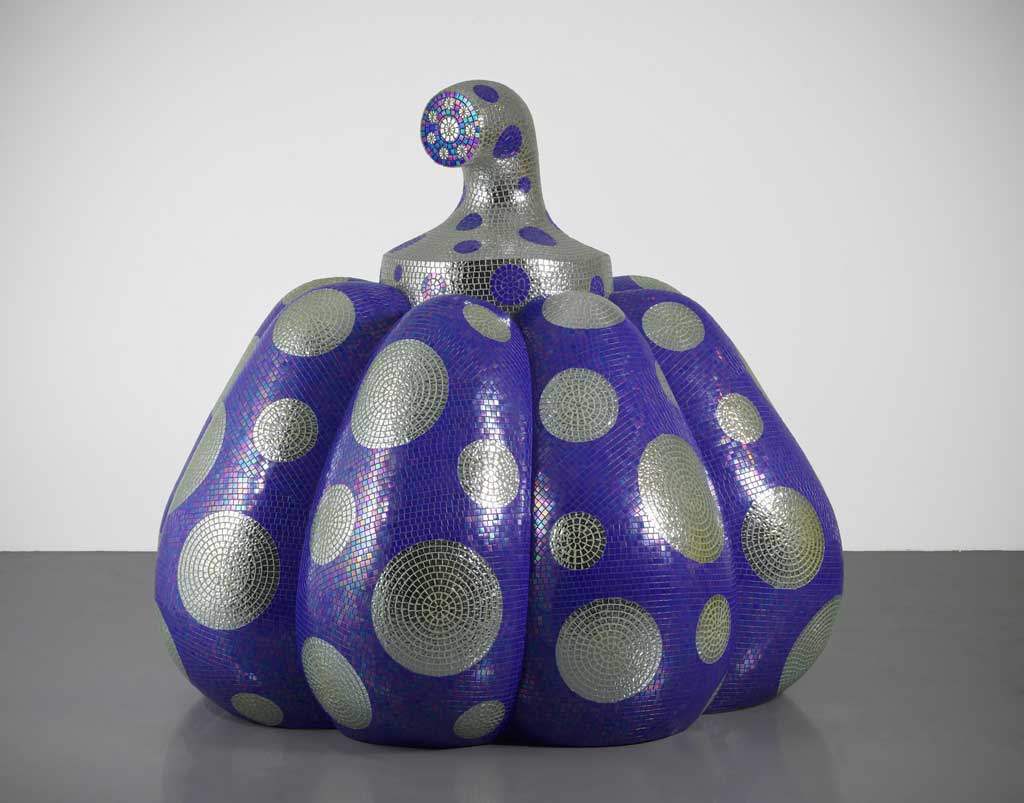 Yayoi Kusama (1929–2026), Starry Pumpkin, 2021. Fiberglass-reinforced plastic and tile. 181×202.2×203.6 cm.
- Investigating Identity. Today, many sculptors address the concept of identity to present authentic lived experiences, question social perceptions, and critique systemic problems, often giving visibility and nuance to underrepresented groups and individuals.
Names to watch: Nick Cave, David Hammons, Felix Gonzalez-Torres, Simone Leigh, Glenn Ligon, Jeffrey Gibson, El Anatsui.
- Materiality and craftsmanship. While the 20th and 21st centuries witnessed the rise of found objects and industrially manufactured sculptures, many sculptors continued to explore traditional techniques, fusing expert craftsmanship with experimental methods. By interacting with their materials on an almost spiritual level—be it wood, glass, fiber, or ceramic—these artists reveal the intrinsic qualities and expressive potential of their medium. This allows texture, weight, and form to shape the impact of the work.
Names to watch: Martin Puryear, Richard Artschwager, Roni Horn, Barbara Hepworth, John Chamberlain, Eva Hesse.
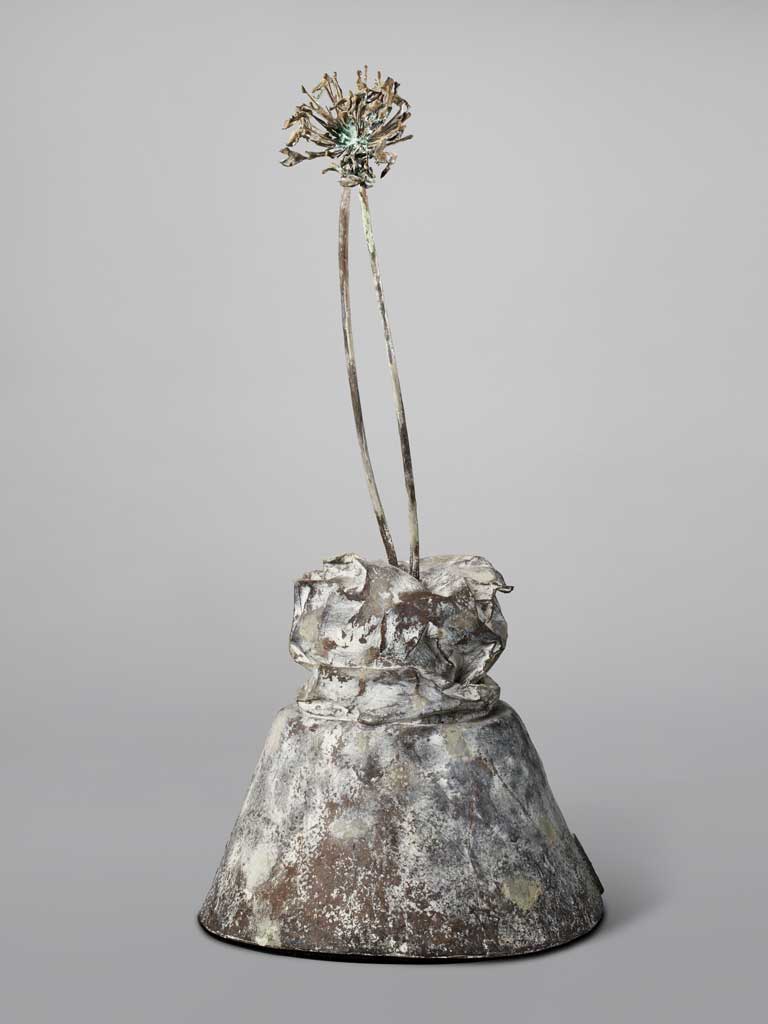 Cy Twombly (1928–2011), Untitled, 1997. Bronze. 73.3 × 35.6 × 35.6 cm.
- Design Reinvented
In 1919, Walter Gropius founded the Bauhaus State School in Weimar, Germany. By uniting fine and applied arts for the first time, the Bauhaus School fostered a new framework of thought that would influence avant-garde sculptors throughout the century, encouraging them to create functional objects that found beauty in simplicity and utility.
Names you should know: François-Xavier Lalanne, Claude Lalanne, Isamu Noguchi, Alberto Giacometti, Diego Giacometti, Salvador Dalí, the Haas brothers.