
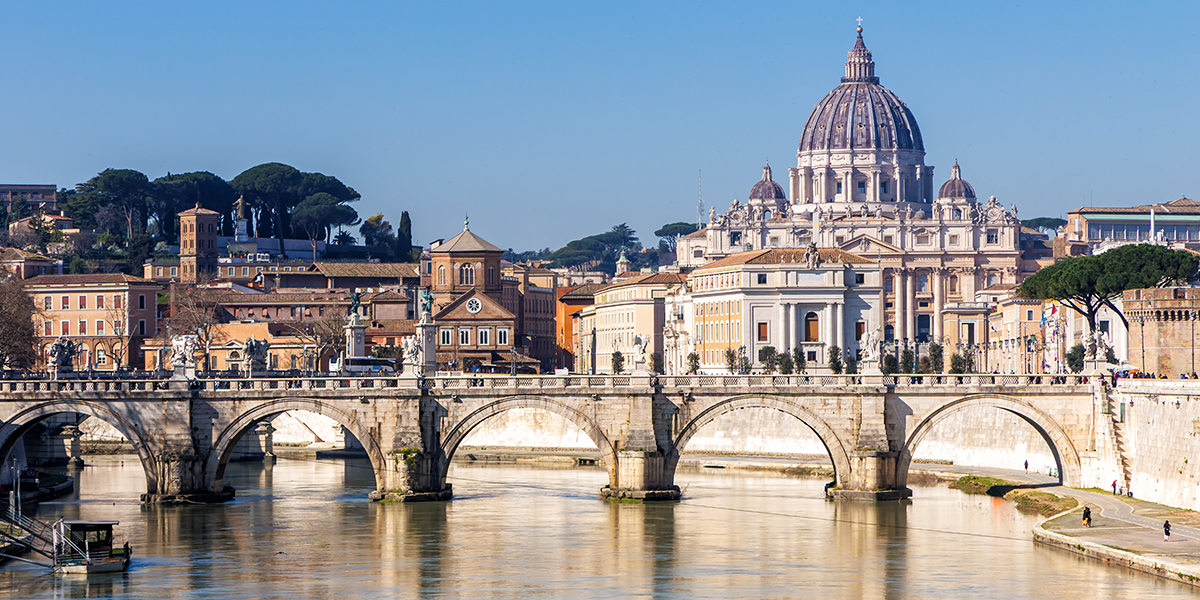
There are places that impress even before you step inside, and St. Peter's Basilica is one of them. Its enormous square, Bernini's colonnades, and the imposing dome that dominates the Rome skyline hint at the magnitude of one of the world's most important churches.
November 18 marks the 400th anniversary of the consecration of the current building. Four centuries of history since the completion of one of the most ambitious architectural projects of the Renaissance and Baroque periods, erected on the site where, according to Christian tradition, the Apostle Peter was buried.
To commemorate this anniversary, Civitatis offers a tour of the corners, works of art, and essential spaces that make this Vatican monument a must-see for any traveler.
What to see inside St. Peter's Basilica?
- Michelangelo's Pietà. Just inside the Basilica, in a chapel to the right, stands one of Michelangelo's most famous sculptures. The Pietà depicts the Virgin Mary holding the body of Christ and was created by the artist when he was still very young.
Besides its extraordinary level of detail, the work holds a curious feature: it is the only sculpture that Michelangelo signed. His name can be seen on the band across the Virgin's chest, a detail that often goes unnoticed by those who see the work for the first time.
- Bernini's Baldacchino, the main feature of the center of St. Peter's Basilica.At almost 30 meters high, the Baldacchino of St. Peter rises beneath the great dome and above the papal altar. Created by Gian Lorenzo Bernini in the 17th century, its enormous bronze Solomonic columns make it virtually impossible not to stop and admire it.
Its location is also not accidental. The baldachin marks one of the most important points in the Basilica: beneath the altar lies the tomb of Saint Peter, considered by the Catholic Church to be the first Pope, according to Christian tradition.
- Michelangelo's dome offers one of the best views of Rome. Michelangelo redefined the dome's design in the 16th century, shaping one of the great icons of the Roman skyline. The experience is completely transformed upon ascending to the top of the dome. From the summit, you can admire Saint Peter's Square, the Via della Conciliazione, and much of Rome. Before reaching the viewpoint, the tour also allows you to approach the interior of the dome itself and observe the basilica's dimensions from a different perspective.
But St. Peter's Basilica is much more than its great masterpieces. Each chapel, sculpture, or monument holds centuries of history and symbolism that often go unnoticed during a self-guided visit. “Many travelers are impressed by the sheer size of St. Peter’s Basilica, but what truly makes the visit special is understanding the significance of the works it houses. That’s where the guide makes all the difference, helping to uncover details, stories, and curiosities that would otherwise go completely unnoticed,” says David Fernández, Head of Communications at Civitatis.
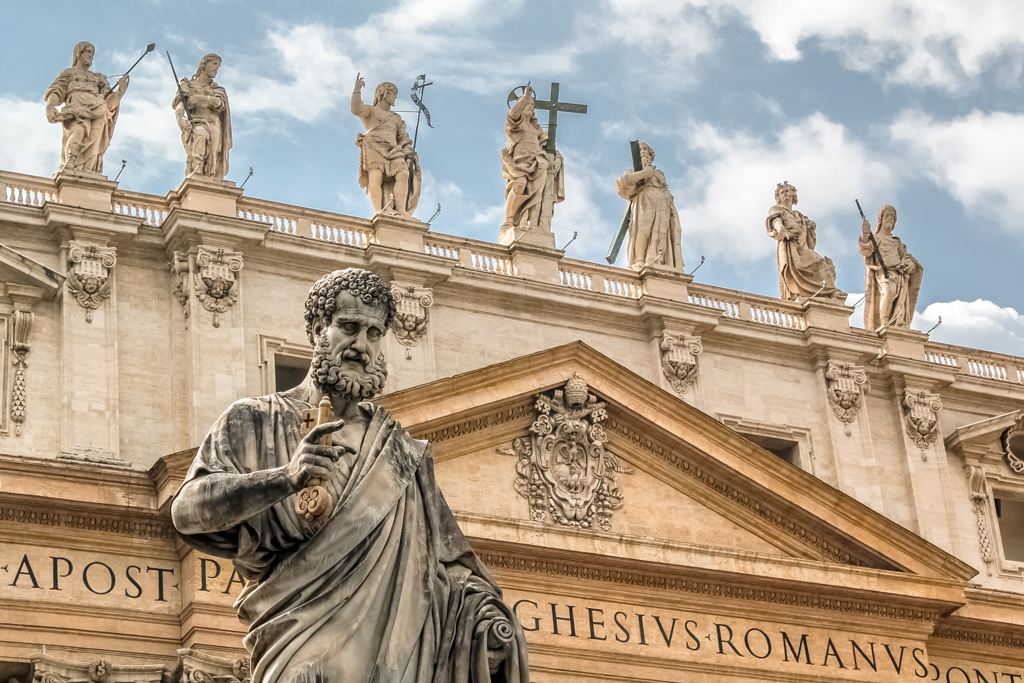 An average of 12 million people visit St. Peter's Basilica annually.
Where is St. Peter’s tomb? Beneath the high altar of the Basilica lies one of its most significant sites: the tomb attributed to the Apostle St. Peter. Tradition places his burial here after his martyrdom in Rome, which is why the first basilica was built here in the 4th century by order of Emperor Constantine.
Surrounding the tomb is the Vatican Necropolis, a space that preserves ancient Roman and early Christian tombs. Exploring this area allows you to descend, literally, to the origins of St. Peter and understand why the Basilica was built precisely in this location.
How much does it cost to visit St. Peter's Basilica?
Entrance to St. Peter's Basilica is free. To explore its interior at a leisurely pace and admire some of its most iconic works, such as Michelangelo's Pietà, Bernini's Baldacchino, and the Chair of St. Peter, it is recommended to dedicate between one and two hours.
According to data from the Basilica itself, it receives an average of 12 million visitors per year, which is equivalent to about 33,000 people per day. Furthermore, since the end of the pandemic, the number of visitors has continued to grow, to the point that in October 2025, more than 100,000 visitors were recorded in a single day, reflecting the enormous interest it continues to generate among travelers and pilgrims from all over the world.