planeta azul •
blue planet
104
·amura·
Texto /
Text:
• Foto /
Photo: Alberto Friscione Carrascosa
F
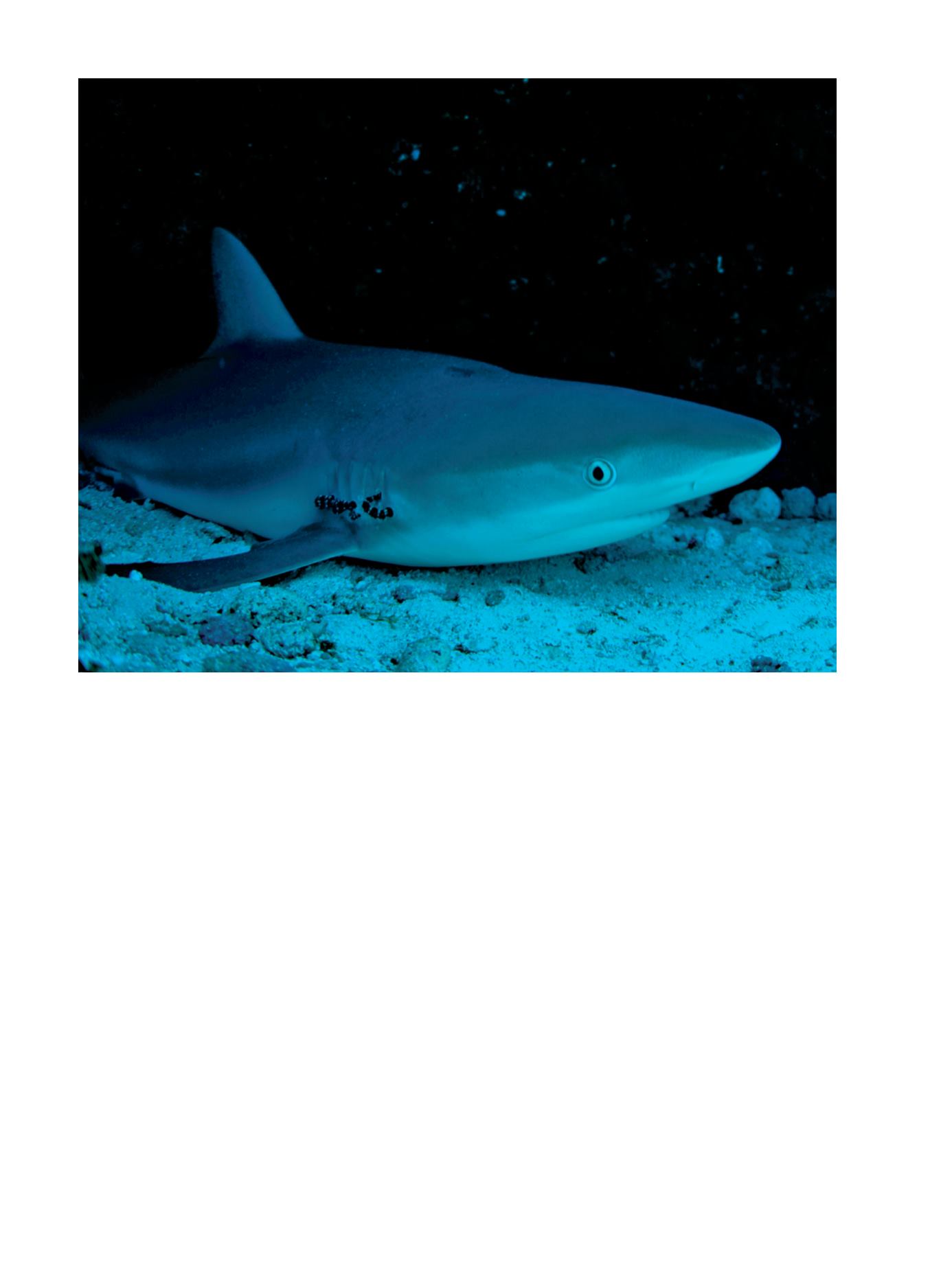
or a long time it was thought that sharks
were unable to sleep because they had to
obtain oxygen from the water while they
swam, apart from that the underwater bladder is
not designed for these animals to rest on the sea bed.
The first sharks that couldbe studied scientifically in
their natural habitat while they rested were carpet
sharks, which have a slow metabolism. Up to that
time, sharks will fast metabolisms had not been
seen resting.
It was a long before a young lobster fisherman
from Isla Mujeres, Carlos García, better known as
”El Válvulas”,
discovered a cave behind the island
where sharks went in to sleep. He says that they
were very large and the type that bites. When the
famous cameraman and adventurer Ramón Bravo
heard about them, he was living in Mexico City
and did not hesitate to gather up his diving and
D
urante mucho tiempo se pensó que los tiburo-
nes no podían dormir por tener que obtener el
oxígeno del agua mientras nadaban, aparte de
que la vejiga natatoria no está diseñada para que
estos animales descansen en los fondos marinos. Los
primeros tiburones que se pudieron estudiar científi-
camente en su medio natural mientras descansaban
fueron los tiburones gatas, de metabolismo lento.
Hasta ese momento no se había visto descansar a un
tiburón de metabolismo rápido.
Pasó mucho tiempo antes que un joven pescador
de langostas de Isla Mujeres, Carlos García, mejor
conocido como ”El Válvulas”, descubriera una cueva
atrás de la isla, donde los tiburones se metían a dor-
mir. Cuenta que eran muy grandes y de los que muer-
den. Esta historia llegó a oídos del famoso
camarógrafo y aventurero Ramón Bravo, que en ese
entonces vivía en la Ciudad de México y no dudó en
Sleeping sharks in the Mexican Caribbean
Tiburones dormidos del
Caribe mexicano


