compás mx •
compass mx
94
·amura·
Contoy is a very important area for biodiversi-
ty, both on land and in the sea because it is where
the Atlantic Ocean and the Caribbean Sea join.
Here, the second-largest coral reef in the world
begins, the Great Mayan Reef, which if we follow it
and pay attention, we can discover some very
beautiful underwater landscapes, as well as
wrecks of ships of all eras that were trapped there.
The first settlement next of this great coral
barrier is the mystical Isla Mujeres, which with its
length of 7.5 km is the perfect place to spend
incredible vacations. The famous filmmaker and
naturalist, the late Ramón Bravo chose to live here
because of its peace and tranquility.
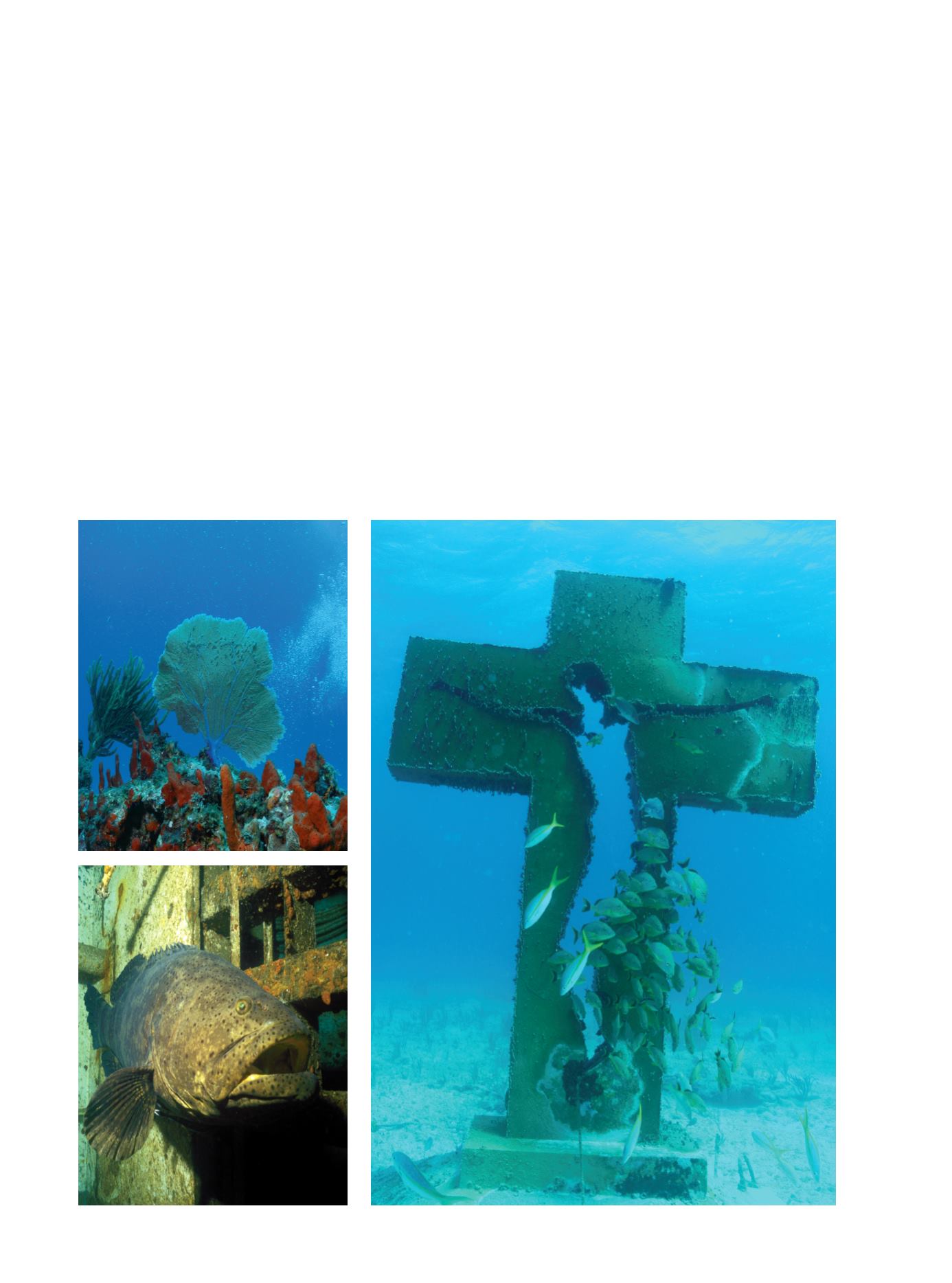
One of the places I recommend to dive are the
famous
manchones
, which are shallow, where we
can observe the moose horn, brain, and deer horn
coral, sea biscuits, which together give shelter so
that large schools of grunt fish and yellow-finned
snappers can live peacefully, while the voracious
rubias and the striped Sergeant fish waited anx-
iously to be fed by the passionate divers or
snorkelers. The beautiful sculpture known as the
“La Cruz de la Bahía” (“The Cross of the Bay”), has
been placed here, which measures 3 meters in
prácticamente donde se juntan el océano Atlántico y
el mar Caribe. También aquí da inicio el segundo arre-
cife más grande del mundo, el Gran Arrecife Maya,
que si lo seguimos y ponemos atención podemos
descubrir unos bellos paisajes submarinos, así como
embarcaciones de todos los tiempos que allí queda-
ron atrapadas.
La primera población que toca esta gran barrera
coralina es la mística Isla Mujeres, que con su 7.5
kilómetros de largo es perfecta para pasar unas
increíbles vacaciones. Lugar que por su tranquilidad
escogió para vivir el famoso cineasta y naturalista
Ramón Bravo, que en paz descanse.
Entre los lugares que recomiendo para bucear
están los famosos manchones, sitios poco profundos,
donde podemos observar a los corales cuernos de alce,
cerebros, cuernos de venado, galletas de mar y que en
su conjunto dan albergue para que los grandes cardú-
menes de peces ronco y pargos aleta amarilla puedan
vivir tranquilos. Mientras los voraces rubias y sargento
rayados esperan ser alimentados por los apasionados
al buceo o al snorkel. En este mismo sitio se colocó una
bella escultura conocida como “La cruz de la bahía”,
mide tresmetros de alto por dos de ancho, y en su cen-
tro presenta la figura de un Cristo al vacío.


