116
·amura·
planeta azul •
blue planet
nearly 22 hours across a calm Pacific Ocean to trav-
el the 240 km to arrive at our destination. We used
this time to make new friends such as Jose Luis
Perez Rocha and Thomas Fernandez, as well as lis-
tening carefully to the talks offered by our shark
expert, Pilar Blanco. The Island of Guadalupe is
located in the enormous Pacific Ocean and politi-
cally belongs to the frontier state of Baja
California. The Island of Guadalupe is Mexico’s last
frontier in its most north-westerly extreme. It’s
volcanic origin and its distance from the mainland
affords it a unique biodiversity that together with
its abrupt and desolate topography awoke our
amazement.
We arrived at the island in the early evening
and right away, the crew put the cages in the water
and started to prepare the bait of tuna, blood and a
kind of oil, which when mixed and thrown into the
water never fails to attract the great white shark.
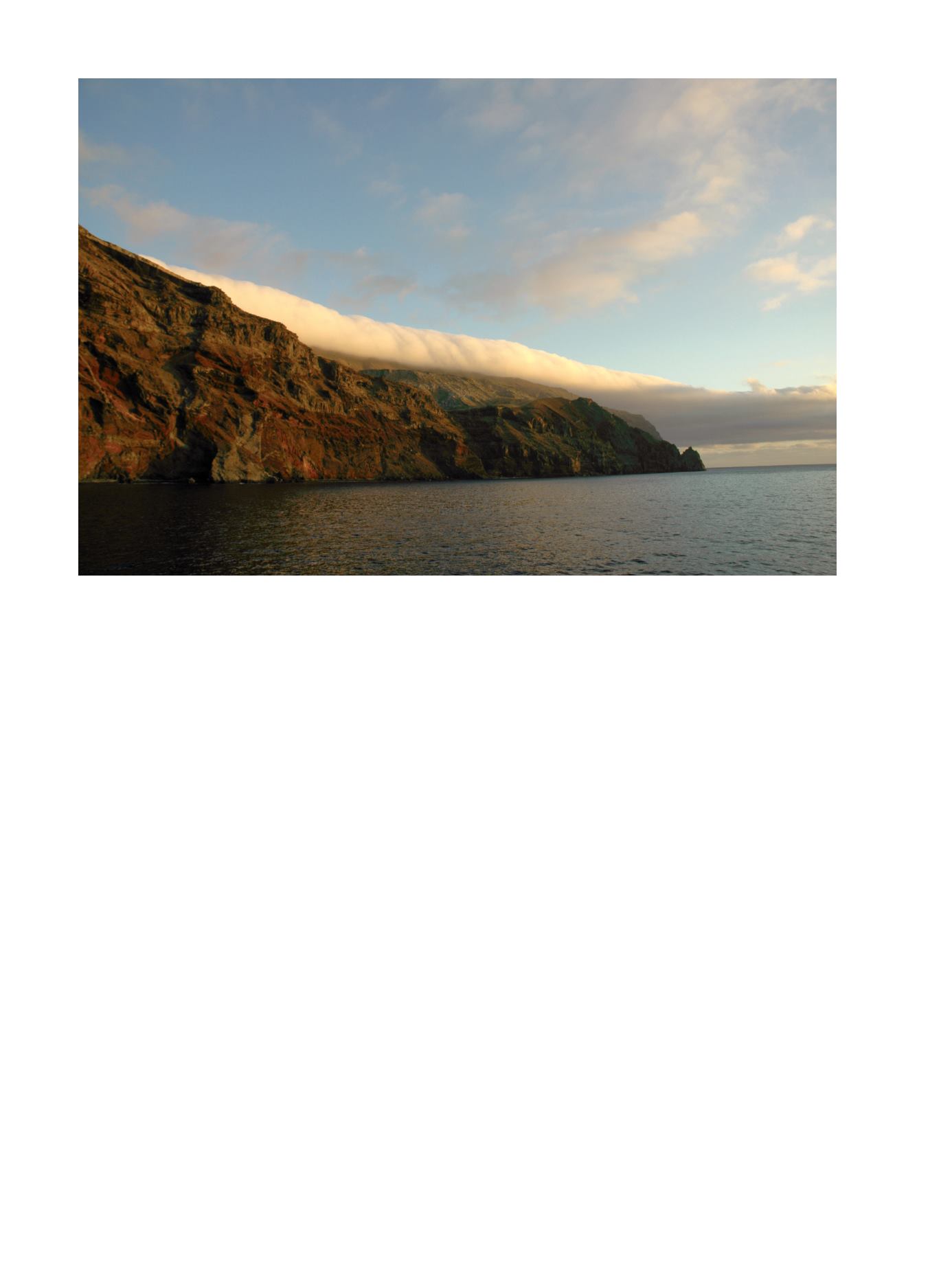
In the morning I found myself on deck watching
the sunrise that rose silently and deceivingly
quickly, painting the clouds that hung over the sea
a subtle pink color. The island was totally illumi-
nated in a matter of seconds showing off its
imposing cliffs and the families of Guadalupe sea
lions and enormous elephant seals. My thoughts
were interrupted by our Captain’s Mike
Carcharodon shouts of “Shark, shark!” Leaning
over the deck, I could see the enormous shadow of
my first white shark. The dining area suddenly
emptied and stress took hold of all the passengers
as we rushed to put on our thick wetsuits to pro-
tect us against the cold water and having to spend
a long time in the cages without moving while
waiting for the Lord of the seas to appear.
hasta llegar a nuestro destino. Tiempo que aprove-
chamos para hacer nuevos amigos, como José Luis
Pérez Rocha y Thomas Fernández, además de escu-
char con atención las pláticas que nos ofreció Pilar
Blanco, la experta en tiburones. La Isla Guadalupe se
encuentra ubicada en el enorme océano Pacífico y
pertenece políticamente al Estado fronterizo de Baja
California. La Isla Guadalupe es la última frontera de
México en su extremo más occidental y septentrio-
nal. Su origen volcánico y su lejanía del continente le
confiere una biodiversidad única, que junto con su
topografía abrupta y agreste despierta el asombro
de cuantos la visitamos.
Llegamos a la isla en la tarde-noche, y enseguida la
tripulación del barco depositó las jaulas en el agua y se
dedicaron a preparar la carnada, que consiste en atún,
sangre y algún tipo de aceite que al mezclarlo y arro-
jarlo al agua atraen irremediablemente al gran tiburón
blanco. Me encontraba en cubierta observando el ama-
necer que llegó con sigilo y engañosa rapidez, pintan-
do las nubes que pendían sobre el mar, de un sutil color
rosado. En cuestión de segundos la isla quedó total-
mente iluminada, mostrando sus imponentes acantila-
dos y a las familias de lobos de Guadalupe, así como a
los enormes elefantes marinos.
Mis pensamientos se vieron cortados por los gri-
tos de “tiburón, tiburón”, que realizaba nuestro capi-
tán Mike Carcharodon, y al asomarme por cubierta
pude descubrir la enorme sombra de mi primer tibu-
rón blanco. El comedor quedó vacío y el estrés se
apoderó de todos los pasajeros, que apresurados
intentamos ponernos nuestros trajes de buceo, muy
gruesos, pues el agua es fría y estaríamos mucho
tiempo en las jaulas sin movernos, a la espera de que
haga su aparición el señor de los mares.


