



 126 / 176

·amura·
124
coOTFrWaOcZ • coOTFrWaciwO
Cuatrociénegas
&TtB SFTFSWB VCJDBEB FO FM FTtBEo EF $oBIVJMB Mn-
YJDo FO VOB [oOB B MB RVF TF DoOoDF DoNo £MB QVFStB
EFM EFTJFSto¤ FT VO TJtJo QSJWJMFHJBEo QoS FM QMBOFtB Z FM
tJFNQo EoOEF EJWFSTBT FTQFDJFT FO FTQFDJBM SFQtJMFT
QFDFT Z toStVHBT TF NBOtJFOFO FO QFSGFDto FTtBEo EF
DoOTFSWBDJwO -BT DBSBDtFSrTtJDBT HFoHSg¬DBT Z FDoMw-
HJDBT EF FTtB DVFODB SJDB FO NBOBOtJBMFT RVF GoSNBO
DJnOFHBT ¡EF BIr TV OoNCSF MF IB QFSNJtJEo QSFTFSWBS
JOtBDtBT FTQFDJFT RVF TF SFNoOtBO B nQoDBTNVZ SFNo-
tBT DoNo TJ Oo IVCJFSBO QBTBEo MoT TJHMoT
5BM FT FM DBTo EF MB toStVHB CJTBHSB
Terrapene
coahuila
VOB EF MBT NgT QSJNJtJWBT EFM NVOEo Z MB
DVBM QVFEF DFSSBS IFSNntJDBNFOtF TV DBQBSB[wO BM
SFtSBFS TVT FYtSFNJEBEFT Z DBCF[B BEFNgT EF otSBT
FTQFDJFT RVF TF IBO DoOWFStJEo FO FM oCKFto EF FTtV-
EJo EF OVNFSoToT DJFOtr¬DoT JOtSJHBEoT QoS MBT JEFB-
MFT DoOEJDJoOFT EF FTtB GnStJM CJwTGFSB QBSB DoOTFSWBS
FKFNQMBSFT EF oSB Z GBVOB RVF FO otSBT QBStFT EFM
QMBOFtB IBO EFTBQBSFDJEo QoS DoNQMFto
0tSB FTQFDJF DBSBDtFSrTtJDB EF FTtB SFHJwO FT FM WFOBEo
EF DoMB CMBODB FM DVBM QoS EFTHSBDJB TF FODVFOtSB FO QFMJ-
HSoEFCJEoBMBDB[BJMFHBM BEFNgTEFGFMJOoTDoNoFMQVNB
Z oToT OFHSoT RVF BOtFT ToMrBO GoSNBS QBStF EFM QBJTBKF Z
BIoSB SBSBNFOtF TF WFO &OFM DBToEF MBoSB BCVOEBOFT-
QFDJFTNFEJDJOBMFT DoNo MB HoCFSOBEoSB
Larrea tridenta
o MB MFDIVHVJMMB
Agave lechuguilla
-B QSoEVDDJwO GBNoTB
EF WJOoT FO FTtB SFHJwO FT GBWoSFDJEB QoS MB WJE RVF TF HF-
OFSB FO FTtF tFSSJtoSJo QFSGFDtB QoS MBT DoOEJDJoOFT DMJNg-
tJDBT RVF GBWoSFDFO TV TBCoS Z DBMJEBE
Cuatrociénegas
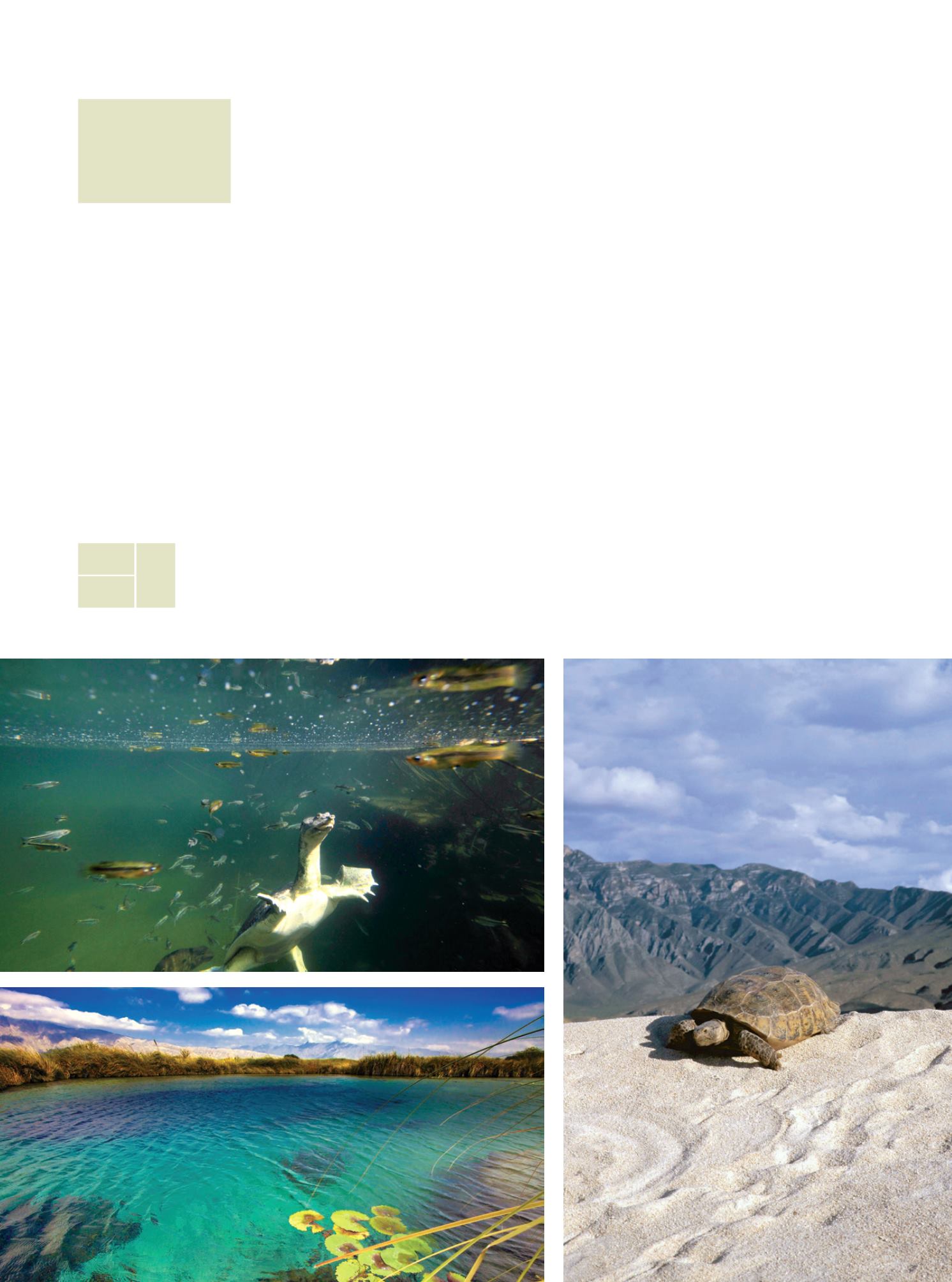
This reservoir located in the Estate of Coahuila,
Mexico, is found in an area known as “the door of the
desert”, it’s a privileged site by Earth and time. Here,
several species, -especially reptiles, fish and turtles-
are maintained in perfect balance due to their state
of conservancy. The geographic and ecological char-
acteristics of this watershed rich in springs formCié-
negas –word in spanish-, which has allowed it to pre-
serve these species intact from very remote times,
seemingly as if centuries hadn’t passed through it.
Such is the case of the hinge turtle (Terrapene
coahuila), which is one of the most primitive in the
world, it is able to hermetically seal its shell and re-
tain its extremities and head; other species have
turned into object of various scientific studies that
have been created by the intrigue of the ideal condi-
tions in this fertile biosphere to conserve specimens
of flora and fauna that in other parts of the world
have completely vanished.
Another speciewhich is important in this region is
thewhite taileddeer, whichunfortunately is anendan-
gered specie due to illegal hunting, as well as pumas
and black bears which used to roam the landscape and
are now rarely seen. In the case of the flora, medicinal
herbs can be easily found, such as gobernadora (Larrea
tridentata), or the lechuguilla (Agave lechuguilla). the
famouswineproductionof this region is favoredby the
strains generated in this territory, perfect for the cli-
matic conditions that encourage it’s taste andquality.
&M NVOEo DVFOtB DoO
OVFWBT SFTFSWBT EF
CJwTGFSB QoS MB U/4&$0
EFTEF FM
/
The world has 22 new
biosphere reserves by
UNSECO since 2009.
-BtoStVHBCJTBHSB
VOGwTJMWJWJFOtFEF
$VBtSoDJnOFHBT /
The hinge turtle, a living
fossil at Cuatrociénegas.
%VOBTEFZFToFO
$VBtSoDJnOFHBT $oBIVJMB
MnYJDo /
Cuatrociénegas
gypsum dunes, Coahuila,
Mexico.
-oTNBOBOtJBMFTToOFM
FMFNFOtoDMBWFEF MBSJRVF[B
OBtVSBMEFFTtBSFTFSWB /
The springs are the key
element of the natural
wealth of this nature
reserve.
1
2
3
4
Foto /
Photo
:
-*(5)R00M / DJtV HVJEF / 4*-7*A 7*(0 / tFE TNJtI / $A15*7 / A84A5