


 128 / 176

·amura·
126
coOTFrWaOcZ •
conservación
Fuerteaventura
4F tSBtB EF VOB JTMB RVF GoSNB QBStF EF MBT $BOBSJBT
TJFOEo MB TFHVOEB JTMB EF NBZoS FYtFOTJwO FO FTtF BS-
DIJQJnMBHo 4V DoNQMFKJEBE EF FDoTJTtFNBT MF QFSNJtF
JOtFHSBS EFTJFSto Z DoTtB BTr DoNo [oOBT TFNJgSJEBT
EoOEF VOB FOoSNF DBOtJEBE EF FTQFDJFT IBCJtBO JO-
DMVZFOEo NBNrGFSoT NBSJOoT DoNo DBDIBMotFT Z EFM¬-
OFT BEFNgT EF toStVHBT NBSJOBT FO QFMJHSo EF FYtJO-
DJwO RVF EFToWBO FO MB DoTtB Z VOB JONFOTB DBOtJEBE
EF BOJNBMFT tFSSFTtSFT Z BWFT
&TtB SFTFSWB EF CJoTGFSB FT tBNCJnO VO DFOtSo EF
JOWFTtJHBDJwO HFo QBMFoOtoMwHJDB WJtBM QBSB FM QMBOF-
tB BTr DoNo VOB GVFOtF EF FOFSHrBT SFOoWBCMFT DoNo
MB FwMJDB Z ToMBS TJFOEo TV NoEFMo VO FKFNQMo EF BQMJ-
DBDJwO QoS QBStF EF MB %JSFDtJWB EF MB UOJwO &VSoQFB
ToCSF &OFSHrBT RFOoWBCMFT
&M FDotVSJTNo FT VOB GVFOtF JNQoStBOtF EF JOHSF-
ToT QBSB FTtF tFSSJtoSJo Z TF CBTB FO VO NoEFMo TVT-
tFOtBCMF &TtB CJwTGFSB DoNQSFOEF BMSFEFEoS EF
,N
2
DoO VO MJtoSBM WJSHFO EF
,N Z
ZBDJNJFO-
toT QBMFoOtoMwHJDoT BTr DoNo NoOVNFOtoT OBtVSB-
MFT DoNo MB MoOtBvB EF 5JOEBZB Z QBSRVFT OBtVSBMFT
DoNo MB *TMB EF -oCoT ¡SFQMFtB EF MoCoT NBSJOoT Z
$oSSBMFKo EoOEF tBOto FM FDotVSJTNo DoNo MB JOWFTtJ-
HBDJwO DoOVZFO FO VO FRVJMJCSJo ToTtFOJCMF
AEFNgT EF TV GBVOB NBSJOB ToCSFTBMFO FTQFDJFT
DoNo FM IBMDwO tBHBSotF MB BWVtBSEB IVCBSB BTr DoNo
WBSJBT BWFT SBQBDFT Z NgT EF
FTQFDJFT EF FOEF-
NJTNoT DBOBSJoT
Fuerteaventura
This is an island that forms part of Canarias, it’s the
second largest island with greatest extension in the
archipelago. It’s complexity of ecosystems allows it
to integrate deserts and coastlines, as well as semi
dry zones, where a wide range of species inhabit it,
including sea mammals such as sperm whale and
dolphins, as well as sea turtles in danger of extinc-
tion that hatch their eggs on the cost and an im-
mense quantity of terrestrial animals and birds.
This Biosphere Reserve is also a geo-paleon-
tological research investigation center, it’s vital
for the planet and it’s also a source of renewable
energies, for example: eolic and
solar.It’s model is
an example on behalf of the Directive of the Euro-
pean Union in Renewable Energies.
Ecotourism is also an important source of
income in this for this sustainable model. It’s
biosphere is composed of 1,660 Km
2
, with a vir-
gin litoral of 100 Km and 50 of paleontological
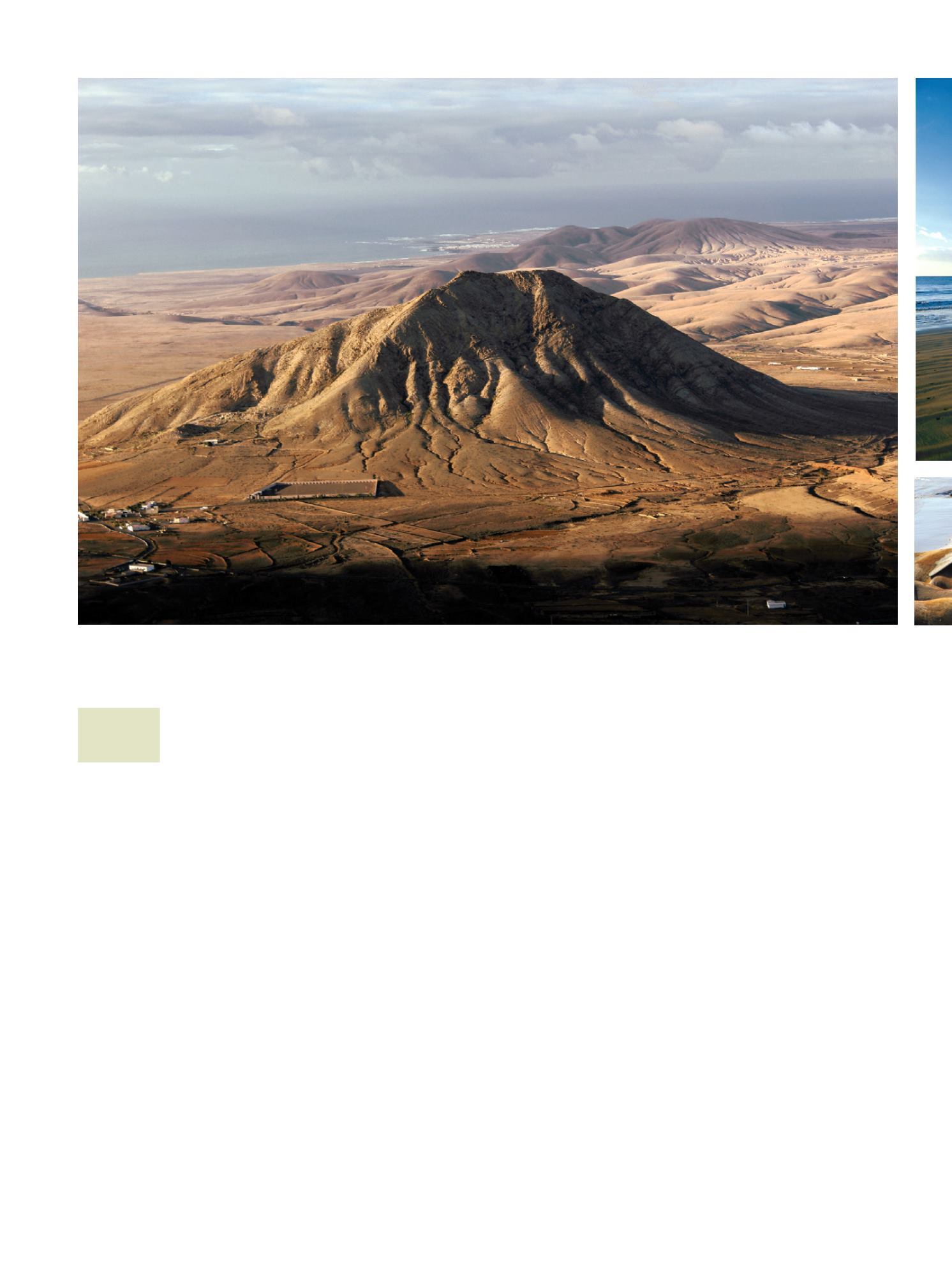
deposits , as well as natural monuments such as
Tindaya Mountain and natural parks like Isla de
Lobos - which is full of sea lions- and Corralejo,
where ecotourism and investigation are fusioned
to maintain this sustainable balance.
It also has a vast sea fauna, species like the
tagarote falcon standout, the avutarda hubara,
several rapacious birds and over 480 endemic
species of canaries.
9
MoOtBvB5JOEBZB
VONoOVNFOto
OBtVSBMEF
FVFStFBWFOtVSB /
Tindaya Mountain, a
natural monument
in Fuerteaventura.