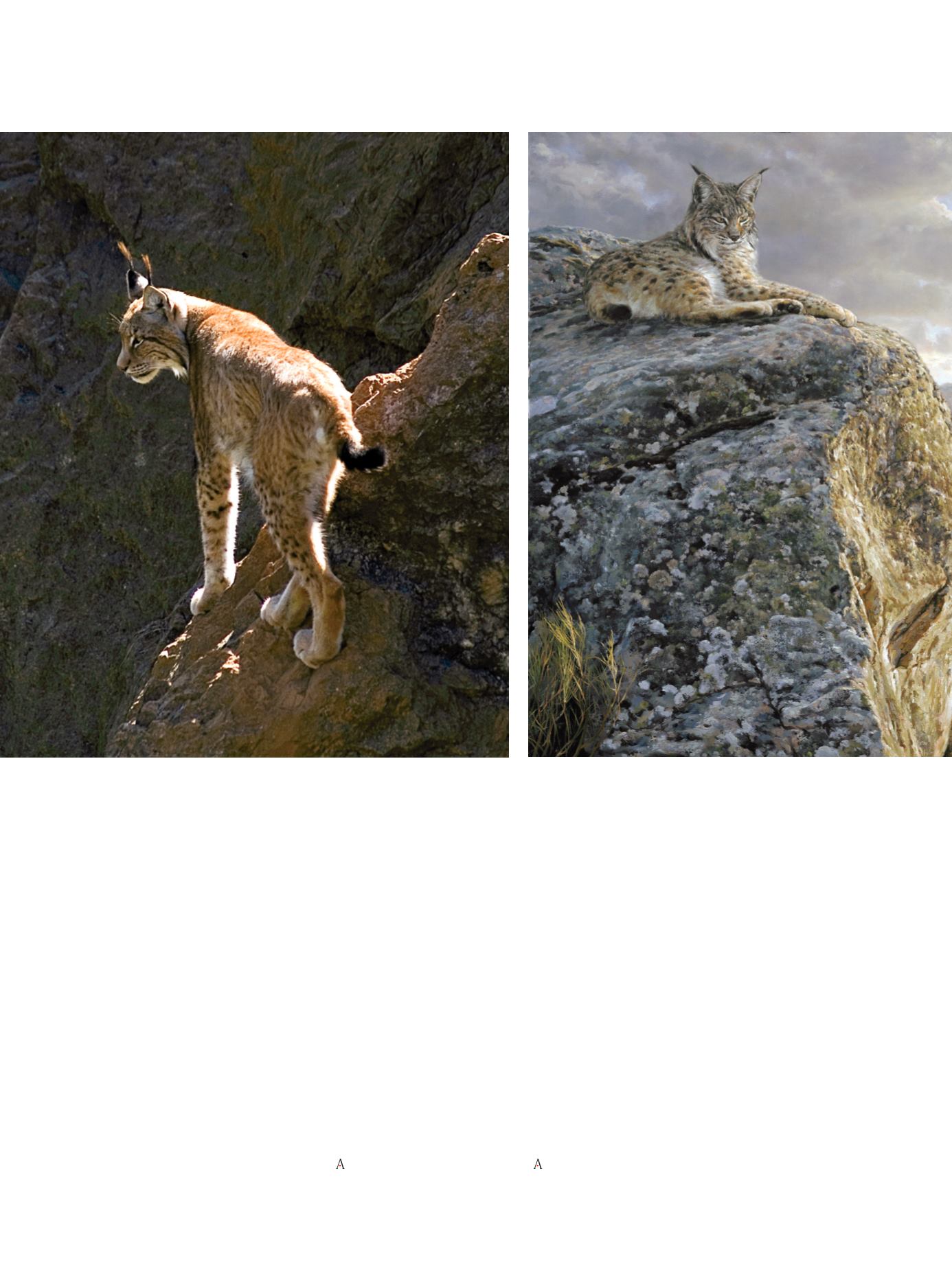
La reproducción era uno de los aspectos menos
conocidos de la biología del lince ibérico. Su periodo
de gestación es de 60 a 70 días aproximadamente y
puede llegar a tener de tres a cinco crías. La época de
apareamiento es entre los meses de enero y marzo.
Durante la crianza se le pude encontrar en refugios
naturales como troncos o cuevas. Es un cazador so-
litario, durante el invierno puede tener actividad
tanto en el día como en la noche, mientras que en el
verano es de hábitos nocturnos; es un ágil trepador
de árboles y se adapta fácilmente a cualquier tipo de
vegetación; inclusive se le puede observar deambu-
lando en poblados cerca de su área de caza.
Actividades como la ampliación de la frontera
agrícola o la deforestación han amenazado su super-
vivencia, ya que esto ha fragmentado las regiones
consideradas como su hábitat natural, además de dis-
minuir sus fuentes de alimento. Por lo que diferentes
programas de conservación realizan un gran esfuerzo
por evitar su extinción.
conservancy •
conservación
The reproduction was one of the aspects less
known in the biology of the Iberian Lynx. Its preg-
nancy period is approximately 60 to 70 days and
the females can carry three to five cubs. The mat-
ing period is between January and March. During
the breeding time these animals can be found in
natural refuges such as caves or tree trunks. It is
a solitary hunter, during winter it can be active in
daytime as well as at night, while in summer its
habits are nocturnal; it can climb trees quite eas-
ily and it easily adapts to any vegetation, it can
also be observed wandering in towns close to its
hunting area.
Activities such as increasing the agricultural bor-
derlineorthedeforestationhavethreateneditssurvival,
for these end up fragmenting the regions considered
its natural habitat, as well as diminishing its natural
sources of food. Therefore, it is important to consider
that if no effort is made to preserve the lynx in this re-
gion, this specieswill endupdisappearing.
·amura·
91


