los conquistadores •
the conqueros
114
·amura·
These alloys to the body indicate the triumph
of the home in the body´
s colonization, the extrem-
ity of the sanitization methods is represented by
the incrustation of the drainpipes directly on the
surface of the body (“Untitled”, 2002-2004), but
indicates at the same time, a poetic resistance: the
drainpipes become passing valves, drains where
desire flows freely.
Intheinstallationpresentedonthe“DIACenterfor
the Arts” (Nueva York, 1992), Gobermade an authentic
plumbing job in the gallery, achieving that the water
would circulate through the eight sinks that the
installation included. These were set on walls, hand
painted, which showed the rural scene of a forest.
Two windows with bars place high on the walls
showed a pale sky created with artificial lighting.
On the floor the newspaper productions would be
piled up, some modified, others were originals,
with articles about the authority’s incompetence
in relation to the HIV epidemic that in that time
was diminishing the population.
Gober looks on nature as a cultural device, the
social lavatory that pressures the minorities to the
periphery and, finally, the shape of the bars that
turn the scene into a prison place.
Everything points that there is no exterior of
the culture. As much as in the processes of subjec-
tivity as in the resource of nature as a device, are
linked to the cultural moldings, but the water and
the drainpipes opened respiration valves to the
chronic systems, on which the cultural systems
are based on.
indica a su vez, una resistencia poética: los desagües
se convierten en válvulas de paso, sumideros por los
que circula libremente el deseo.
En la instalación que presentó en el “DIA Center
for the Arts” (Nueva York, 1992), Gober realizó en la
galería un auténtico trabajo de fontanería, logrando
que circulara agua por los ocho lavabos que incluiría
la instalación. Estos fueron fijados sobre las paredes,
pintadas a mano, que mostraban la escena pastoril
de un bosque.
Dos ventanas con barrotes colocadas a lo alto
de las paredes mostraban un cielo cerúleo logrado
con iluminación artificial. Sobre el piso se apilaban
reproducciones de periódicos, algunas modificadas,
otras originales, con notas acerca de la incompe-
tencia por parte de las autoridades en relación con
la epidemia de VIH que en aquella época estaba
mermando a la población.
Gober recurre a la naturaleza como artificio cul-
tural, a la ablución social que presiona las poblacio-
nes minoritarias a la periferia y, por último, a la
figura de los barrotes que convierten la escena en un
lugar carcelario.
Todo parece indicar que no hay un afuera de la
cultura. Tanto los procesos de subjetivación como
el recurso de la naturaleza como artificio, están
sujetos a las formaciones culturales, pero el agua y
los desagües abren válvulas de respiración a los sis-
temas endémicos, sobre los que se basan los siste-
mas culturales.
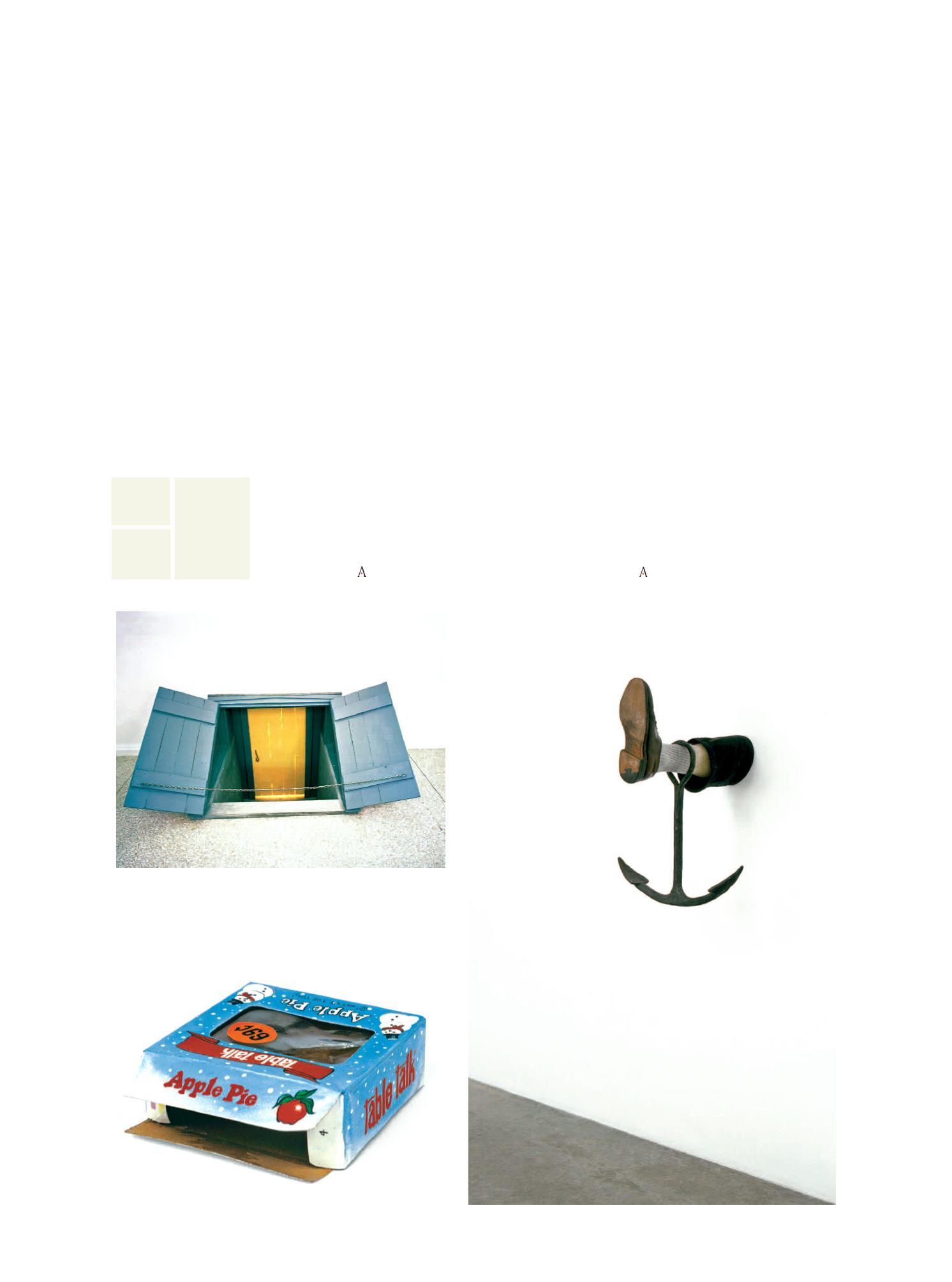
1. Untitled
2000-2001
Wood, paint, concrete, cast plastic
and human hair
Overall approx: 80 x 48 x 72 in; 203 x
122 x 183 cm
Above ground approx: 32 x 48 x 48 in;
81 x 122 x 122 cm
Below ground approx: 48 x 48 x 72;
122 x 122 x 183 cm
© Robert Gober, Courtesy Matthew
Marks Gallery, New York
2.
Untitled
2008
Copper, paint, paper, slumped glass
1 1/2 x 5 1/4 x 4 1/4 inches
4 x 13 x 11 cm
© Robert Gober, Courtesy Matthew
Marks Gallery, New York
3.
Leg with Anchor
2008
Forged iron and steel, beeswax, cotton,
leather, human hair
27 1/2 x 18 1/4 x 20 inches
70 x 46 x 51 cm
© Robert Gober, Courtesy Matthew
Marks Gallery, New York
1
2
3


