


 107 / 150

·amura·
103
Diseño •
Design
Convirtiendo el futuro distante
en nuestro presente inmediato
N
avigation has reshaped his-
tory, our way of thinking
and our connectivity with
the outside world. It has
fusedwithluxuryinforward-
thinkingmodels thatwishto
progress, be more efficient,
faster and more sustainable
without compromising leisure.
The ocean is a compelling force full of life and
unpredictable will. To design a vessel, one must
understand the engineering behind it, what im-
pact the wind will have on it, how the structure will
respond to different oceanic conditions, currents,
precipitations and endless difficulties that might
present themselves. The only way to improve them
is sailing, correcting and innovating.
Yacht designers often describe it as a “trial and
error” process that begins by setting the expecta-
tions and requirements the vessel has to meet, ac-
cording to what the client or shipyard has in mind.
It is crucial to establish what purpose the yacht will
serve, and focus exclusively on that idea. Design-
ers work mostly by instinct and experience. They
make calculations, assumptions and finally create
something new based on the knowledge they have
acquired in the field.
L
a navegación ha moldeado la his-
toria, nuestra forma de pensar y
nuestra conectividad con el resto
del mundo. Se ha fusionado con
el lujo en la creación de modelos
con visión a futuro que buscan
progresar, ser más eficientes, rá-
pidos y sustentables sin compro-
meter el confort.
El océano es una fuerza llena de vida y volun-
tad impredecible. Para diseñar un barco, se debe
comprender la ingeniería que lo respalda, el im-
pacto que tendrá el viento, y cómo responderá la
estructura a las diferentes condiciones oceánicas,
climáticas y otras dificultades que podrían presen-
tarse. La única forma de optimizarlo es navegando,
corrigiendo e innovando.
Los diseñadores de yates a menudo lo descri-
ben como un proceso de “prueba y error”, que co-
mienza estableciendo las expectativas y requisi-
tos que el cliente o el astillero tienen en mente. Es
crucial determinar qué propósito tiene el yate, y
concentrarse exclusivamente en esa idea. El traba-
jo de los diseñadores parte de su propio instinto y
experiencia. Hacen cálculos, suposiciones y final-
mente crean algo nuevo de acuerdo al conocimien-
to que han adquirido en el campo.
Turning the Distant Future into Our
Immediate Present
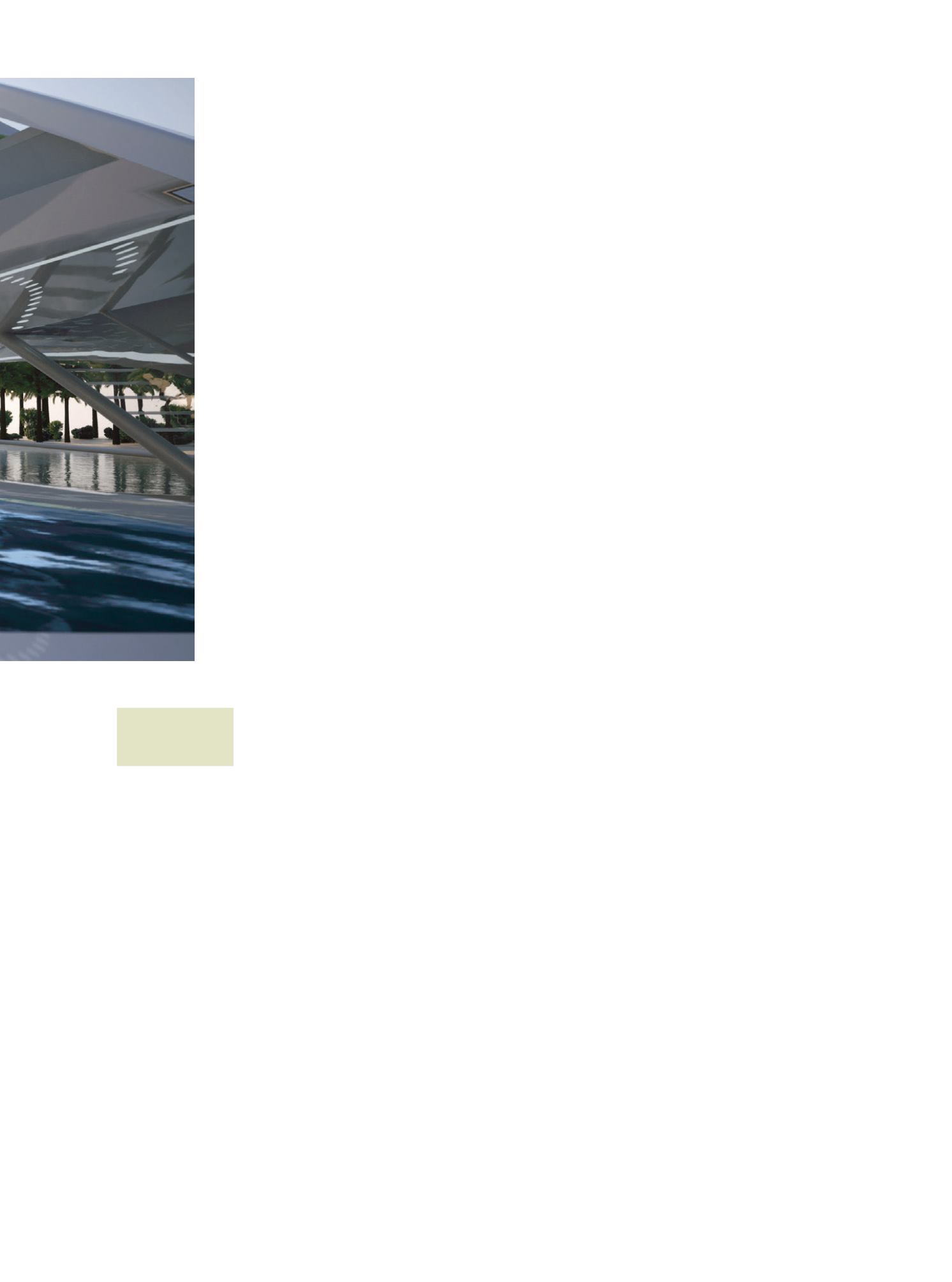
1.TheUniqueCircle
JazzYachtdiseñado
porZahaHadid/
The
Unique Circle Jazz
Yacht designed by
Zaha Hadid
1