137
tips & tops
·amura·
•
En Málaga es posible disfrutar de un recorrido por el
amplio patrimonio histórico, artístico, arquitectónico
y cultural que posee la provincia. El legado de las
civilizaciones está constituido por edificios eclesiás-
ticos y civiles, y una extensa colección de obras
pictóricas y escultóricas que pueden encontrarse en
las calles y plazas del pueblo, así como en las paredes
de sus fascinantes museos.
•
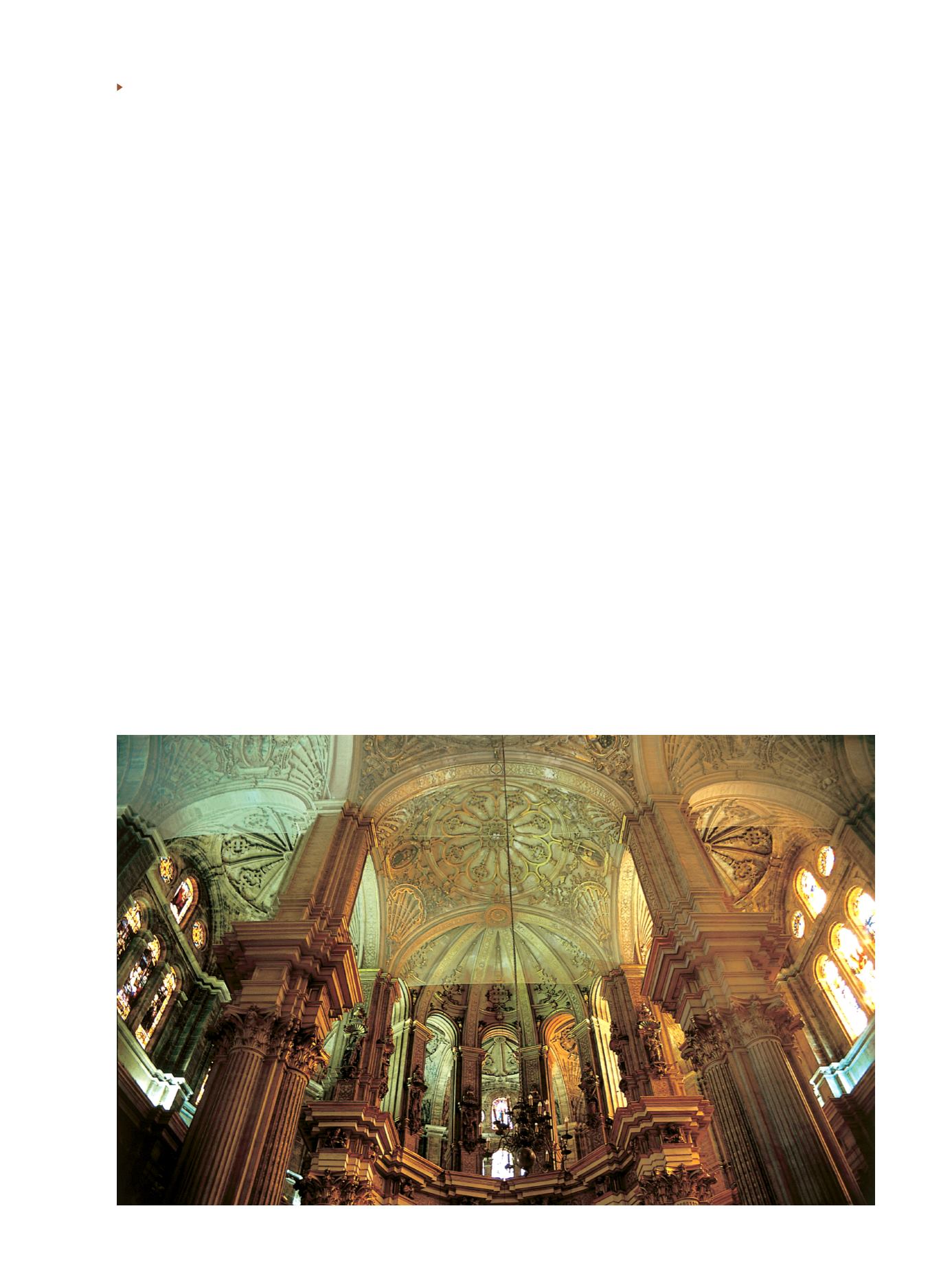
La Catedral de la Encarnación, de Málaga, representa
una de las joyas renacentistas más valiosas que
posee la ciudad. Fue construida entre 1528 y 1782,
por ella pasa el eje vial más importante de la Málaga
antigua y musulmana, que se extendía desde la
Alcazaba al río Guadalmedina. Está dividida vertical-
mente en dos pisos: el inferior, de tres puertas cobi-
jadas por arco sobre columnas con medallones, y el
superior, con arquerías. Una verdadera obra de arte.
•
La hermosa Málaga cuenta con 23 espacios protegi-
dos como parques naturales. De entre sus más
exquisitos paisajes, considerados museos naturales,
destacan la Serranía de Ronda, donde se encuentran
los parques naturales de la Sierra de las Nieves, Sierra
de Grazalema y Los Alcornocales, así como los valles
del Genal y del Guadiario. En estos lugares se pueden
rastrear antiguas culturas y disfrutar de paisajes
llenos de belleza única.
•
Desde sus orígenes el flamenco ha sido el arte
andaluz por excelencia. Sus tres elementos, canto,
baile y guitarra, han teñido de alegría cada rincón del
sur peninsular, creciendo así su popularidad y con-
tribuyendo a un enriquecedor mestizaje entre
gitanos, payos y musulmanes. Considerada como una
sentida expresión del arte en la provincia, el flamen-
co ha demostrado que cuenta con personalidad
propia en territorio malagueño.
Tesoros /
Treasures
• Visitors to Malaga can take a tour of the ample his-
toric, artistic, architectural and cultural heritage of
the Province. The legacy of past civilizations can be
seen in both ecclesiastical and civil buildings, as
well as an extensive collection of pictorial and
sculptural works that can be seen in the streets and
plazas of the town, as well as on the walls of its fas-
cinatingmuseums.
• The Cathedral of the Incarnation represents one of
the jewels of the Rennaisance of the city. It was
built between 1528 and 1782. The most important
thoroughfare of ancient and Muslim Malaga runs
past it and extends from the Alcazaba to the Rivero
Guadalmedina. It is divided vertically on two floors:
the lower floor, with three doors sheltered by an
arch set on columns withmedallions and the upper
floor, with a series of arches. It is a true work of art.
• The beautiful Malaga has 23 protected natural
parks. Among its most beautiful landscapes,
which are considered to be natural museums, the
Serranía de Ronda stands out, which contains the
Sierra de las Nieves, Sierra de Grazalema and Los
Alcornocales natural parks, as well as the Genal
and Guadiario valleys. Here, ancient cultures can
be traced and visitors can enjoy landscapes full of
unique beauty.
• From its origins, flamenco has been the
Andalucian art of excellence. Its three elements,
song, dance and guitar, have colored every corner
of the Southern peninsular with happiness, thus
increasing its popularity and contributing to an
enrichingmixture of gypsies, payos andMuslims.
Considered as the full expression of art in the
province, flamenco has shown that it has its own
personality in the Malagan territory.


