·amura·
88
planeta azul •
blue planet
Texto/
Text
: Gerardo del Villar Cervantes • Foto /
Photo
: Gerardo del Villar Cervantes
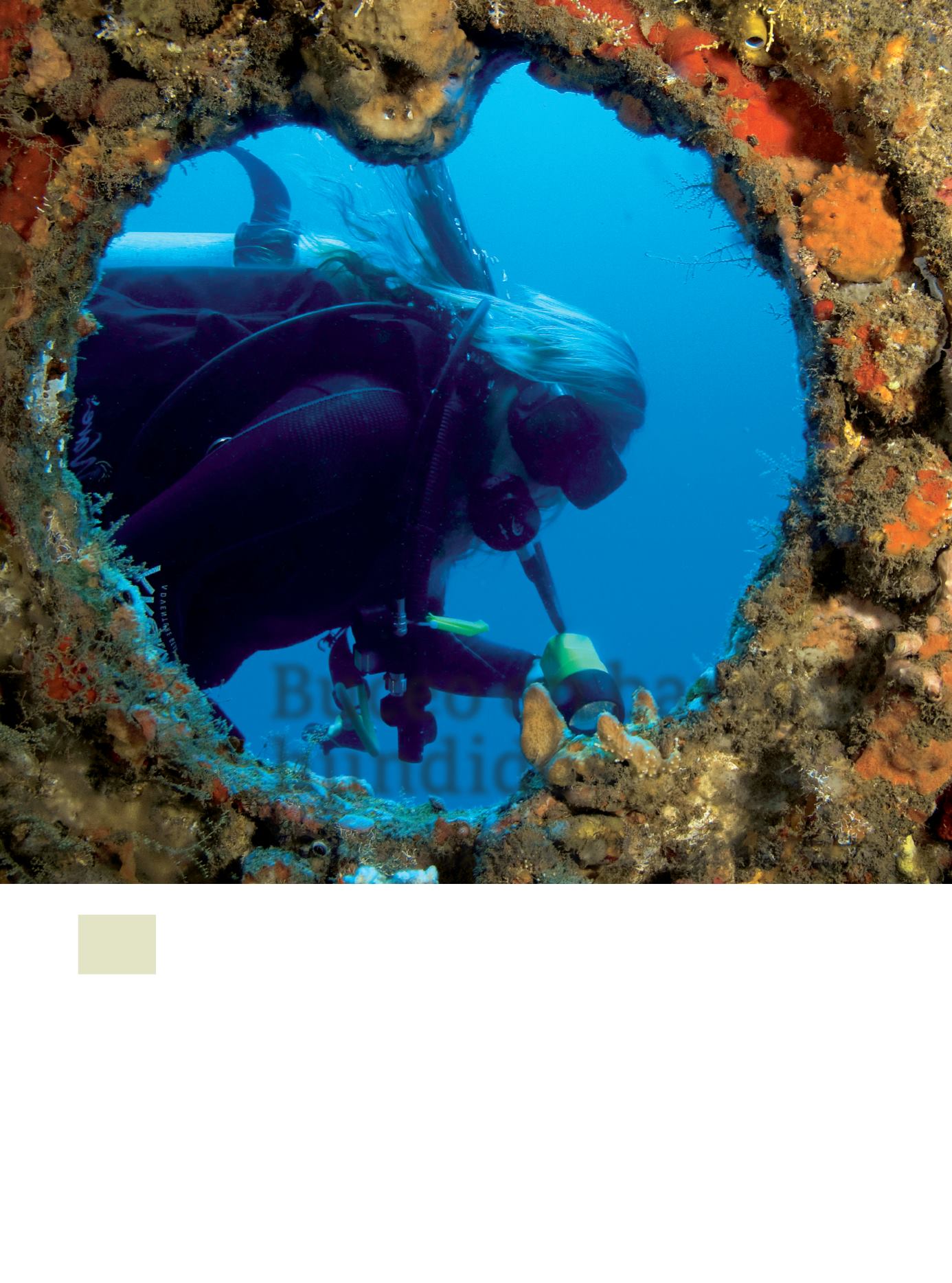
Buceo en barcos
hundidos
Shipwreck diving
L
os barcos hundidos son el hogar de varios
peces y corales; sus oxidados y viejos cascos
se convierten con el tiempo en arrecifes
artificiales, siendo algunos de gran interés ar-
queológico e histórico. Con el paso de los años
las plantas marinas se incrustan en la estructura,
mientras que las morenas, pulpos y congrios
se esconden en sus agujeros aprovechando el
refugio y protección que les ofrece. Los peces
pequeños suelen rodear el casco y los más
grandes merodean alrededor para alimentarse
de los más chicos. Esto convierte a los barcos
hundidos en una experiencia grandiosa para el
buceo y la investigación submarina. En algunos
sitios se marcan los recorridos con líneas que
te guían dentro de la estructura de la embar-
cación, o folletos sumergibles que indican los
datos más relevantes.
H
ome to a myriad of marine species, sunken
ships gradually become artificial coral reefs,
their rustedhulls eventually becoming sanc-
tuaries that are of great historical and architectural
interest. As time goes by, marine vegetation becomes
encrusted on the overall structure, as eels, octopuses
and conger-eels find refugee inside these ships, right-
fully seeking the refuge and protection that is found
inside its compartments. Smaller fish tend to swim
around the surface of the hull, while larger predators
roam in the hopes of catching and feeding on their
smaller counterparts. The events that unfold in and
around these ships make for an extraordinary diving
experience. A few of these shipwrecks on the ocean
floor are marked specifically to guide divers when
swimming inside the hull, while others are fittedwith
water-proof flyers that provide additional informa-
tion to the divers about thewreckage.
1
1. Puerto de Veracruz


