·amura·
89
planeta azul •
blue planet
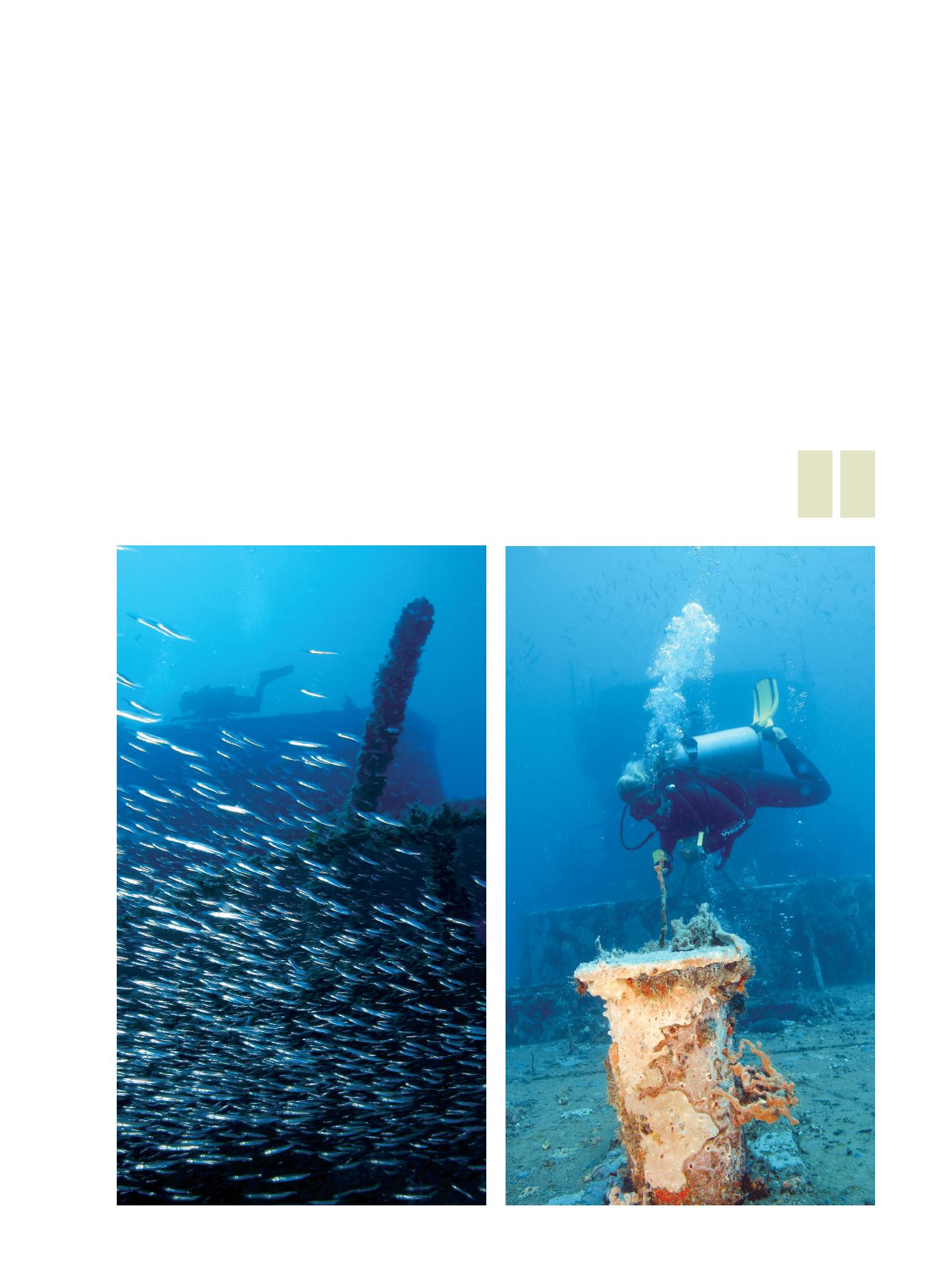
Throughout history, the remains of numerous un-
identified shipwrecks that now rest at the very bottom
of the oceanfloor have only been explored by specially
trained divers, making it impossible for amateur
divers to reach those depths without special, and
extremely costly,equipment.Theseshipswhereusually
built around ironhulls, yet there are caseswhere ships
hundreds of years older are found at the very same
depthswhich, seeminglyuntouched, harbor avast and
unique collection of rare artifacts. Nowadays, it is pos-
sible to readily access a vast amount of information
about recent shipwrecks. An example of this would be
the Ferri Salvatierra, which was sailing from La Paz to
Mazatlan before tragedy struck.
Normally, one can freely dive in and around
these shipwrecks, although some divers will re-
quire a special permit to access those that are
deemed off-limits, as it’s the case with historical
shipwrecks andmilitary vessels. Some ships have
been deliberately sunk in shallowwaters, to create
artificial coral reefs, as well as to make it easier for
amateur divers to explore a shipwreck up close. The
overall structure of these ships tends to be firmer
and safer for divers, since these ships have been
rid of any entanglements or loose equipment that
could be hazardous for divers. These, of course, are
suitable for practice and recreational diving.
En la historia, hay muchos restos de nau-
fragios desconocidos que están situados en
aguas muy profundas, lo que hace muy difícil
el acceso a los buzos de nivel recreativo y sólo
pueden bajar quienes tengan una preparación
especial. Por lo general, este tipo de embar-
caciones son de metal, pero también existen
de madera, provenientes de hace cientos de
años, y en ellos se pueden admirar antiguos y
extraños artefactos. En la actualidad la infor-
mación sobre recientes naufragios es bastante
accesible, entre los que se encuentra el Ferri
Salvatierra, que viajaba de La Paz a Mazatlán.
Normalmente se puede bucear en todos los
naufragios del mundo, pero para algunos se re-
quiere un permiso especial, como los declarados
históricos o cementerios de guerra. Además, en
algunos lugares se han hundido barcos a poca
profundidad, con el propósito de hacer arrecifes
artificiales y facilitar el acceso de este tipo de
buceo a más personas. Las estructuras de estos
barcos suelen ser más seguras, porque antes de
ser depositadas en el mar fueron limpiadas por
completo, dejando el puro casco, sin cables u
otros objetos que hacen más complicado y técnico
el buceo. Esto los convierte en un buen lugar para
practicarlo.
1
2
1. Puerto Morelos,
Quintana Roo
2. Puerto de Veracruz


