·amura·
96
toys collection » business
jets
SPECIFICATIONS
Maximum Cruise Speed
402 ktas ( 745km/h)
Certified Ceiling
39,400 ft (12,009 m)
Landing Distance
3,282ft (1,000 m)
Rate of Climb at Sea Level
2770 fpm (844mpm)
WEIGHT
Ramp Weight
12,150 lb (5,511 kg)
Takeoff Weight
12,100 lb (5,489kg)
Landing Weight
11,500 lb (5,216 kg)
Zero Fuel Weight
9,800 lb (4,445kg)
Usable Fuel Capacity
2,802lb (1,271 kg)
Maximum Payload
1750 lb (794 kg)
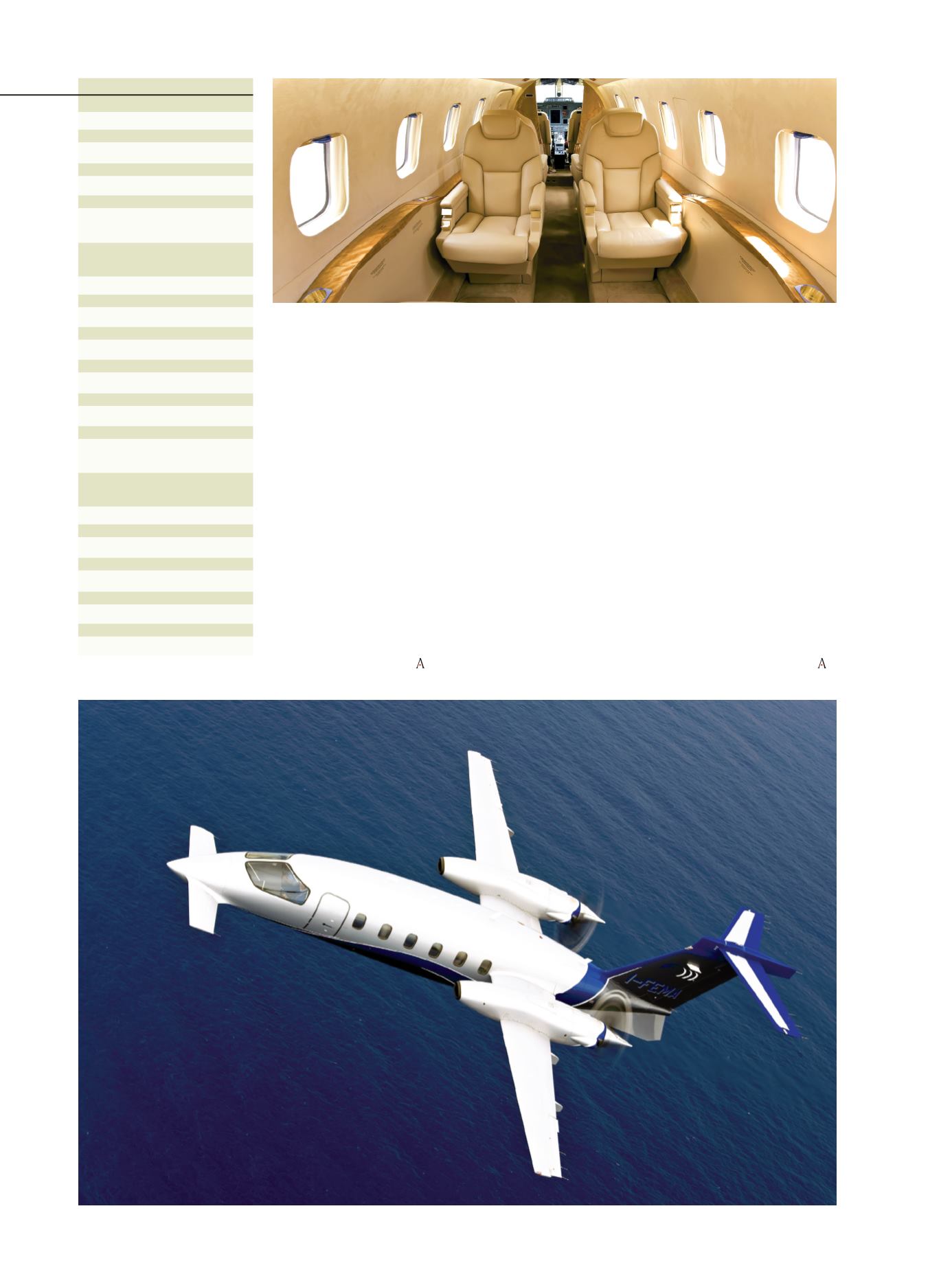
INTERIOR DIMENSIONS
Height
69 in (1.75 m)
Width
73 in (1.85 m)
Length
267 in (6.79 m)
Standard Seating Capacity
11
Baggage Capacity
44.15 cubic ft (1.25 cubic m)
percent aluminumalloyand10%composite construc-
tion. The engineer’s objective was to concentrate the
primary stress from the wing, landing gear and aft
pressurization bulkhead on the “structural core” of
the aircraft. This allowed a noticeable weight saving
in that area since the same structure supports differ-
ent loads at different times.A variable cross-section,
streamlined fuselage was developed to obtain both
efficiency and the greatest possible interior volume.
The fuselage is a structure made of conventional
aluminum alloy, produced through an innovative,
“outside-in” construction process, whereby large skin
panels are held in place by vacuum pressure as
internal structure is riveted into place. The result is a
fuselage built to extremely close external tolerances,
thus minimizing drag due to imperfections.
Composite materials were used only where
they really made sense; in areas requiring maxi-
mum stiffness with minimum weight, such as the
horizontal stabilizer, and also in areaswith intricate
compound curves such as the engine nacelles.
de las alas, el tren de aterrizaje y del tabique
hermético presurizado justo en el “centro es-
tructural” del avión para un ahorro de peso en esa
zona, ya que esta misma soporta diferentes cargas
en diferentes tiempos. Una sección transversal
variable, y un fuselaje aerodinámico fueron creados
para obtener mayor eficiencia, y el mayor volumen
interior posible.
La cabina está construida a base de aluminio aleado
de manera “
outside-in
”; grandes paneles de aluminio
se sujetan por medio de un vacío creado desde el in-
terior de la cabina a base presión expuesta a los pane-
les. El resultado es una cabina extremadamente lisa,
que permite que los flujos de aire se desplacen con
mayor fluidez por el exterior de la cabina. Materiales
compuestos fueron utilizados solamente en donde
hacía sentido usarlos; en áreas en donde se requería
la máxima tiesura y el menor peso posible, como lo
requeriría el estabilizador horizontal, y otras zonas
con intricadas curvas compuestas, como lo serían
las barquillas del motor.


