compás int • int compass
“C
incuenta años desde su origen como
nación independiente. Un territorio
limitado por la carencia de recursos
naturales como el agua, y habitado
por diferentes culturas como: mu-
sulmana, budista, católica e hinduista; y limitado con una
extensión territorial de 700 kilómetros cuadrados, es una
breve forma de definir Singapur. Pero no hay que dejarse
engañar por este contexto, ya que este lugar, en poco
tiempo se ha convertido en una nación excepcional.
A partir de 1965 -año en que se vuelve un país in-
dependiente- comienza el proceso de transformar un
pequeño territorio, en una de las urbes más impresio-
nantes del planeta, y todo esto gracias a un notable
personaje llamado Lee Kuan Yew, responsable de mar-
car la diferencia en todos los sentidos para el mejor
desarrollo de su gente, y comprometiéndose con la
educación de las personas: ‘El trabajo es algo que tu
vendes, entonces si quieres darle un valor agregado a
tu trabajo, hazlo por medio de la educación’.
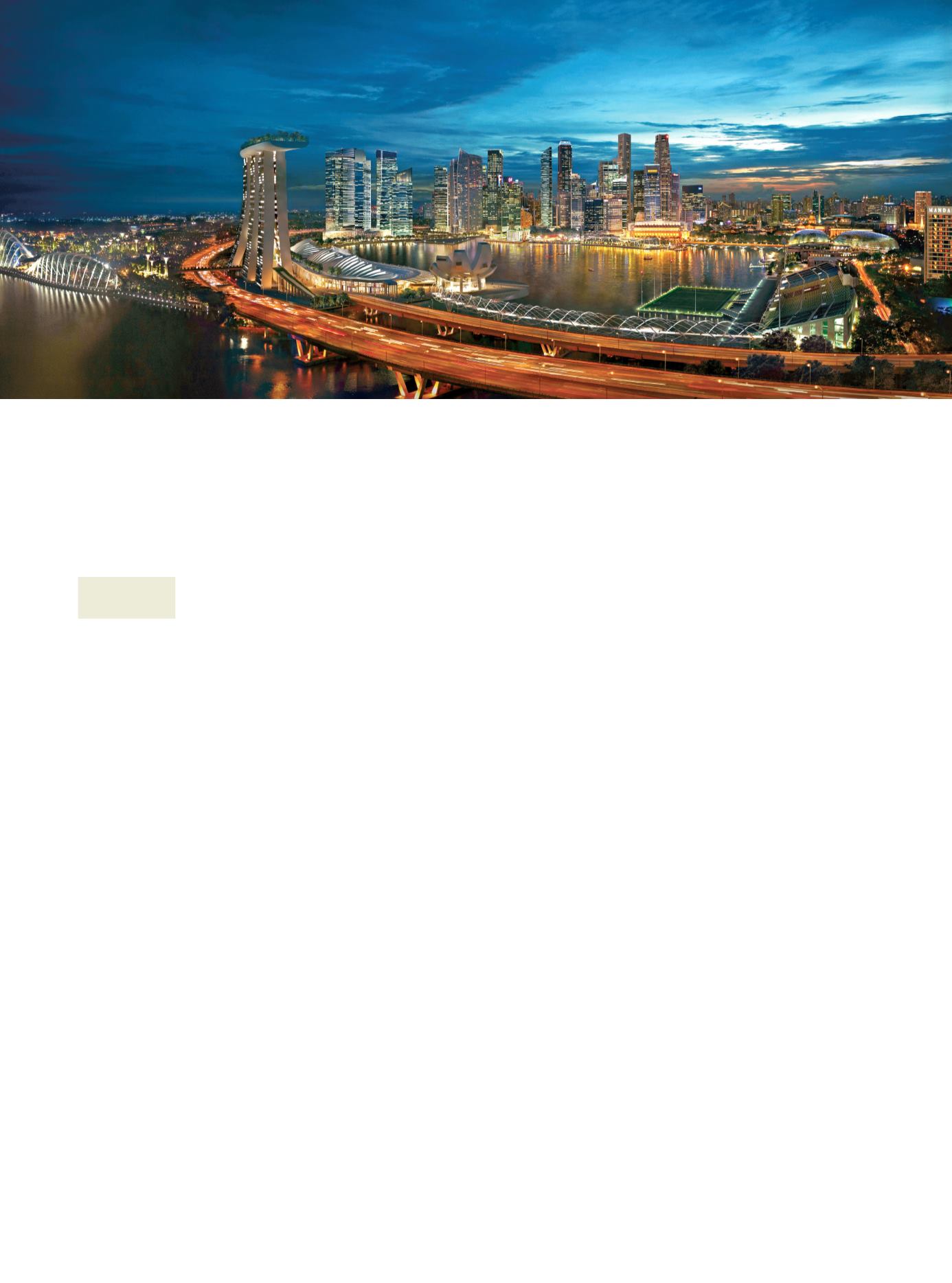
En la actualidad hablar de Singapur es hablar de una
de las naciones más cosmopolitas de la tierra. La escasez
de recursos y territorio no han sido una restricción para
poder transformarse en una ciudad perfecta para el turis-
mo y los negocios, debido a que cuenta con el mejor aero-
puerto del mundo, y del mismomodo el puerto comercial
más completo del sureste de Asia. Además, los habitan-
tes de esta sociedad pueden hacer presunción por contar
con uno de los ingresos per cápita más altos del mundo;
abriendo así oportunidad para los inversionistas.
Para el turismo, la Ciudad del León cuenta con una
oferta, que va desde impresionantes campos de golf, im-
ponentes rascacielos, tradicionales barrios étnicos, mara-
villosos jardines botánicos, así como modernos centros
comerciales en donde tienen presencia las marcas más
prestigiadas demoda.
Definitivamente, nohaymejormanerade experimen-
tar Singapur que visitándolo y ser testigo de sugrandeza”
“F
ifty years ago since its incep-
tion as an independent na-
tion. A territory limited by
the lack of natural resources
like water, and inhabited by
different cultures as Muslim, Buddhist, Catholic
and Hindu; and restricted to an area of 700 square
miles, is a short way to define Singapore. But do not
be fooled by this context, as this place has quickly
become an exceptional nation.
Since 1965 -when it became an independent
country-, the process of transforming a small terri-
tory, inone of themost amazing cities on the planet,
all thanks to a remarkable character called Lee Kuan
Yew, responsible for making a difference in every
way for the better development of its people, as well
as taking the great challenge of education: ‘Work is
something you sell, so if you want to add value to
your work you must do it through education.’
Nowadays, talking about Singapore is to con-
cern in one of the most cosmopolitan nations of the
earth. The shortage in resources and territory have
not been a constraint to become a perfect city for
tourism and business, due to its airport, the best
one in the world, and also as the most complete
trading port in Southeast Asia.
Also, the people of this society can make pre-
sumption for having one of the highest per capita
income of the world, that opens plenty of opportu-
nities for investors. For tourism, the Lion City of-
fers lots of possibilities, ranging from impressive
golf fields, towering skyscrapers, traditional eth-
nic neighborhoods, wonderful botanical gardens,
as well as modern shopping malls where the most
prestigious fashion brands have strong presence.
Definitely, there is no better way to experience
Singapore than visiting the place and beingwitness
of its greatness”
Singapur: Orgullo de Asia
Singapore: Pride of Asia
Mr. Eduardo A. Henkel Pérez-Castro
42
42.Singapure./
Singapore.
·amura·
56


