


 147 / 184

145
·amura·
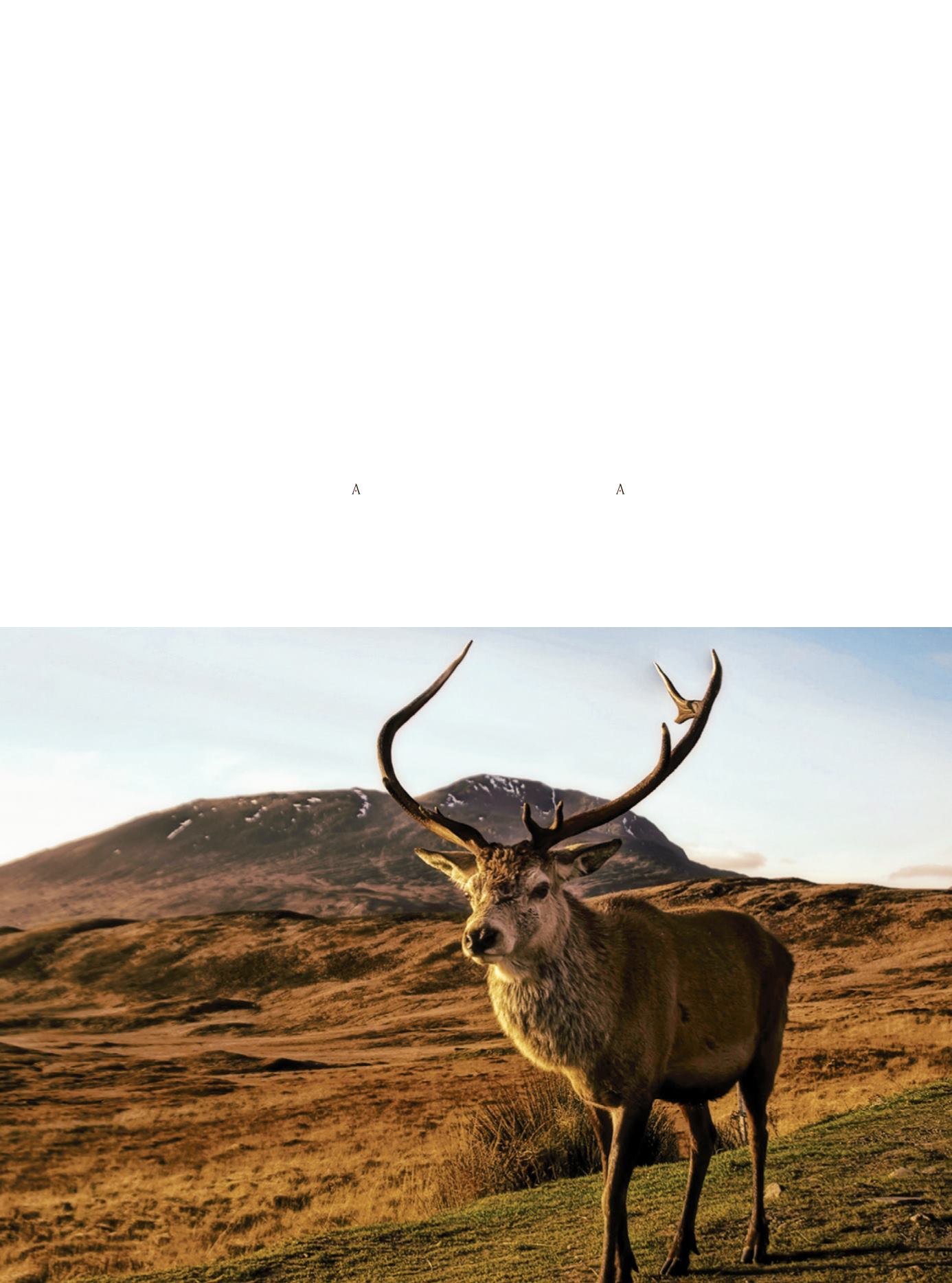
Animal codiciado
Se trata del segundo cérvido más grande después
del alce, con altura de hasta 1.5 m y un peso de en-
tre 80 y 240 kg, cuyo nombre proviene del rojizo cro-
matismo aterciopelado que recubre su cornamenta,
a la cual la cultura escocesa le ha dado cualidades
curativas, por lo que se emplea en la medicina tradi-
cional, de ahí que resulte sumamente atractiva para
los cazadores. Sus astas además de poder son un
indicador reproductivo, pues cuanto más grandes y
complejas, mayor fertilidad. Los machos suelen ser
solitarios y las hembras, junto a los más jóvenes, se
mantienen en rebaños de hasta 20 ejemplares.
Seres de las penumbras
Concentran su actividad al amanecer y en el ocaso,
durante las densas neblinas de la campiña escocesa,
tiempo que aprovechan para alimentarse de gramí-
neas, hierbas o bellotas. Originario de Eurasia y la
ecozona paleártica occidental, el ciervo rojo fue tras-
ladado a diversos rincones del mundo; sin embargo,
es una especie en peligro de extinción.
O
Coveted animal
It is the second largest deer after the moose, reach-
ing a height of up to 1.5m and a weight between 80
and 240kg; it’s name being derived for them chro-
matic red hues that permeate it’s hide, a quality
that has been belived has curative powers in the
Scottish culture. It is employed in traditional medi-
cine, thus becoming profoundly attractive to hunt-
ers. It’ss antlers are a sign of it’s reproductive power
and strength; the larger andmore intricate they are,
they more fertile the male is. Males tend to be soli-
tary, while females and younger specimens tend to
live into herds of up to 20 individuals.
Shadow beings
Red deers are most active during dawn and dusk, as
well during periods of intense mist deep in the Scot-
tish countryside. They take advantage of this periods
to feast on herbs, berries, and grass. Originally from
Eurasia and the western palaeartic ecozone, the
red deer migrated to various corners of the world.
Nevertheless, it is an endangered species.
eTQecieT •
species