


 149 / 184

eTQecieT •
species
L
os robustos y fuertes caballos escoceses,
criados para el campo de batalla, pasaron
de servir a los caballeros a la transporta-
ción de carbón y el tiro pesado, luego de
que el Duque de Hamilton y John Petterson
hicieran la cruza entre descendientes de la especie y
algunos sementales de Flandes, en el siglo XVIII.
El nuevo equino, más grande, fornido y recio, que su
antecesor, se hizo tan popular que pronto fue exporta-
do a otras regiones de Europa, Nueva Zelanda, Australia.
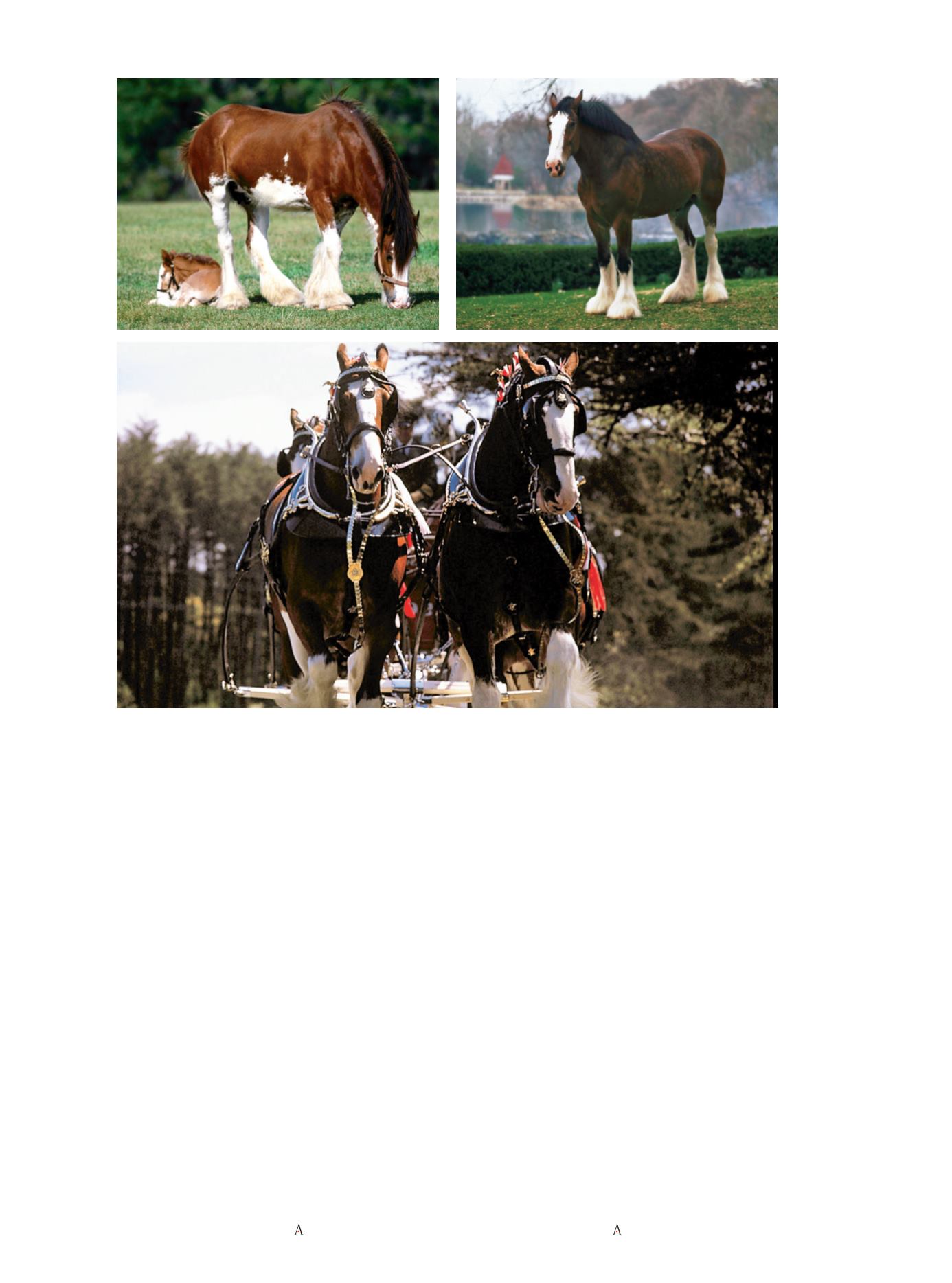
Este caballo, que recibe su nombre de la región de proce-
dencia –hoy Lanarkshire–, tiene una alzada de 180 centí-
metros, cabeza pequeña y elegante, sobre un largo y po-
tente cuello; su dorso es corto con extremidades largas
y rectas, pezuñas adornadas por borlas que las rodean y
mirada enérgica, características que, aunadas a su carác-
ter amistoso, temperamento tranquilo, gran actividad y
fuerza, lo hacen un espécimen fascinante.
Digno de la realeza
Antes de la Segunda Guerra Mundial, fueron reempla-
zados por automotores y era poco frecuente verlos en
faenas pasadas; sin embargo, la nobleza que posee este
ejemplar capturó la atención de la reina Isabel II al ver a
uno que jalaba de un carro de leche; desde entonces pasó
a ser una raza de exhibición, concursos y ceremonial.
Para preservación y fomento del desarrollo de esta
especie, en 1877 se fundó la Clydesdale Horse Society y
hoy es reconocido como uno de los caballos más bellos,
fuertes y de aire distintivo que existen.
O
T
he robust and powerful Scottish horse,
raised in the battlefield, it went from
serving knights to transporting coal
and large game after the Duke of Ham-
ilton and John Petterson crossbred the
descendants of the specie with stallions from Flan-
ders, in the 18th century.
The new steed, larger, stockier and tougher than
it’s predecessor, became so popular that it was soon
exported to other European regions, New Zealand,
andAustralia. This horse, which bears it’s name from
it’s land of origin – Lanarkshire – is 180cm tall, of a
small and elegant head, set upon a large and power-
ful neck; It’s back is short with long and straight ex-
tremities, hoofs adorned with tassels, and energetic
stare are qualities which andcoupled with a friendly
demeanor, a tranquil temperament, along great force
and energy, make it a fascinating specimen.
Worthy of royalty
Before theSecondWorldWar theywere replacedbymo-
tor vehicles, it was rare sight to observe them in labor;
nevertheless, the nobility that kept their steeds cap-
tured the attention of Queen Elizabeth II, who saw one
pulled a milk cart. Since then, it rose to become a cer-
emonial, exhibition, andahorse of showmanship.
In 1877, the Clydesdale Horse society was founded
to preserve and foment the development of the specie;
it is recognized today as on the most gallant, forceful,
anddistinctivehorse inexistence.
O