·amura·
120
tips & tops
Texto/
Text
: AMURA • Foto /
Photo
: Patrick Monney, Oficina Española de Turismo en México
Tips & Tops
Tips /
Tips
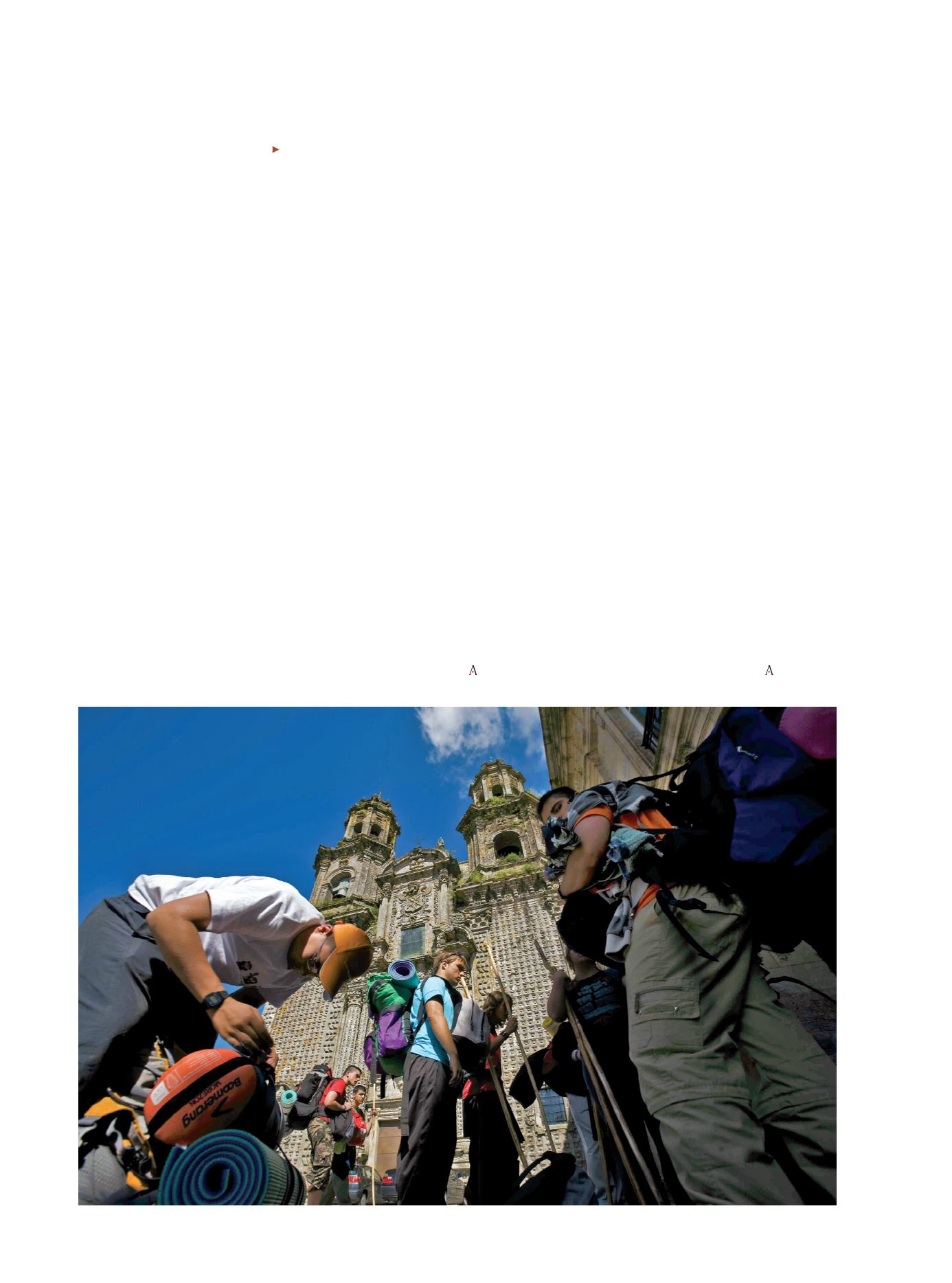
• Para el que se embarca en la travesía del Camino de
Santiago, es importante decidir si lo hará solo o en
compañía de alguien cercano o dentro de un grupo
de peregrinos que se vaya encontrando en el cami-
no. Un factor a considerar si se planea hacer el viaje
con alguien, es que el acompañante vaya al mismo
ritmo que uno, con el fin de evitar rezagos.
• La rutamás transitada y que cuenta conmayor infra-
estructura es la llamada ruta francesa. En ésta se en-
cuentran los populares lugares St Jean Pied de Port,
Roncesvalles y Pamplona. No obstante, hay otras
rutas que pueden tomarse desde Portugal, Francia y
varios sitios en el norte de España. A estos puntos
de arranque se puede llegar fácilmente a través de
tren o autobús desde el aeropuerto, y aunque son
menos conocidos, estánmenos concurridos y tienen
su propio encanto.
• El trayecto del Camino de Santiago es largo, y si se
planea recorrer en su totalidad, un factor muy im-
portante a considerar es la cantidad de equipaje que
se lleve, pues al final será uno el que avance a cada
kilómetro con el peso de la mochila a cuestas. Este
peso no debe rebasar los 10 kilos o, por lo menos,
representar el 10% de nuestro peso total.
• Sin duda, el peregrinaje no es algo fácil, y si nuestros
hábitos cotidianos involucran poca o nula actividad
física, es probable que el Camino de Santiago sea un
paseo difícil y cansado. Se aconseja que, una semana
antes de emprender el camino, se realicen caminatas
breves de 10 minutos al día usando los zapatos que
planean usarse durante el trayecto.
• For the travellerwhoembarksona journey through
Camino de Santiago, it is important to decide if the
journey will be undertaken alone, or in the compa-
ny of a loved one, or with a group of pilgrims found
on theway. One factor to consider, if one is to begin
this journeywitha lovedone, is toensure that one’s
companion can keep pace to avoid delays.
• The most popular route, and the one that harbours
the largest infrastructure, is the French route. On
this one, travellers will find popular spots such as
the St. Jean Pied de Port, Roncesvalles and Pam-
plona. Nonetheless, there are other routes that can
be taken from Portugal, France and various other
spots in northern Spain. One can arrive to these
starting points quite easily via train or bus taken
fromthe airport, and although they are less known,
they are less populated and hold their own charm.
• The Camino de Santiago journey is a long one, and
if one plans towalk it all theway through, one very
important factor to consider is the amount of lug-
gage to carry, for, in the end, this will affect the
distance one travels. The weight of the luggage
should not exceed 20 lbs, or, at least represent 10%
of the travellers’ weight.
• Without a doubt, the pilgrimage is not easy one,
and our everyday habits do no usually include
strenuous activity. It is probable, then, that the
journey will be tiresome. It is recommended that
travellers walk at least 10 minutes each day using
the shoes they intend to use for the eventual walk
at least one week before departure.


