


 128 / 150

·amura·
124
los conquistadores •
the conquerors
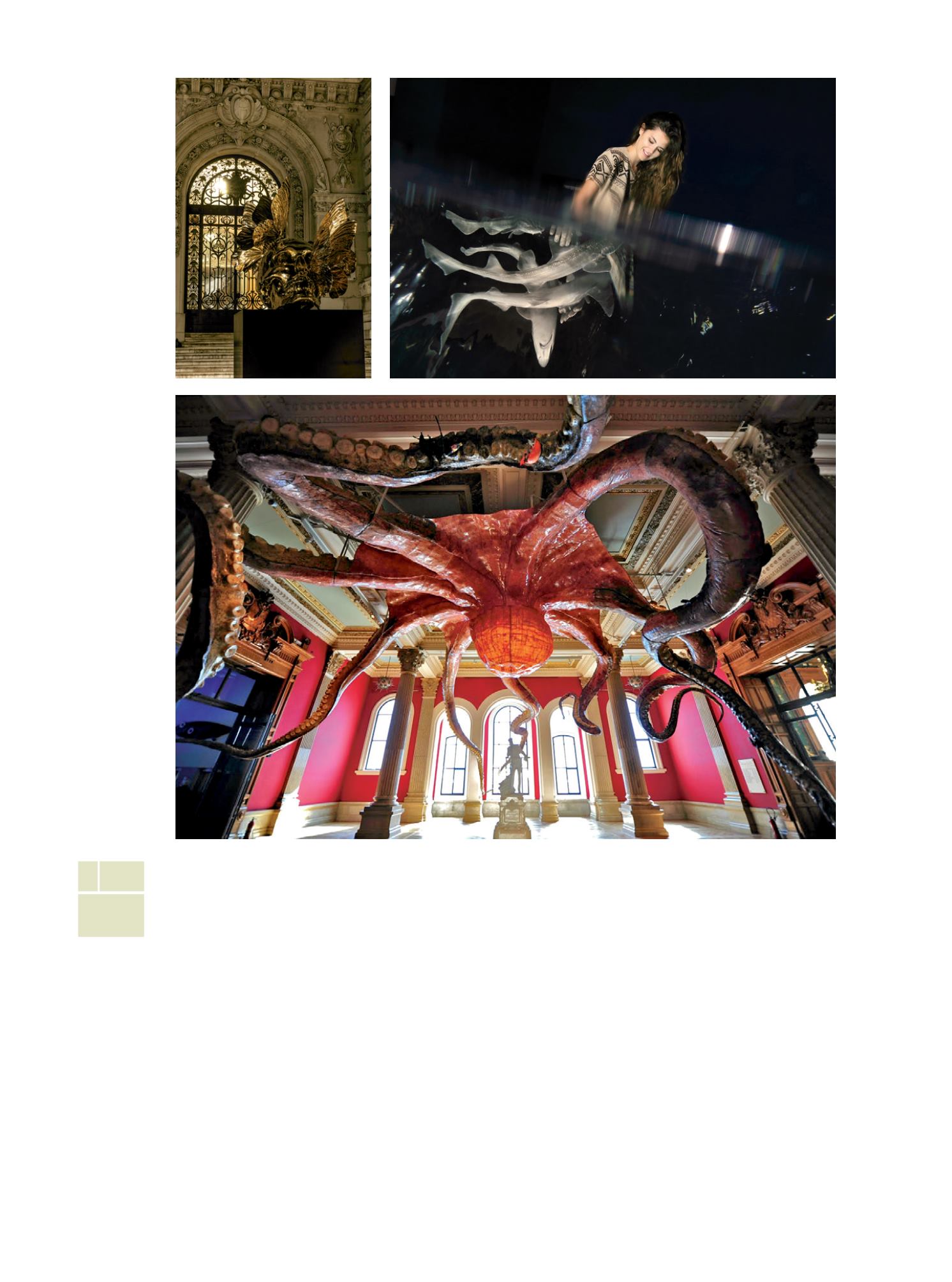
5.ExposiciónBorderline
dePhilippePasquaenel
MuseoOceanográficode
Mónaco./
Borderline
exhibition by Philippe
Pasqua at the
Oceanographic Museum
of Monaco.
6.WuZei,instalación
delartistachinoHuang
YongPingenlasalaVIP
delMuseo./
Wu Zei,
work by Chinese artist
Huang Yong Ping at the
museum’s VIP room
.
7. Tiburones, Exposición
sensorial, la cual permite
interactuar con ellos.
/
Sharks, sensorial
exposition that allows
visitors to interact with
them.
The Oceanographic
Museum
Prince Albert I created the Oceanographic Museum
of Monaco with the purpose of promoting the study
of the collections and discoveries acquired in the
various expeditions that he carried out. Under the
motto of its founder, “to know, love and protect the
oceans,” the museum encompasses 6,500 m
²
that
remain open to the public and currently exceeds
700,000 visitors annually.
The palace that houses the Monaco Oceano-
graphic Museum is a masterpiece of monumental
architecture. It was built in French neoclassical
style between 1899 and 1910 by the architect Paul
Delefortrie. For its construction, 100,000 tons of
La Turbie region stone were needed. The imposing
building descends along the cliff for 85m, almost
touching the Mediterranean Sea.
El museo
Oceanográfico
El Príncipe Alberto I creó el Museo Oceanográfi-
co de Mónaco con el fin de propiciar el estudio de
las colecciones y descubrimientos adquiridos en
las diversas expediciones que llevó a cabo. Bajo el
lema de su fundador, “conocer, amar y respetar a
los océanos”, el museo dispone de 6,500 m
²
abier-
tos al público, que en la actualidad sobrepasa los
700,000 visitantes anuales.
El palacio que alberga el Museo Oceanográfico
de Mónaco es una obra maestra de la arquitectu-
ra monumental. De estilo neoclásico francés, fue
realizado entre 1899 y 1910 por el arquitecto Paul
Delefortrie. Para construirlo fueron necesarias
100,000 t de piedra de la región de La Turbie. La
imponente edificación desciende por el acantila-
do 85 m hasta casi tocar el mar Mediterráneo.
5 7
6