especies •
species
120
·amura·
dientes tiene unas placas coreas compuestas de quera-
tina y que les sirve para filtrar sus alimentos.
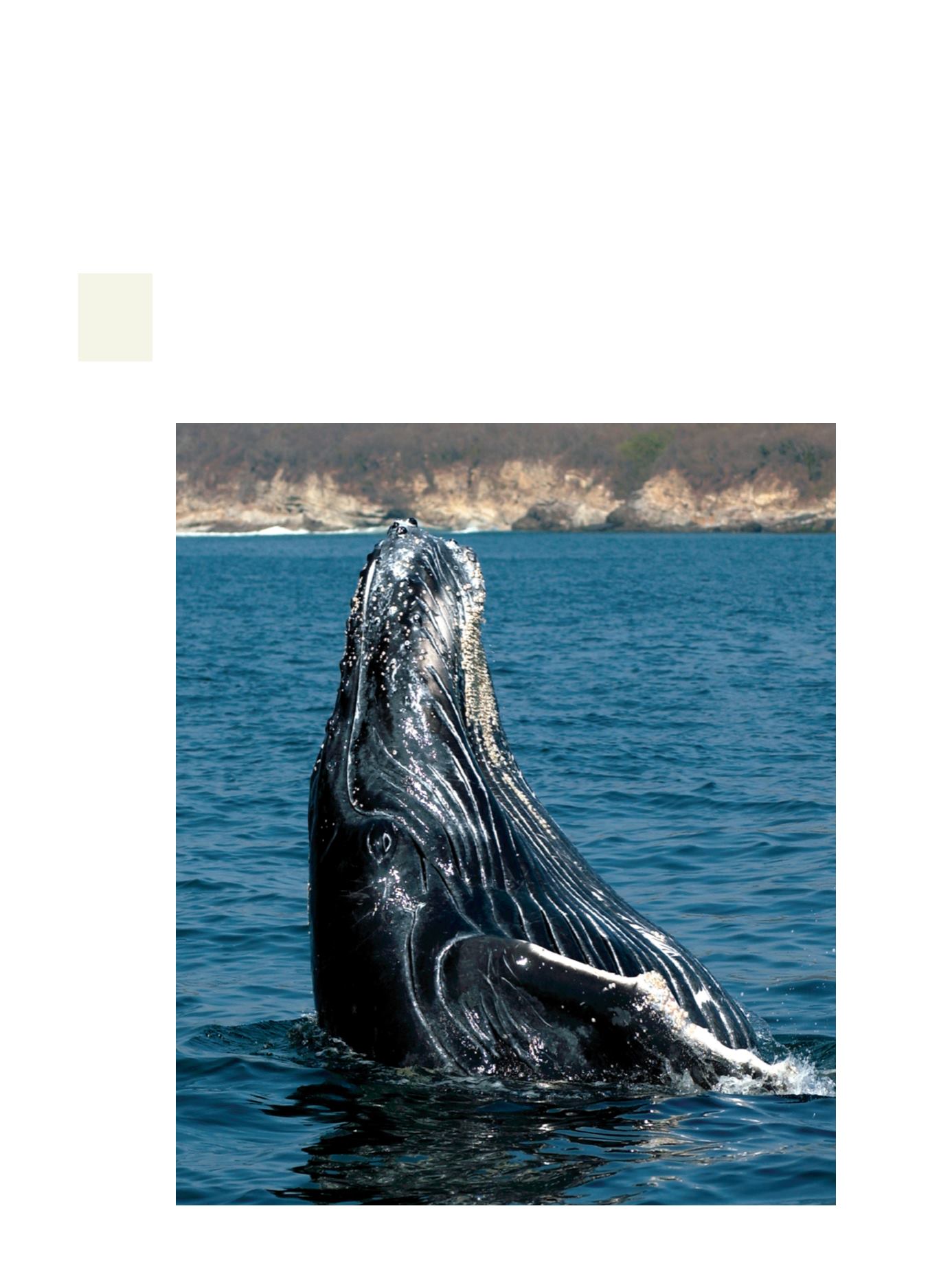
Entre estas ballenas encontramos en nuestros
mares a la ballena jorobada (
Megaptera novaeangliae
),
la cual viene a aguas mexicanas a aparearse y a tener a
sus crías. Tiene tres zonas de congregación, una se
encuentra frente a Los Cabos en Baja California, la
segunda en Bahía de Banderas, lugar mejor conocido
por PuertoVallarta, y la última, peromás importante, en
las islas Revillagigedo, a estos lugares arriban a finales
de noviembre y permanecen en ellos hasta principios
de abril. Es una de las ballenas más espectaculares de
observar, ya que es muy activa y suele saltar casi com-
pletamente fuera del agua con frecuencia, así como
sacar la cola o golpear el agua con sus aletas pectorales.
También contamos con las dos más grandes balle-
nas del mundo: la ballena de aleta y la ballena azul.
Respecto de la primera (
Balaenoptera physalus
) somos
muy afortunados de contar con grupos residentes del
Among these whales in our waters we find the
humpbackwhale (
Megaptera novaeangliae
), which
comes to Mexican waters to breed and give birth to
its young. It has three areas of congregation: one
off the coast of Los Cabos in Baja California, the
second at Bahía de Banderas, better known as
Puerto Vallarta, and thirdly, but more importantly,
the Revillagigedo Islands, where they arrive at the
end of November and stay there until the begin-
ning of April. It is one of the most spectacular
whales to observe because it is very active and
very frequently jumps almost completely out of
the water, as well as raising its tail out of the water
and hitting the water with its pectoral fins.
We also have the two largest whales in the
world: the fin whale and the blue whale. With
regard to the first (
Balaenoptera physalus
), we are
very lucky to have resident groups in the Sea of
Cortes, which means that they are present
La Ballena Jorobada
humpback whale


