130
·amura·
In danger of extinction
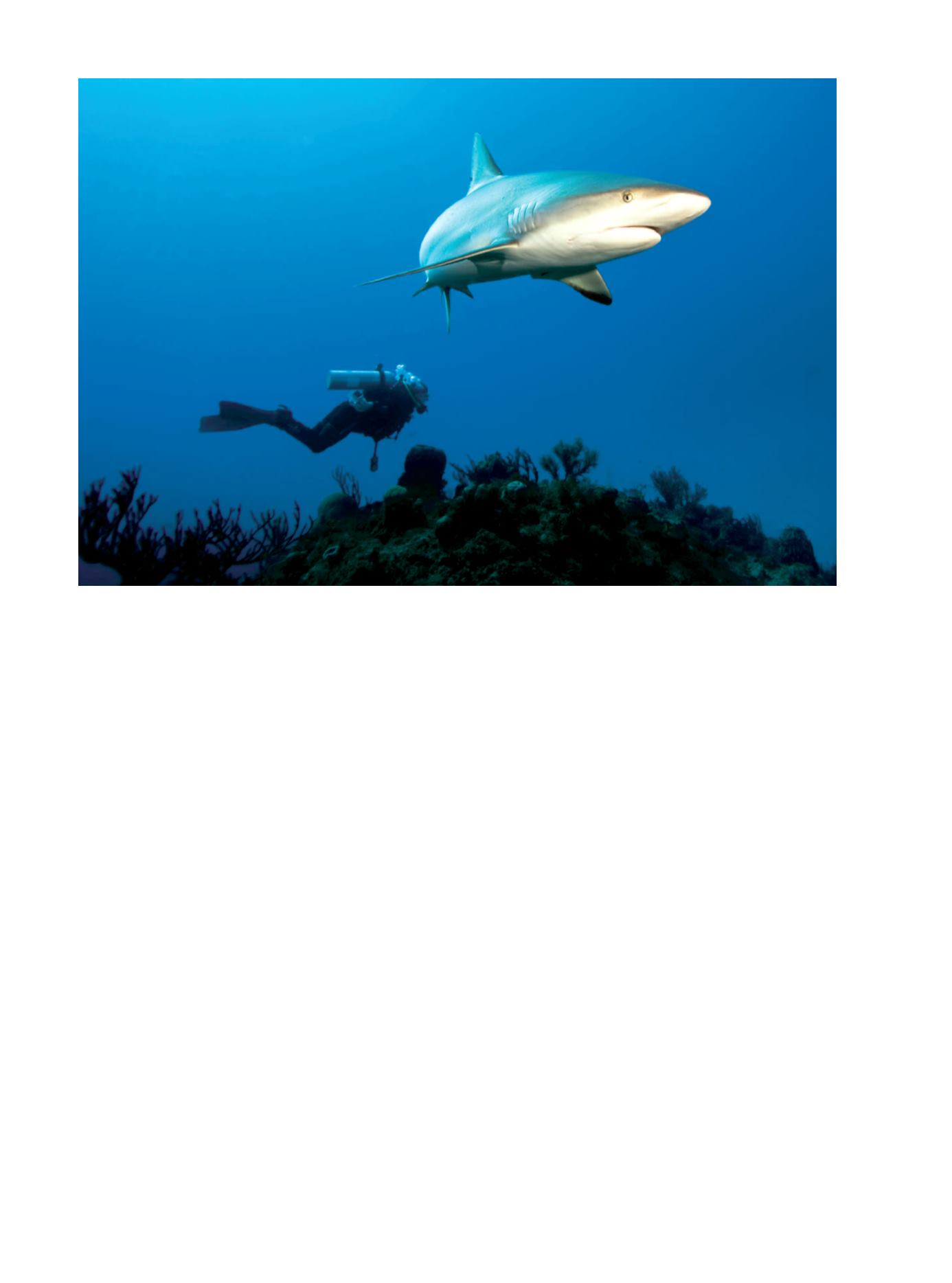
One of the current main causes that endanger
shark populations is the increasing demand on
shark fin soup, considered an exquisite dish in
some countries, they are taken out of the water
just to cut their fins when they are still alive and
afterwards they are returned to the sea, where a
slow death awaits them.
Nevertheless, the biggest threat is commercial
fishing. Millions of sharks are scarified each year
because of their meat, liver (fat), CARTILAGOS, jaws,
teeth, internal organs, skin, and above all, their fins.
¿How long will this project take?
Due to large distances that have to be traveled,
at the time I have to pass in each place, to how dif-
ficult it is to see some of these sharks and the sea-
sons to observe these species are very short, we
have an estimated period of three years to finish it.
First Journey: Tiger Shark
Tiger Beach, Bahamas, is found 25 miles at the
Northeast West End in the Great Bahama, in Little
Bahama Bank. The main objective is to photograph
the Tiger Shark. The place it holds is among the
most dangerous ones: third.
The name is because, as the great Asian feline,
this shark carries a series of dark transversal
stripes at the back and on the side, which tend to
blur with age.
The rest of the body is gray or light greenish-
blue, being replaced by the white on the face and
ventral zone. The nose is snub and the head repre-
sents a rectangular shape, with a big mouth.
The eyes are big and round and the nasal ori-
fices long and advanced. The teeth are sharp and
pointy, provided with strong saw like edges.
En peligro de extinción
Una de las principales causas en la actualidad que
pone en peligro a las poblaciones de tiburones es la
creciente demanda de sopa de aleta de tiburón, con-
siderada un plato exquisito en algunos países, se les
saca del agua sólo para cortarles las aletas cuando
aún están vivos y después se les devuelve al mar,
donde les espera una lenta muerte.
Noobstante,laamenazamásgraveeslapescacomer-
cial.Millonesde tiburones sonsacrificados cada añopor su
carne, hígado (grasa), cartílagos, mandíbulas, dientes,
órganos internos, piel y, sobre todo, por sus aletas.
¿Cuánto tiempo llevará este proyecto?
Debido a las grandes distancias que hay que recorrer,
al tiempoque tengoquepasar en cada lugar, a lodifícil que
esveraalgunosdeestostiburonesyaquelastemporadas
para poder observar a estos escualos son muy cortas, te-
nemos estimado un tiempo de tres años para finalizarlo.
Primer viaje: Tiburón Tigre
Tiger Beach, Bahamas, está ubicado 25 millas al
noreste de West End en la Gran Bahama, en Little
Bahama Bank. El objetivo principal es fotografiar al
“Tiburón Tigre”. El puesto que ocupa entre los más
peligrosos: tercero.
El nombre se debe a que, como el gran felino de Asia,
este tiburón tiene una serie de rayas oscuras transver-
sales en el dorso y en los costados, que tienden a difumi-
narse con la edad.
El resto del cuerpo es gris o azul-verdoso claro, sien-
do sustituido por el blanco en la cara y la zona ventral. La
nariz es chata y la cabeza presenta una forma rectangu-
lar, con una boca grande.
Los ojos son grandes y circulares y los orificios nasales
alargadosymuyadelantados.Losdientessongrandesyafi-
lados, provistosdebordes fuertementeaserrados.
especies •
species


