los conquistadores •
the conquerors
124
·amura·
The Inuit- the natural habitants of these
places since ancient times-, were its creators
and it is said that within the region you can
find Inukshuks which have more than a thou-
sand years of existence. In the Inuit language,
Inukshuk means ¨
that which looks like a per-
son¨
and even though now we discover in them
a completely artistic context, the creation of
this anthropomorphic moles made with giant
stones, had a very important role in the caribou
hunting, this way before the Inuit had access to
guns and ammunitions with the arrival of the
European to America in the XVII century.
The traditional hunting method would con-
sist of lifting a series of Inukshuk placing them in
a funnel kind of way that would lead them to a
dead end alley, an ambush spot above a hill. The
armed hunters with arches and bows would
remain hidden behind an inukshuk. The women
and the children would lead the caribous flock
towards the hunters, shaking furs up and down,
making a lot of noise. The caribous would get
really nervous, since being myopic; they would see
the Inukshuk as humans and would believe they
had fallen into a trap. This way of hunting created
confusion among the herds and would allow hun-
ters to stay behind the flock.
Since the Inukshuk can be seen from kilome-
ters away and is spread here and there on most of
the Canadian territory, today as well as in ancient
times the travelers use it as a direction reference.
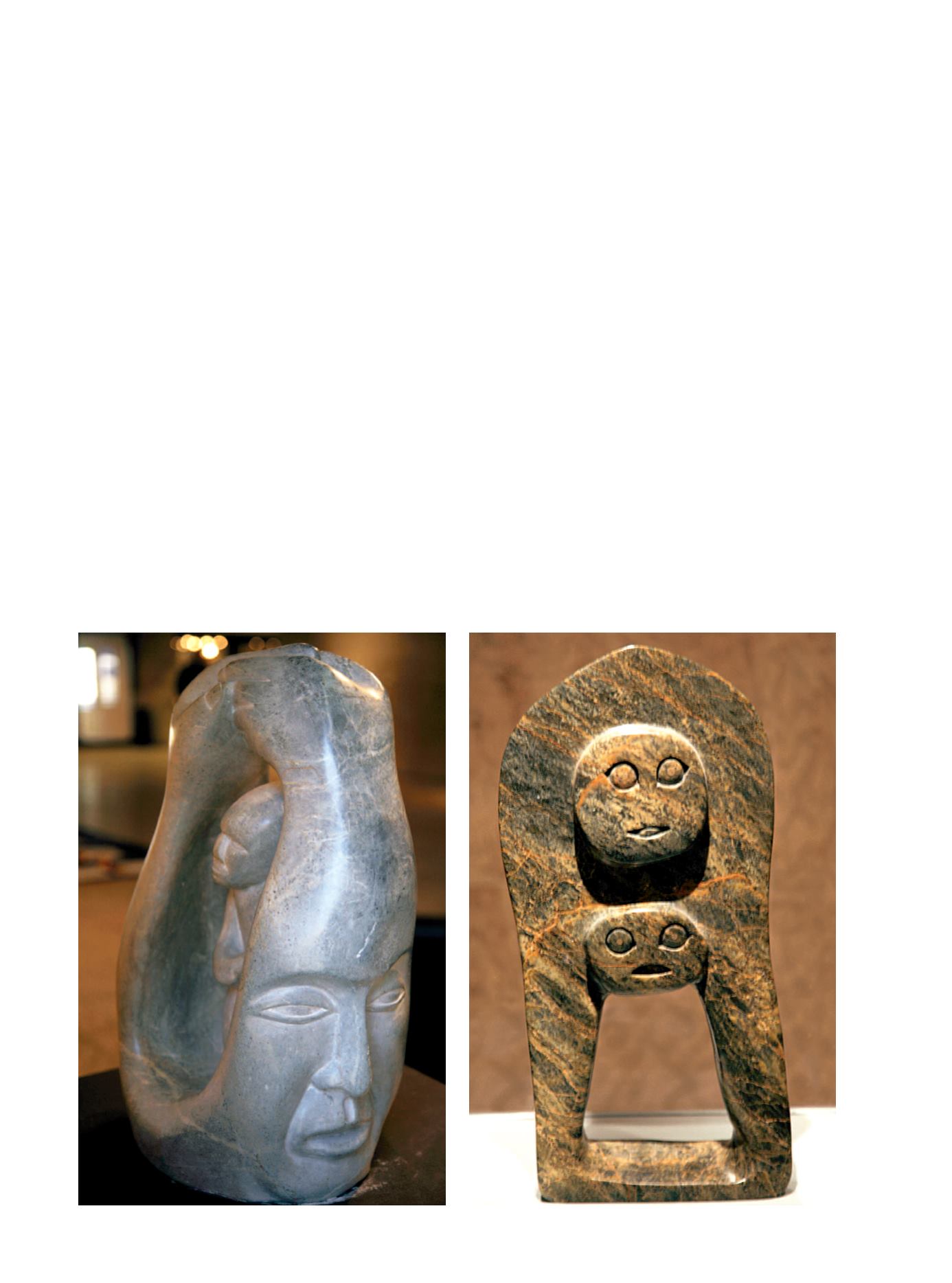
Besides these impressive sculptures, from a
prehistoric age the Inuit used the wood, marble
and stone utensils, for which they are recogni-
zed as great carving artists. The marble comes
Los Inuit -la gente natural de estos lugares desde
tiempos inmemoriales-, fueron sus creadores y se
dice que en la región se pueden encontrar Inukshuks
que superan una antigüedad de mil años. En el idioma
Inuit, Inukshuk significa "aquel que se parece a una
persona" y aunque ahora los encontramos en un con-
texto totalmente artístico, la creación de estas moles
antropomorfas hechas con piedras de grandes dimen-
siones, tuvieron un papel muy importante en la caza
del caribú, esto mucho tiempo antes de que los Inuit
tuvieran acceso a fusiles y municiones con la llegada
de los europeos a América en el siglo XVII.
El método tradicional de caza consistía en erigir
una serie de Inukshuk disponiéndolos en forma de
embudo que los conducía a un callejón sin salida,
lugar de emboscada sobre una colina. Los cazadores
armados con arcos y flechas permanecían ocultos
tras un inukshuk. Las mujeres y los niños conducían
al rebaño de caribúes hacia los cazadores, agitando
pieles de arriba hacia abajo, haciendo mucho ruido.
Los caribúes se ponían muy nerviosos puesto que,
dado que son miopes, veían a los Inukshuk como a
humanos y creían que habían caído en la trampa.
Esta manera de cazar creaba confusión entre las
manadas y permitía a los cazadores ir a situarse
detrás del rebaño.
Dado que al Inukshuk se le puede percibir a kiló-
metros de distancia y se les encuentra regados aquí
y allá en buena parte del territorio canadiense, desde
tiempos remotos así como hoy en día, los viajeros los
emplean como referencia de dirección.
Más allá de estas imponentes esculturas, desde
tiempos prehistóricos los Inuit emplearon utensilios
como madera, marfil y piedra con la que ganaron
fama como diestros artistas en la talla. El marfil pro-


