


 121 / 132

Mitos •
Myths
·amura·
119
Another version of the legend of the creation of Fiji describes a canoe and
a journey. The canoe was the Kaunitoni and its occupants were Lapita sett-
lers, led by the Lutunasobasoba and Degei, who reached land on Viti Levu,
where they spread to different parts of Fiji.
Otra versión de la leyenda de la creación de Fiyi describe una
canoa y un viaje. La canoa era el Kaunitoni y sus ocupantes eran
los colonos lapitas, encabezados por los jefes Lutunasobasoba
y Degei, quienes tocaron tierra en la isla Viti Levu, desde donde
se desplazaron a otras partes de Fiyi.
Sacerdotes y curanderos eran (y aún lo son) me-
diadores entre dioses y hombres. Los primeros ha-
bitantes creían en una vida futura y en una morada
local del alma después de la muerte. Muchos de los
habitantes se pensaban autóctonos, y la memoria
de las migraciones antiguas se había olvidado.
La Comisión de Tierras Nativas de Fiyi descri-
be que cada héroe o precursor fundaba una
yavu-
sa
(una tribu) que estaba conformada por los des-
cendientes directos de un solo “Kalou-vu” o dios
antepasado. Este fundador era invariablemente
deificado después de su muerte; adorado por sus
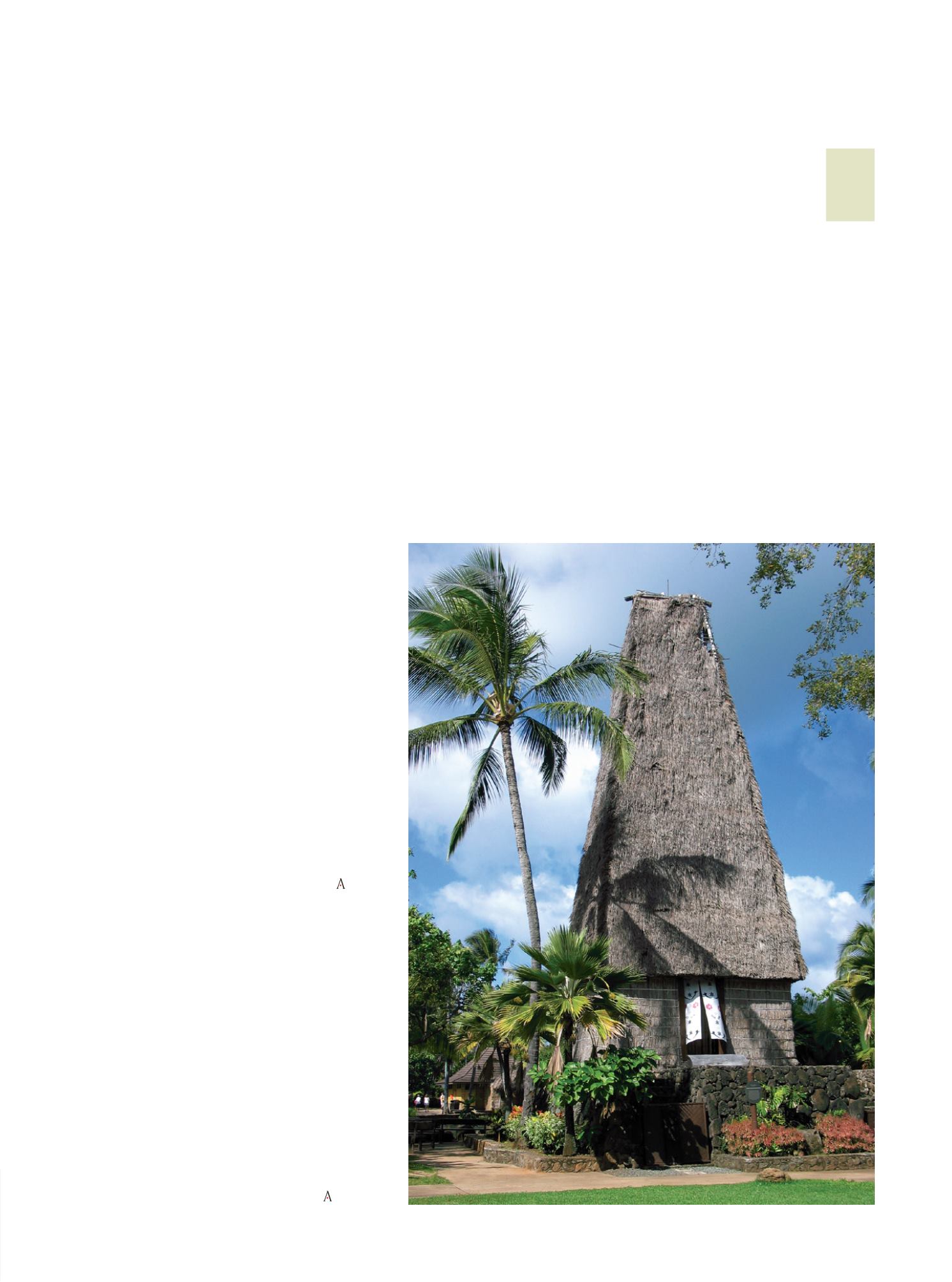
herederos como un dios en un
“burekalou”
(templo)
que se establecía para su adoración, regido por sa-
cerdotes sucesores. Su espíritu habitaba el cuerpo
de alguna criatura viva que a partir de entonces era
temida, venerada y respetada por toda la tribu. La
vida de los fiyianos continúa rigiéndose por rituales
acompañados de elaboradas ceremonias y estricta
obediencia de las prácticas ancestrales, con arrai-
gadas concepciones mágicas de la vida.
Priests and healers were (and still are) me-
diators between gods and men. The first settlers
believed in a future life and a terrestrial home
for the soul after death. Many of the inhabitants
thought themselves as autochthonous, and the
memory of past migrations was forgotten.
The Native Lands Commission in Fiji says that
each hero or precursor founded a
yavusa
(a tribe)
with the direct descendants of one “Kalou-vu” or an-
cestor god. This founder was invariably deified af-
ter death, worshiped by their heirs as a god in a
bu-
rekalou
(temple) that was built for prayers, ruled by
successor priests. Their spirits lived in the bodies of
live creatures that were to be feared, worshiped and
respected by everyone in the tribe from then on.
Fijians’ lives continue to abide by rituals and cere-
monies, and strict obedience of ancestral practices,
with rooted magical beliefs about life.
11
11. Un “Burekalou”
es un templo, una
casa espiritual
construida en
memoria de los
antepasados
en los pueblos
tradicionales.
/
A Burekalou
is a temple, a
spiritual house
built in memory
of the ancestors
in traditional
villages.