



 98 / 132

especies •
species
C
onsiderada uno de los lagartos
más hermosos del mundo, la
iguana bandeada de Fiyi
(Bra-
chylophus fasciatus / Brachylo-
phus bulabula)
es endémica de
esta nación y se puede encontrar
en otras regiones del Sur del Pa-
cífico, como Tonga y Vanuatu. Los
habitantes de este conglomerado de islas se han uni-
do en años recientes para proteger esta especie que
ahora se considera un tesoro nacional.
La iguana bandeada es un reptil arbóreo que habi-
ta los bosques y las áreas costeras pantanosas. Tam-
bién son buenas nadadoras, y se cree que evoluciona-
ron a partir de iguanas que migraron en escombros
que flotaron a la deriva hacia el Sur del Pacífico desde
Sudamérica. Son más delgadas que otras especies de
iguanas; pueden crecer hasta 80 cm y pesar alrededor
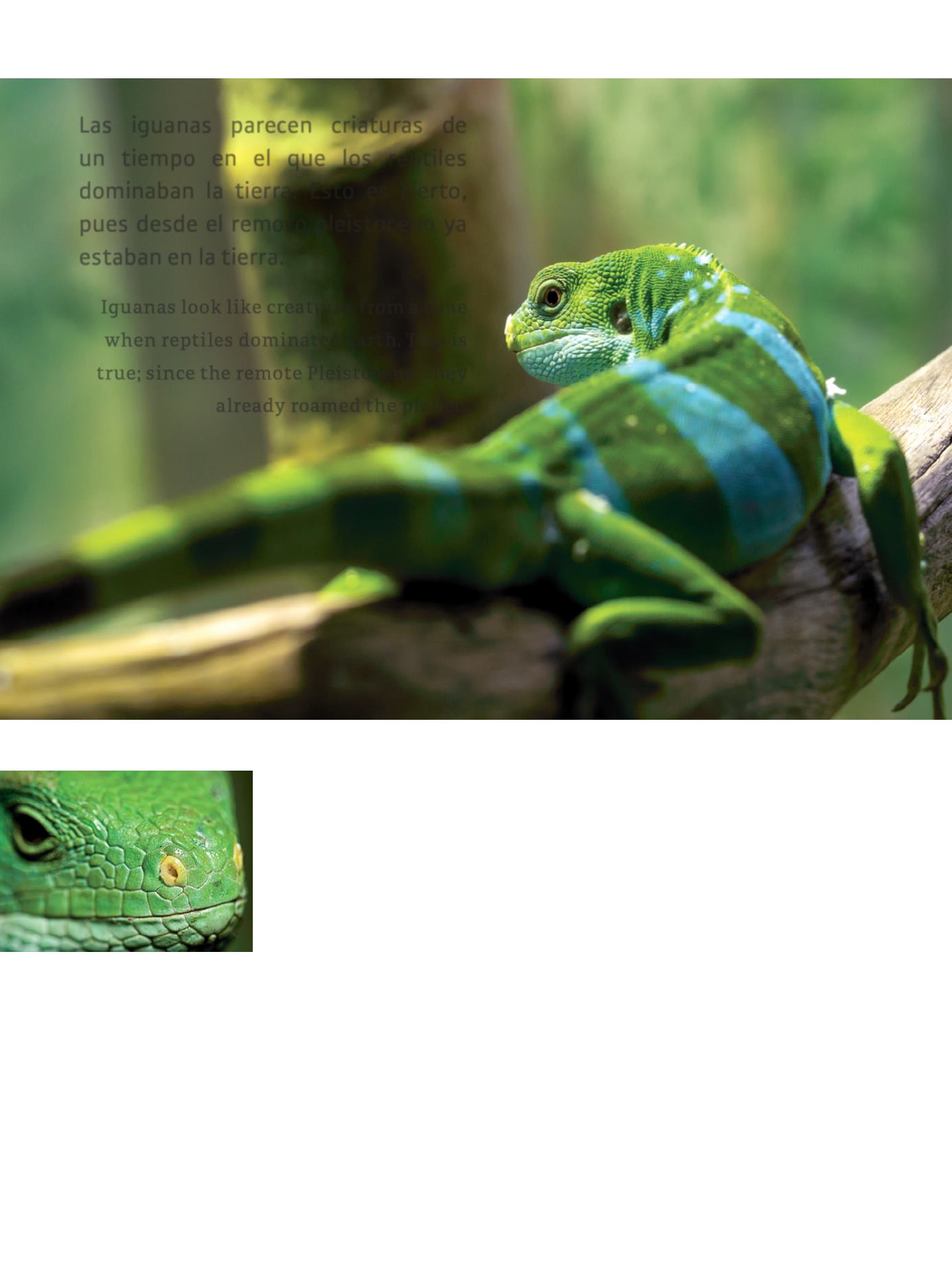
de 1.8 kg. A los machos se les conoce por las bandas
blanquiazules que rodean sus cuerpos verdes –carac-
terística que les atribuye su nombre– mientras que
las hembras usualmente portan un color verde unifor-
me. Ambos tienen vientres y fosas nasales amarillos,
y una cresta pequeña (0.5 cm).
C
onsidered one of the most beau-
tiful lizards in the world, the Fiji
Banded Iguana
(Brachylophus
fasciatus / Brachylophus bula-
bula)
is endemic of this nation
and can also be found in other
regions of the South Pacific, like
Tonga and Vanuatu. Locals have
come together in recent years to contribute to the
protection of this species and now it is considered a
Fijian national treasure.
The banded iguana is an arboreal lizard that
inhabits forests and swampy coastal areas. They
are good swimmers as well, and they are believed
to have evolved from iguanas that migrated to
the South Pacific through drifting debris from
South America. They are more slender than
other iguana species and can grow up to 80cm,
and weigh around 1.8kg. Males are known for
the bluish-white bands that circle their green
bodies—trait from which they get their name—
while females are usually a variety of uniform
green. Both have yellow underbellies and
nostrils, and a small crest (0.5cm).
·amura·
96
Las iguanas parecen criaturas de
un tiempo en el que los reptiles
dominaban la tierra. Esto es cierto,
pues desde el remoto pleistoceno ya
estaban en la tierra.
Iguanas look like creatures from a time
when reptiles dominated Earth. This is
true; since the remote Pleistocene, they
already roamed the planet.