



 101 / 132

·amura·
99
especies •
species
However, this iguanid lizard thrives in captivity,
which is why several captivity breeding programs have
been created in conservation centers such as the Fear-No-
More Zoo and Kula Ecopark, plus they are under the pro-
tection of Fiji and international laws. The banded iguana
is elusive in the wild, and researchers have a hard time
studying their interactions and behaviors outside of cap-
tivity; they are excellent at camouflaging and hiding in
plain sight. But they have observed specimens in captiv-
ity and determined some social behavior patterns, like
head-bobbing and color-changing as a means of commu-
nicationunder different circumstances. Anexample is the
changes a male undergoes when it meets other males in
comparisonwith the low contrast between the bands and
the green background while sleeping. Additionally, their
long claws allow themto climb highup the trees, and dur-
ingbreedingseason, females lay four to sixeggs andcover
themwithsoiluntilitisimpossibletotellwheretheywere
buried. The eggswill hatch between 120 and 170 days.
In Fijian culture, the iguana is called “Vokai”, while
some tribes call it “Saumuri” and is totemic to them. People
used to fear these lizards because they are capable of turn-
ing almost completely black when they become aggres-
sive, which has influenced myths where the iguana plays
a villainous role and stories where they jump from trees to
attack villagers. Conservation efforts have changed that
reputation by letting children interact with them, demon-
strating iguanas are mostly harmless and raising aware-
nessof their vulnerability instead. Localshaveparticipated
in the endeavor to restore their habitat, reduce threats like
predators and alert authorities about possible poachers.
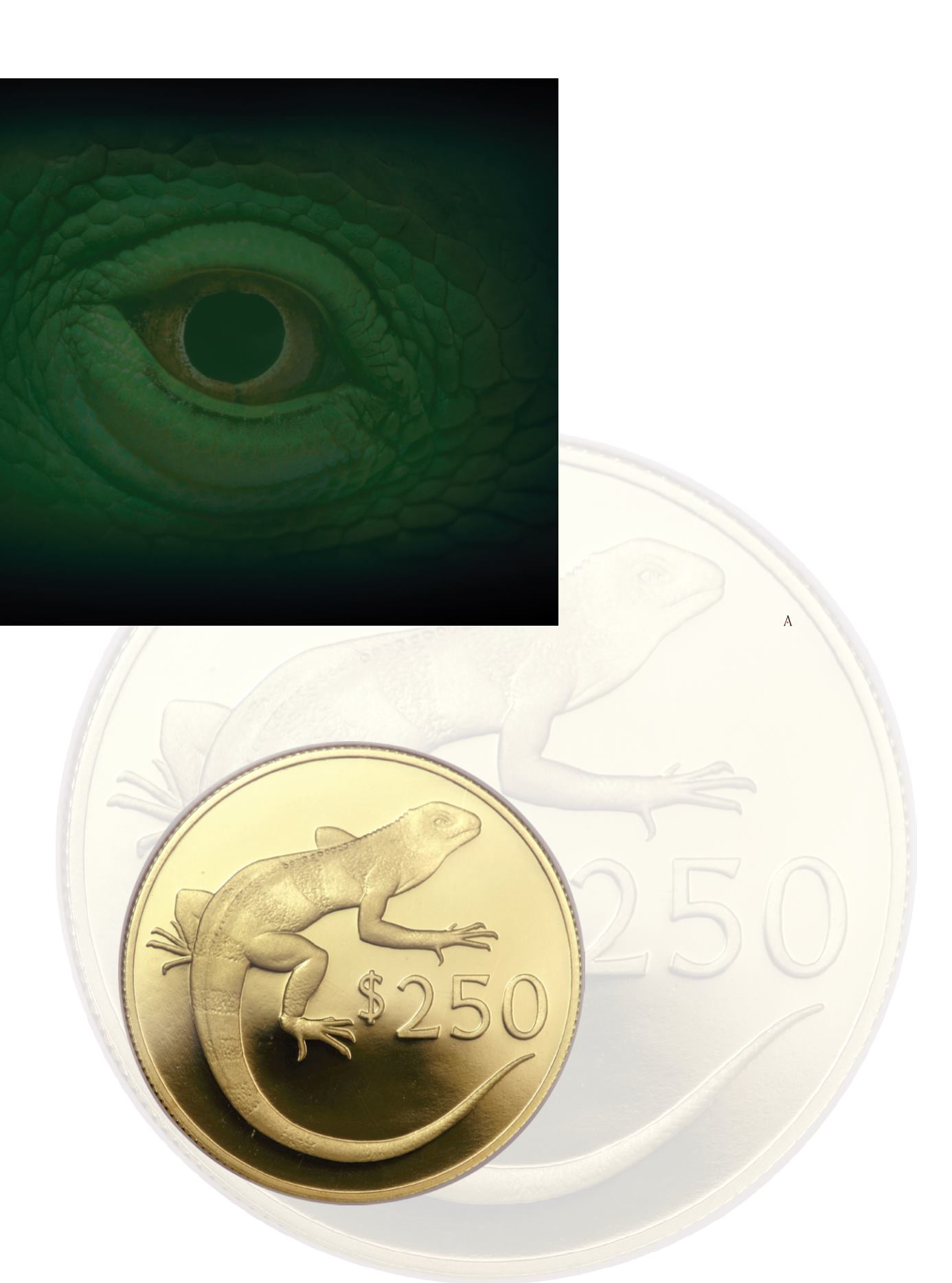
Now the species is deeply respected and honored; it is even
featuredonstamps and local currency.
Fiji implemented new
currency symbols 25 years
after its Independence,
replacing Queen Elizabeth II
with plants and animals—
the banded iguana among
them—to promote an
identity of their own and
their environmental pride