



 104 / 132

·amura·
102
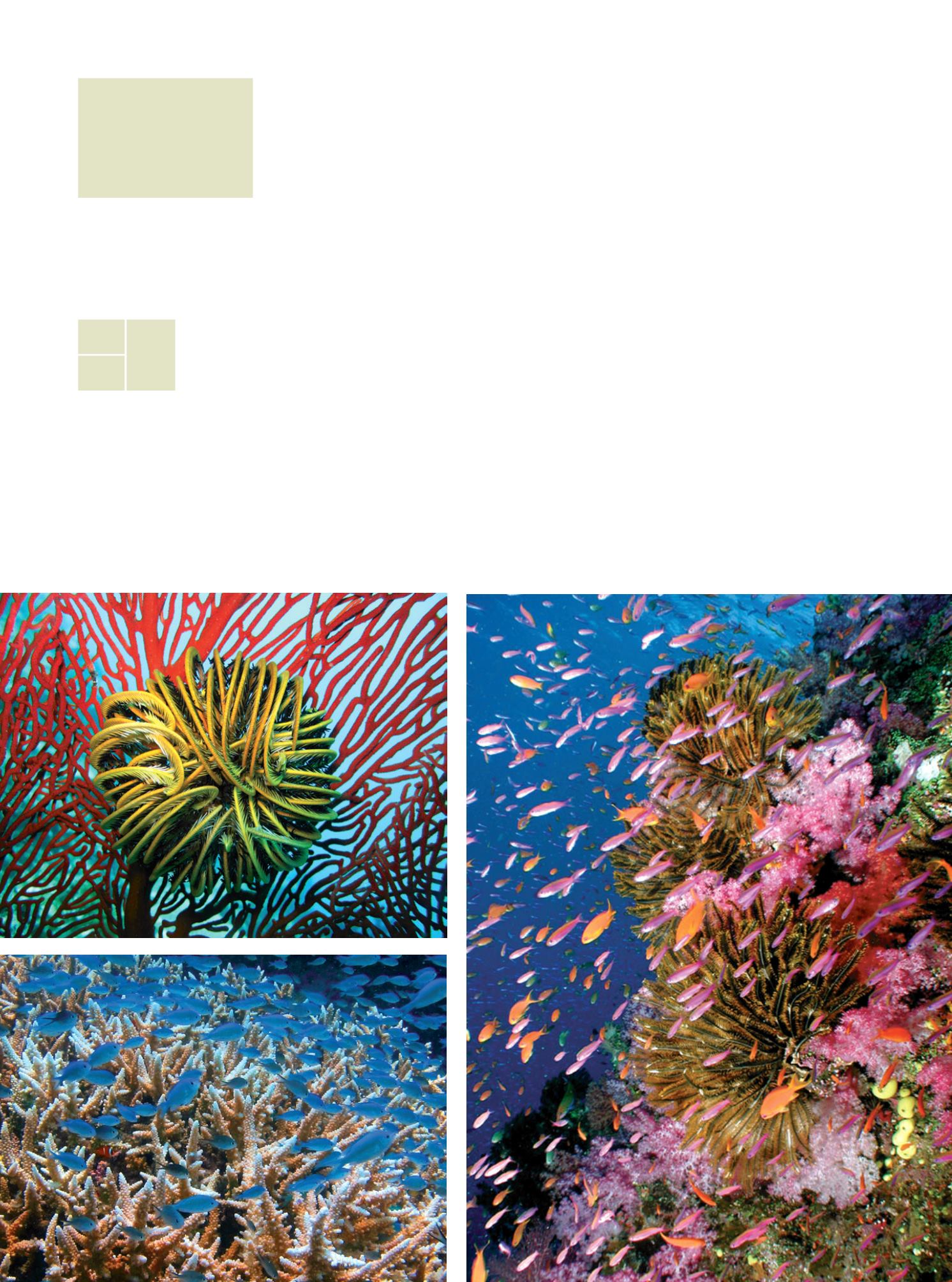
Es difícil imaginar que estas formaciones fantásti-
cas estén constituidas por millones de pequeñísimos
animales carnívoros, que ocupan solamente el 1% de la
superficie oceánica planetaria pero representan el ho-
gar para el 25% de las criaturas marinas. Los registros
fósiles establecen que los arrecifes de coral que pue-
blan hoy los mares del planeta comenzaron a formarse
hace 50millones de años; se calcula que existen alrede-
dor de 2,500 especies.
Sus funciones son altamente beneficiosas para
la vida: han dado forma a islas llamadas atolones;
son productores de arena y evitan la erosión en
playas y costas, por lo que brindan una significati-
va protección contra las inundaciones por la entra-
da del mar en la temporada de huracanes. Además,
los corales captan el CO
2
de la atmósfera a través
de la fijación del mismo en sus esqueletos; han de-
mostrado ser beneficiosos para el tratamiento de
distintas enfermedades, por lo que se usan en la
industria farmacéutica, y aportan una gran ganan-
cia económica a través del sector turístico.
El archipiélago es conocido como el centro
mundial del coral blando o suave, llamado así por
su forma y flexibilidad. Los corales pertenecen al
grupo de los Cnidarios, al que también correspon-
den las medusas, los abanicos de mar y las ané-
monas. El sistema de arrecifes de Fiyi posee una
belleza singular por su extensa paleta de colores.
It is difficult to imagine that these fantastic
formations are inhabited by millions of tiny car-
nivorous animals, which occupy only 1% of the
planet’s oceanic surface, but it is home to 25% of
all marine creatures.
Fossil records state that coral reefs currently
populating the oceans began to form 50 million
years ago; it’s calculated that there are around
2,500 species.
Their functions are highly advantageous for life:
they have shaped the islands called atoll, produce
sand and prevent the erosion of beaches and coasts,
which is why they provide significant protection
against flooding from an overflow of seawater dur-
ing hurricane season. Additionally, corals capture
CO
2
from the atmosphere through its fixation into
their skeletons. It has been proved that corals are
beneficial for the treatment of different diseases,
and this is why they are used in the pharmaceutical
industry, and they contribute with great economi-
cal profit through the tourist sector.
The archipelago is known as the global center
of the soft coral, thus named due to its composi-
tion and flexibility. Corals belong to the family
of the
Cnidaria
, to which jellyfish, sea fans and
anemones also belong. Fiji’s reef system pos-
sesses a singular beauty due to its extensive
color range.
planeta azul •
blue planet
1
1. Playas e islas de coral,
parajes inolvidables
que invitan a disfrutar
la aventura de vivir, le
están esperando en Fiyi. /
Beachesandcoralislands,
unforgettableplacesthat
inviteyoutoenjoythe
adventureofliving,are
waitingforyouinFiji.
2. Las formaciones
coralinas: una obra de arte
magistral de la naturaleza.
/
Thecoralformations:a
masterpieceofnature.
3. Los corales proveen
sustento y protección
al 25%de las especies
marinas. /
Corals
providesustenanceand
protectionto25%ofall
marinespecies.
4. Es posible encontrar
corales a 6,000mde
profundidad. /
Itispossible
tofindcoralsupto6,000
mdeep.
2
3
4
Foto /
Photo
: THE CULT
URE / PALACE TOURS / BEST GOLF AND DIVING