Y de exquisitez, una comida islandesa típica como
el “Hangikjöt” (cordero ahumado), el “Skyr” (especie
de yogur), el “Har
ð
fiskur” (pescado seco) o el “lundi”
(frailecillo). Qué tal el chocolate islandés, (o el choco-
late-regaliz), pastillas Ópal. Y si pasa por Islandia poco
antes de Navidad, podría llevarse un poco de “jólaöl”
(refresco navideño: naranjada tipo fanta mezclada con
malta) y algo de “Laufabrau
ð
” (pan de hojas: tortitas
finas cuya pasta ha sido “tallada” a cuchillo).
Ysi puedenservir las siguientes recomendaciones cul-
turales, a continuación una lista de las fiestas y celebracio-
nesmás importantes a celebrarse durante todo el año:
Enero-mayo
: Temporada cultural (música, teatro y
otras artes).
Del 23 de enero al 22 de febrero
: Fiesta Invernal (
Þ
o-
rrablót), una antigua tradición vikinga donde se degus-
tan “manjares” como cabeza de cordero chamuscada.
Del 23 al 25 de febrero:
Días del “Reventón”. El «Lunes
del Buñuelo» atibórrese antes de Cuaresma con todos
los buñuelos de crema que pueda comer, y el «Martes
del Reventón» con raciones gigantes de carne salada y
sopa de guisantes.
Febrero:
La Fiesta de la Luz en el Parque de Laugarda-
lur, Reikiavik.
1 demarzo:
Día de la Cerveza. La cerveza no se legalizó
en Islandia hasta 1989 y la gente celebra ese gran día
de manera apropiada cada año.
Del 18 al 22 marzo:
“Food & Fun”, es un festival cu-
linario anual con la participación de conocidos chefs
extranjeros compitiendo con los mejores maestros de
la cocina islandesa.
Del 9 al 13 de abril:
Semana Santa, donde se cele-
bran conciertos de música clásica y eclesiástica por
todo el país.
23 de abril:
Primer Día del Verano, para celebrar el final
del invierno y el comienzo del verano.
And for a typical exquisite Icelander meal we
have the “Hangikjöt” (smoked lamb), the “Skyr”
(some kind of yoghurt), the “Har
ð
fiskur” (dry fish) or
the “lundi”. What about the Regaliz Icelander choco-
late (or regaliz-chocolate) and the Opal tablets. And
if you go through Iceland right before Christmas,
you will be able to get you hands on some “jólaöl”
(a holiday soda: a orange flavored drink mixed with
malt) and some “Laufabrau
ð
” (a fine bread).
And if these recommendations are useful, here’s
a list of the most important dates and holidays that
are celebrated during the year:
January-May:
Cultural Season (music, theater, and
other arts).
From January 23rd to February 22nd:
Winter
celebration (
Þ
orrablót) an old Viking tradition
where several “delicacies” are tasted, like roasted
lamb head.
From February 23rd to February 25th:
The “party”
days. The “Fritter Monday” eat all the cream fritters
you can before Lent, and the “Party Tuesday” with
big portions of salted meat and peas soup.
February:
The celebration of Light at the Lau-
gardalur Park, Reykjavik.
March 1st:
The Beer Day. Beer wasn’t legalized until
1989, so people celebrate this great day accordingly
every year.
Frommarch 18th to March 22nd:
“Food & Fun” the
annual culinary festival whit the participation of
world chefs competing against the best chefs in Ice-
lander cuisine.
FromApril 9th to April 13th:
The Holy Week, where
classic and ecclesiastic music concerts are celebra-
ted all over the country.
April 23rd:
First day of summer, to celebrate the end
of winter and the beginning of summer.
·amura·
51
compás int •
compass int
1
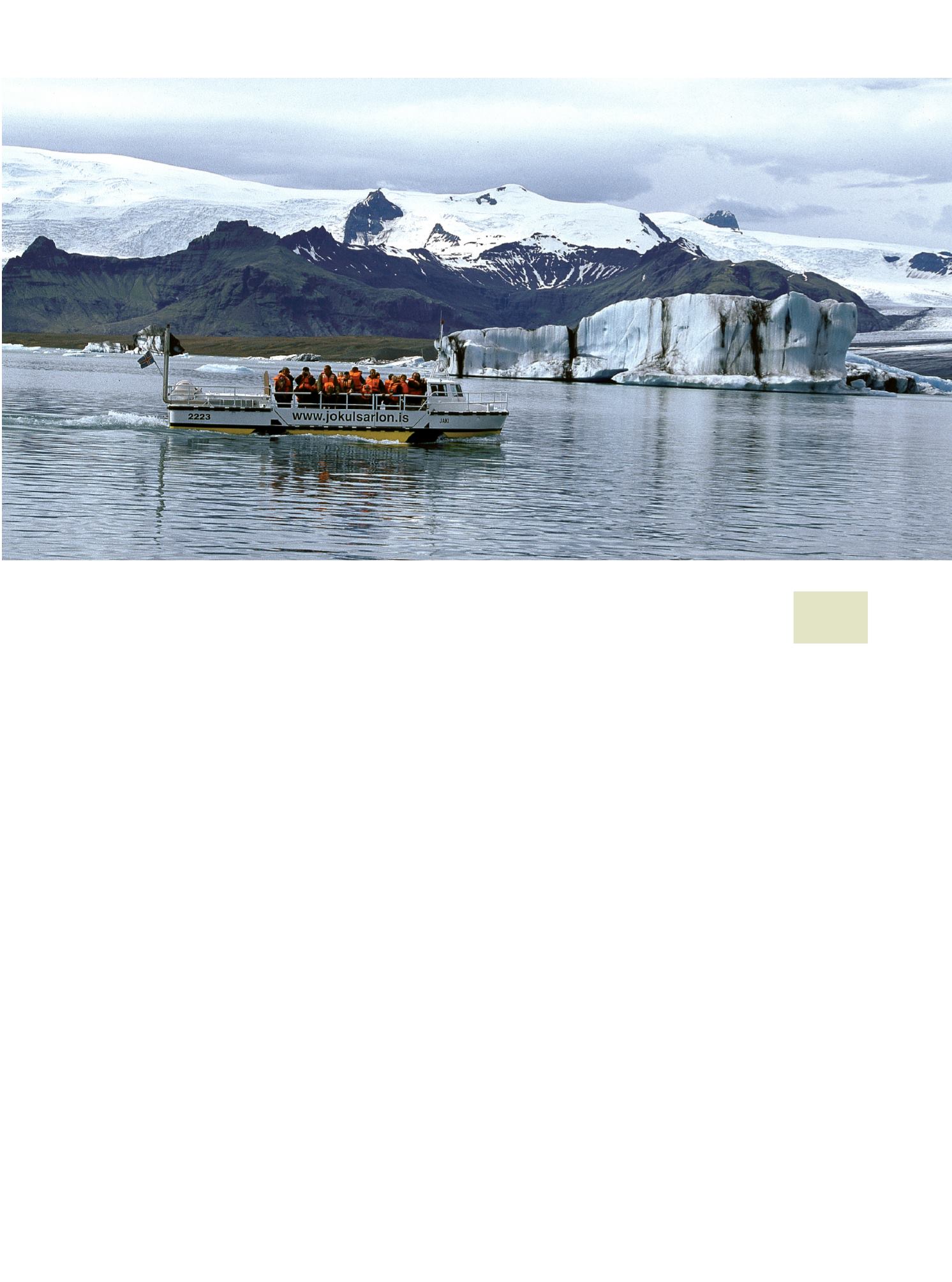
1.Jökulsarlon, la
laguna del río glaciar,
de las más accesibles
para arribar. /
Jökulsarlon, the
glacier river lagoon,
is one of the most
accessible


