·amura·
41
joyas • j
ewelry
Características excepcionales
Según las teorías científicas, la Tierra sólo ha creado
diamantes tres o cuatro veces en su vida. Los diaman-
tes naturales se forman a profundidades de entre 140
a 190 km bajo el manto terrestre con presión y tem-
peraturas extremas, condiciones que se dan en perío-
dos de 1 a 3,300 millones de años; lo que corresponde
aproximadamente al 25 o 75%de la edad de la Tierra.
En el siglo XX, expertos en el campo de la gemolo-
gíadesarrollaronmétodosparaclasificar a losdiaman-
tes y valorarlos como gemas. Estas cuatro característi-
cas, conocidas informalmente como las cuatro C, son
las valoraciones más básicas de un diamante: carat,
cut, colour y clarity (quilataje, corte, color y claridad).
La naturaleza dicta las características del color
y claridad, mientras que el corte y quilataje son
directamente concedidos por la mano del hombre.
La calidad del corte y la precisión del pulido final,
liberan la belleza del diamante, determinando la
cantidad de luz refractada: su brillo. El tamaño del
diamante es medido por el peso en quilates.
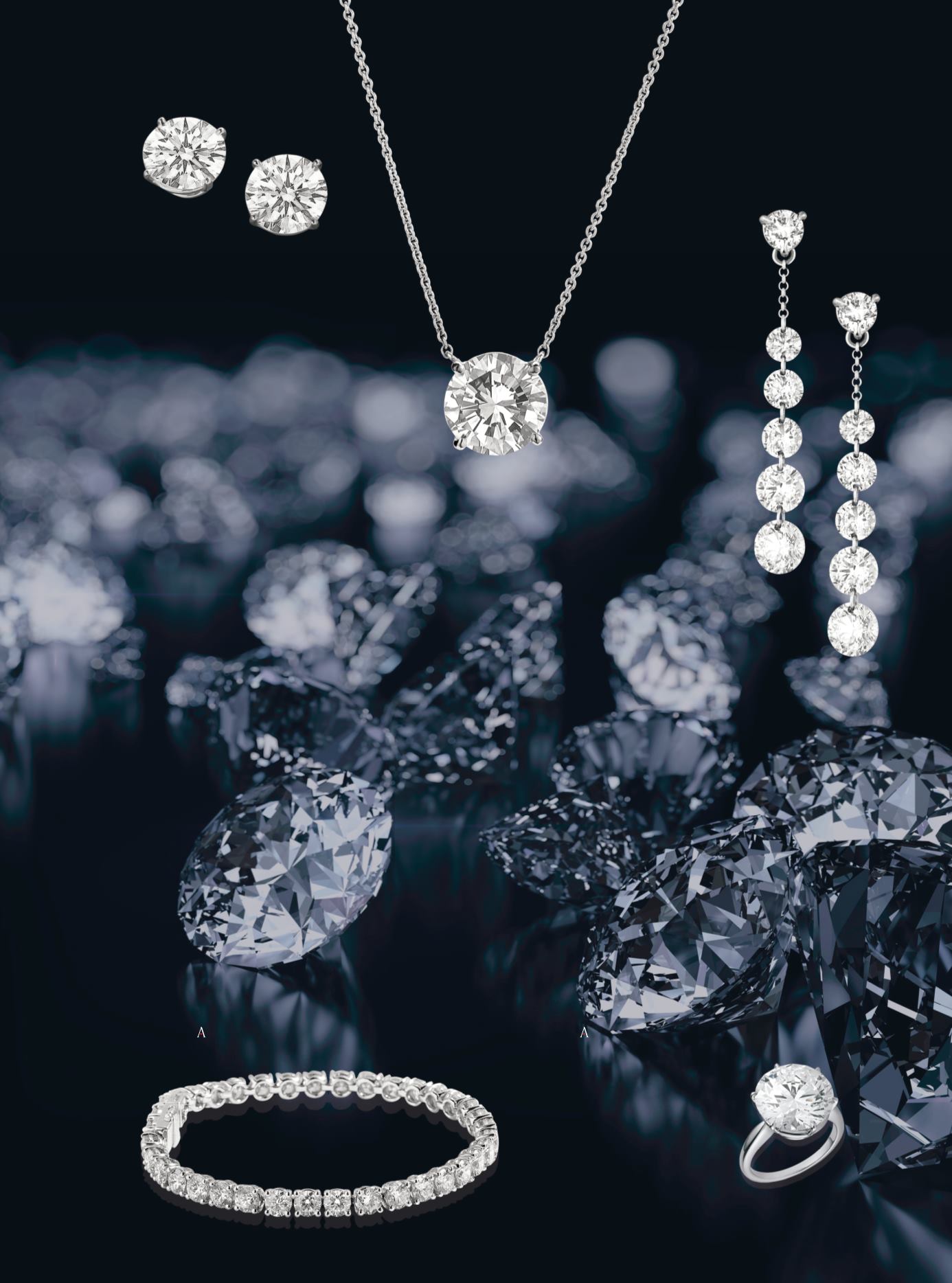
El más clásico corte es el redondo o brillante,
que se inventó en 1919 y consta originalmente
de 58 facetas cortadas en dos pirámides de bases
enfrentadas: 33 en la corona (mitad superior) y 25
en el pabellón (mitad inferior). Quien posee un dia-
mante, conserva el más antiguo, duro y hermoso
material creado por el planeta.
Exceptional features
According to scientific theories, Earth has created
diamonds three or four times in her life. Natural di-
amonds are formed from 140 to 190 depths, under
the mantle, with extreme pressure and tempera-
ture, conditions given in periods that range from 1
to 3,300 million years, corresponding more or less
to 25% or 75% of the Earth’s age.
In the XX century, experts in gemology de-
veloped methods to classify diamonds and val-
ue them as gemstones. These characteristics
known informally as the four Cs are the most
basic assessments of a diamond: carat, cut, color
and clarity.
Nature dictates the characteristics of color
and clarity; and cut and carat are given straight
by the man’s hand. The quality of the cut and pre-
cision of the final polish free up the beauty of the
diamond, determined by the refracted light: its
brilliance. The size of the diamond is measured
by its weight in carats.
The most classic cut is round or brilliant, it was
invented in 1919, having originally 58 faces, cut in
two confronted pyramids, 33 in the crown (upper
half) and 25 in the pavilion (lower half). The person,
who possesses a diamond, preserves the hardest
and themost ancient and beautiful material created
by the planet.


