Llamada por los primeros exploradores “el con-
tinente perdido”, acoge la más amplia diversidad de
flora y fauna endémicas del planeta. Debido a la sepa-
ración de esta isla, con tierra continental, desde hace
más de 12,000 años, las especies que ahí habitan evo-
lucionaron de manera única.
Los vestigios de los primeros habitantes de esta
gran isla datan de la segunda mitad del 600 d.C., in-
vestigaciones realizadas el siglo pasado establecen la
teoría de que hacia el siglo III los primeros navegan-
tes malayo-polinesios atravesaron 8,000 kilómetros
de océano y arribaron a la costa africana, hecho que
se repitió en el siglo V. Esto provocó una mezcla con
las etnias africanas, misma que dominó; de ahí que
su lengua sea magalache y no bantú –la lengua de los
pueblos más próximos del continente africano–. En
el periodo comprendido entre los años 1301 a 1450,
comerciantes árabes, comoranos, yemenitas y so-
malíes establecieron puertos en la región norte de la
isla, los cuales fueron destruidos con la llegada de los
portugueses guiados por el conquistador Diogo Dias;
sin embargo, al no hallar oro ni marfil ni especias, los
lusitanos perdieron interés en la isla.
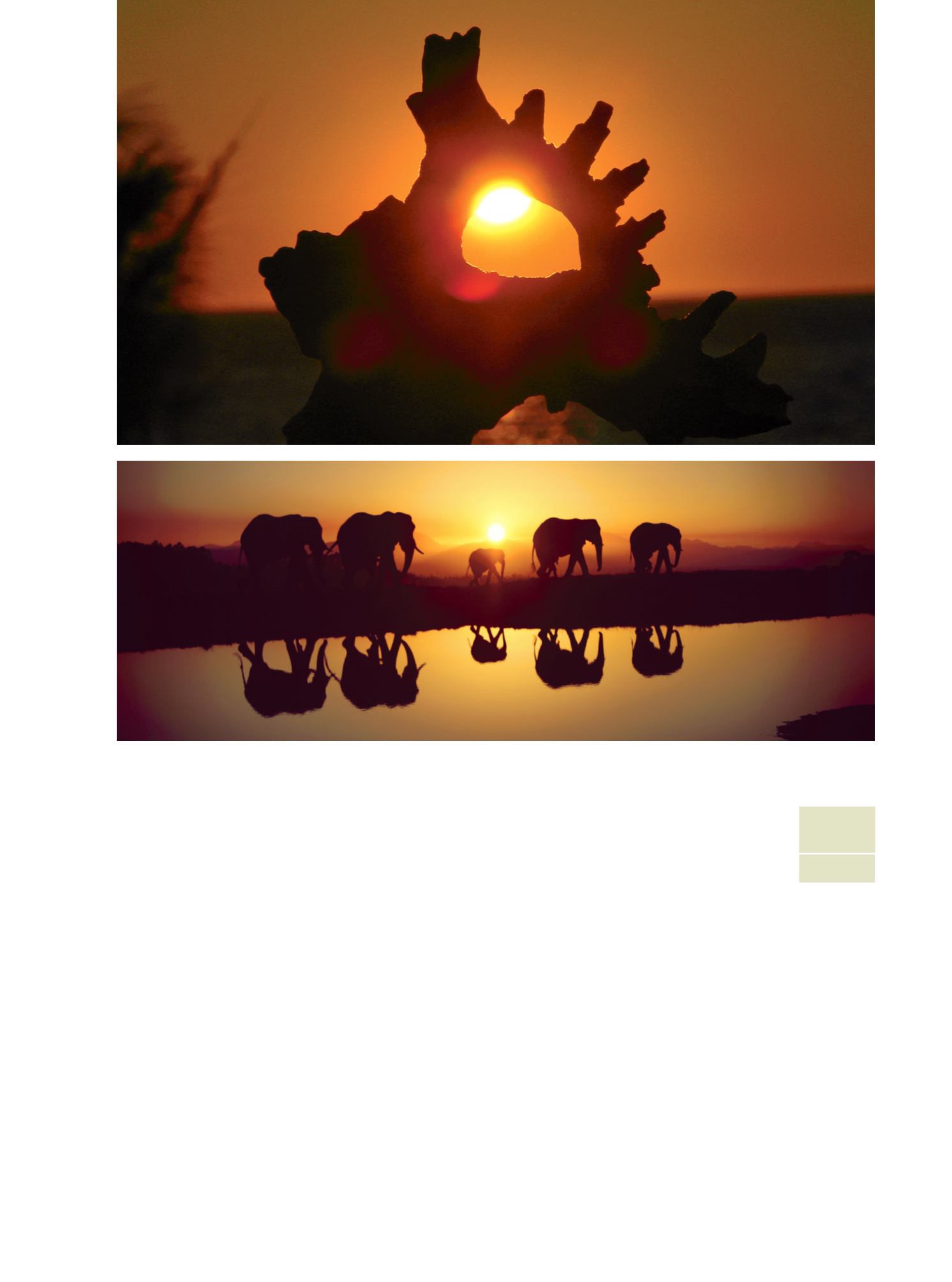
3.Madagascar
es llamada“La
islaroja”porsus
tierrasentonos
encendidos,sobre
todoalatardecer./
Madagascariscalled
“Theredisland“
becausetheirfiery
lands,especiallyat
sunsettones.
4.Madagascaresuno
de loshogaresdel
elefanteafricano,el
cualseencuentraen
peligrodeextinción.
/
Madagascarisone
ofthehomesofthe
Africanelephant ,
whichisendangered.
compás int • int compass
Named by the first explorers as “The lost con-
tinent”, it shelters the widest endemic flora and
fauna diversity of the planet, and due to the separa-
tion of this island from the continental land, 12,000
years ago, the species inhabiting it evolved in a
unique way.
Traces of the first inhabitants of this big island
date from the second half of 600 D. C.; investiga-
tions made past century establish the theory that
towards the III century, the first Malaysian-Polyne-
sian seafarers went through 8,000 km of ocean, and
arrived in the African coast, once and once again
until the V century, bringing about the prevail-
ing mix of African ethnic groups; which is why its
tongue is Malagasy and not Bantu –the language of
its closest peoples in the African Continent. In the
period between 1301 and 1450, Arab, Comoro, Ye-
menite and Somali traders established ports in the
northern region of the island, whichwere destroyed
by the arrival of the Portuguese who were guided by
conqueror Diogo Dias; nevertheless, having found
no gold, ivory or spices, the Lusitanians lost inter-
est in the island.
·amura·
47
3
4


