



 107 / 132

·amura·
105
coOTerWBOcy •
conservación
Esto protege a los tiburones mientras se encuen-
tren en el área de jurisdicción de la ciudad, pero todos
sabemos que las especies de fauna marina migran y no
reconocen fronteras políticas, ypor lo tanto, siguen sien-
do vulnerables a la pesca de aleta más allá del santuario.
En Filipinas, con cinco millones de visitantes ex-
tranjeros en 2015 y alrededor de 45 millones de tu-
ristas nacionales, la demanda de nuevas atracciones
y destinos en el país es inevitable. El número de visi-
tantes interesados en las interacciones con fauna ma-
rina parece estar creciendo. En 2012 hubo alrededor
de 150,000 turistas que participaron en la interacción
con fauna marina a través de seis destinos en el país.
Otros sitios pueden querer sacar ventaja demasiado
rápido con este auge y algunos incluso se han converti-
do en polémica con sus prácticas. Uno de esos sitios es
la ciudad Oslob en Cebú, donde los tiburones ballena son
atraídosconpecespequeños,lo cualhasuscitadolaindig-
nación de varios grupos de conservación. Se argumenta
que el aprovisionamiento afecta negativamente a la salud
del tiburón ballena, así como su movimiento y compor-
tamiento. Acostumbrarlos a los seres humanos y a los
barcos también los hacemás vulnerables a la caza furtiva.
Pese a las protestas, Oslob tiene el mayor número de visi-
tantes para cualquier sitio de interacción con fauna mari-
na en el país, alcanzando un máximo en 2011 de 98,000
visitantes, para su primer año de funcionamiento.
This protects the sharks while in the area of the
town’s jurisdiction, but we all know that marine
wildlife speciesmigrate and do not recognize politi-
cal boundaries, and therefore, remain vulnerable to
shark fin fisheries beyond the sanctuary.
With the Philippines, fivemillion foreign visitor
in 2015 and around 45 million domestic tourists,
the demand for new attractions and destinations
in the country is inevitable. The visitor numbers
interested in marine wildlife interactions seem to
be growing. In 2012, there was a low estimate of
150,000 tourists engaged in marine wildlife inter-
action across six destinations in the country.
Other sites may want to cash in too quickly
with this boom and some have even become con-
troversial with their practices. One such site is
Oslob town in Cebu, where the whale sharks are
lured with tiny shrimps which has elicited out-
rage from various conservation groups. It is ar-
gued that provisioning negatively affects the
whale shark’s health, movement, and behavior.
Accustoming them to humans and boats also
make them more vulnerable to poaching. De-
spite protests, Oslob has the most number of
visitors for any marine wildlife interaction site
in the country, peaking with 98,000visitors in
2011, its first year of operation.
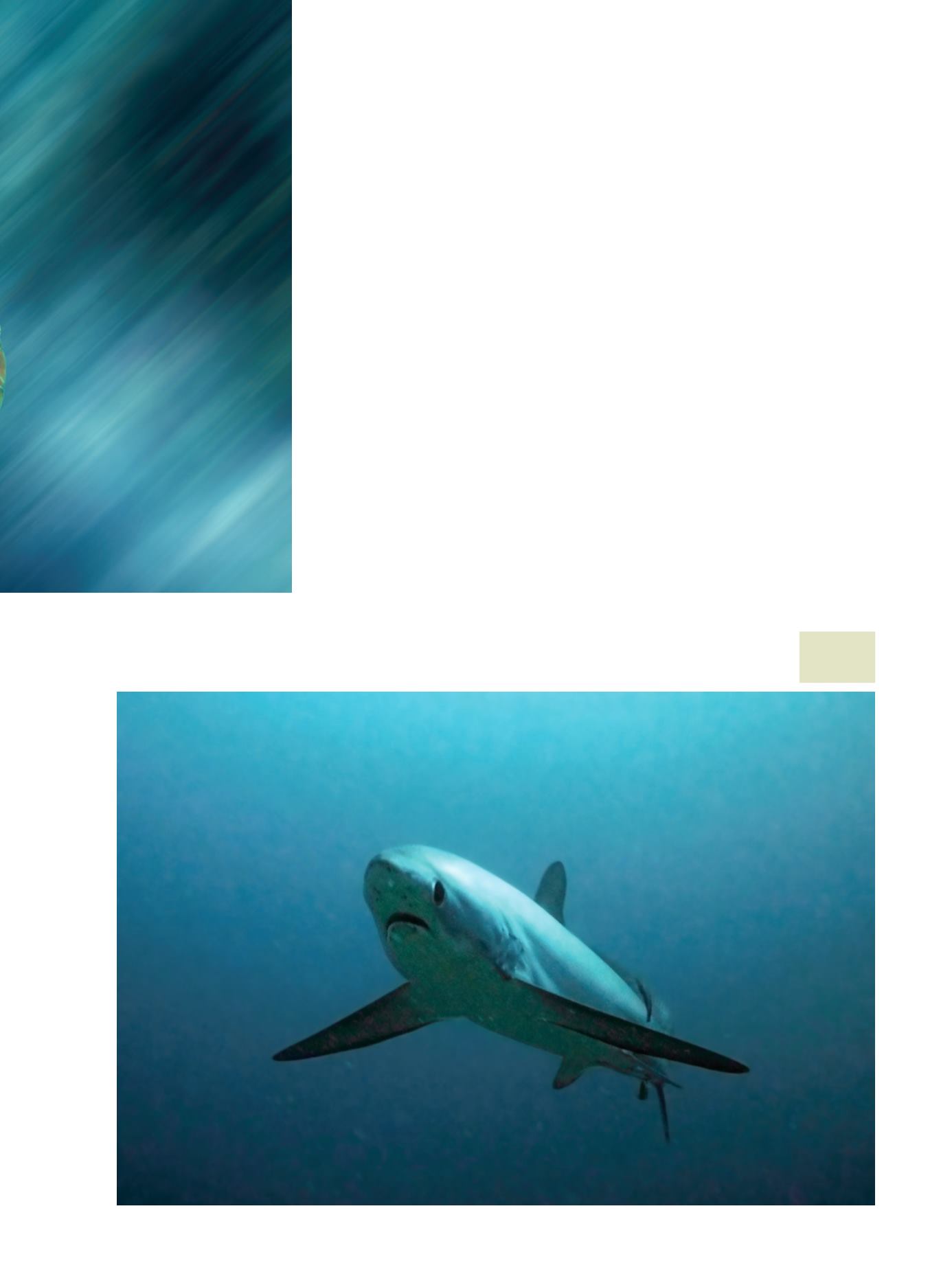
9.TiburónZorro.
/
Thresher shark.
9