



 117 / 132

·amura·
115
IereOciB cVMtVrBM •
culture and heritage
1
La “Nao de China” que unió
a Acapulco con el Oriente
The “Nao of China” that joined
Acapulco with the East
W
ithout a doubt one of the most
famous episodes of the story
of the New Spain concerns the
Galleon of Manila, also known
as the Nao of China. It was a
vessel that, once a year, linked the ports of Manila
and Acapulco, carrying in its hold silk, porcelain,
spices, fine woods, lacquer, carpets, folding screens
and vases from Asia, or gold and silver from Ameri-
ca, as well as diverse goods from Europe.
The galleons were huge ships developed in
the mid-sixteenth century that combined the
carrying capacity of the carracks with some of
the maneuverability and speed of the caravels.
At the time they were the most powerful ships in
the world and that’s why Spain selected them for
this trade. Although originally King Philip II de-
cided that these trade galleons could not exceed
300 tons nor carry merchandise worth more than
250,000 pesos, in the eighteenth century
the “Santísima Trinidad” came to have a
tonnage of about 2,000 tons and some of
its shipments reached values of over two
and a half million silver pesos.
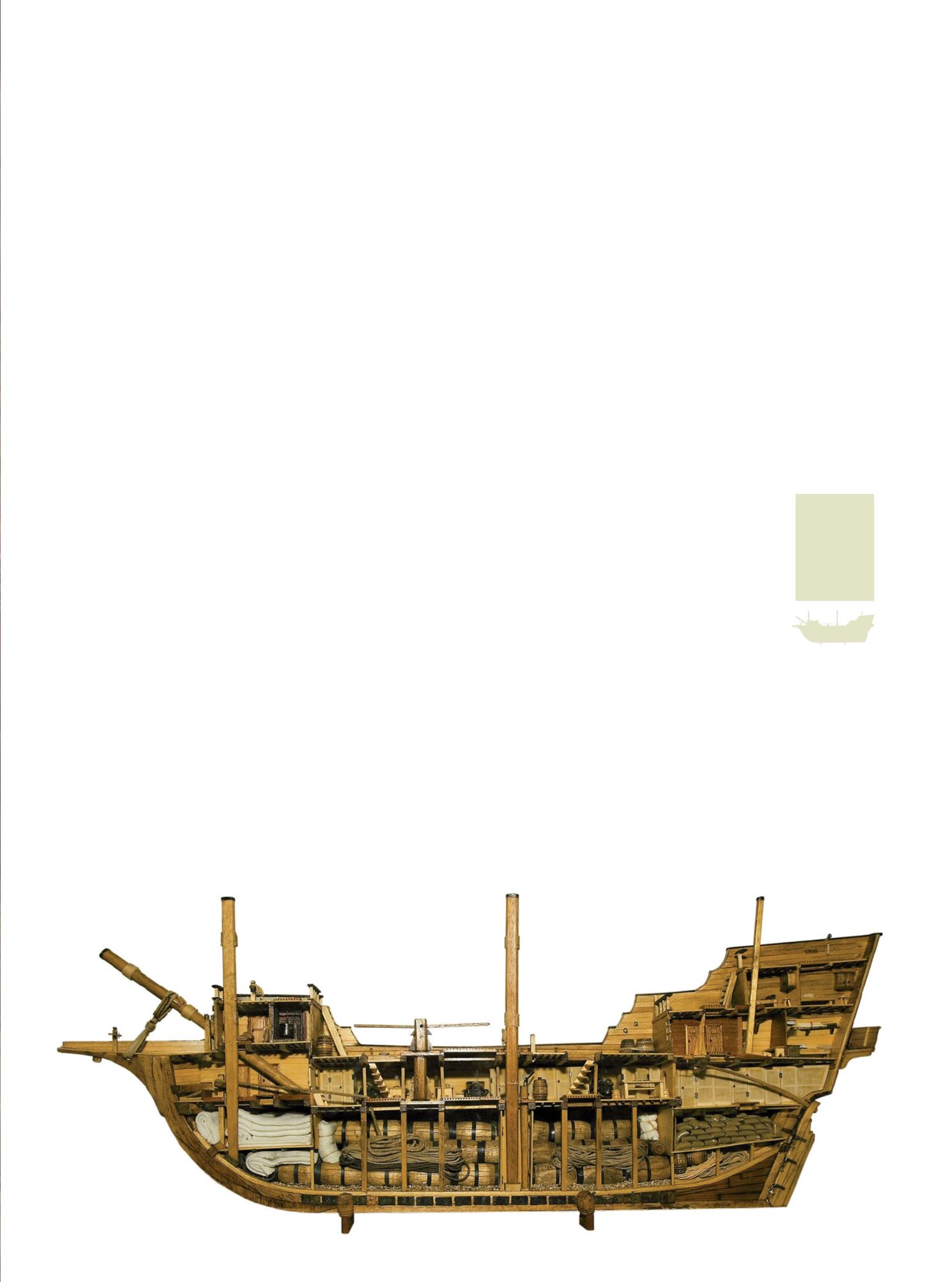
1
1.ElGaleóndeManila
representaunode los
episodiosnáuticosmás
importantesdelmundo
yungranpasoa la
globalización./
TheManilaGalleon
representsoneofthe
mostimportantnautical
eventsintheworldand
agreattransitionto
globalization.
-BTCoEFHBT
ycapacidadpara
transportarmercancías,
hacende losgaleones
grandesnavíoscon
unaestructuramuy
característica./
Wineries
andcarryingcapacity
totransportgoods,
bringsthegalleonstheir
characteristicstructure
ashugeships.
2
S
in duda alguna, uno de los episodios
más conocidos de la historia novohis-
pana es el referente al Galeón de Manila,
tBNCJnO DoOoDJEo DoNo MB £/Bo EF $IJ-
na”. Se trataba de un bajel que, una vez
BM Bvo VOrB MoT QVFStoT EF MBOJMB Z ADBQVMDo MMFWBOEo
en sus bodegas seda, porcelana, especias, maderas fi-
OBT MBDB BMGoNCSBT CJoNCoT Z KBSSoOFT EF ATJB o FM
oSo Z MB QMBtB EF ANnSJDB BTr DoNo EJWFSTBT NFSDBEF-
rías provenientes de Europa.
-oT HBMFoOFT FSBO CBSDoT FOoSNFT RVF TVSHJFSoO B
NFEJBEoT EFM TJHMo 97* Z RVF DoNCJOBCBO MB DBQBDJEBE EF
carga de las naos con la maniobrabilidad y algo de la ve-
locidad de las carabelas. En su momento fueron los más
poderosos navíos del mundo, y es por ello que España
MoT TFMFDDJoOw QBSB SFBMJ[BS FTtF DoNFSDJo AVORVF FO VO
QSJODJQJo FM SFZ FFMJQF ** EFDJEJw RVF FTtoT HBMFoOFT DoNFS-
ciales no podrían superar las 300 toneladas ni transportar
mercancía con valor superior a 250,000 pesos, en el siglo
97*** FM 4BOtrTJNB 5SJOJEBE MMFHw B tFOFS VOB
capacidad de casi 2,000 toneladas y algu-
nos de su cargamentos alcanzaron va-
lores superiores a los dos millones y
medio de pesos de plata.