



 122 / 132

They set sail for the Philippines, lands al-
ready explored by the Spaniards, whom they
named in honor of King Philip II. The intrepid
explorers lead five ships and 350 men. After oc-
cupying some indigenous settlements on the
larger islands, Urdaneta set out to find the way
that would allow them to return to New Spain,
known as “the tornaviaje”, while in the Philip-
pines Legazpi remains to defend the conquest.
Once they occupied Leyte, Panay and Mind-
anao, the Spaniards went to Luzon where they
came in contact with the Tagalog people. They met
resistance from local leaders but they also discov-
ered the existence of a rich commercial port called
Mayniland. Legazpi then sent 300 of his men to
fight the Tagalogs. After defeating them, they
agreed to make peace, giving up several lands to
Spain, including the coveted city. There, Miguel
López de Legazpi founded the” Always Loyal and
Distinguished City of Spain in the East of Manila”
in 1571, which was to become the capital of the
Spanish dominions in Asia.
The city was built following the instructions
of King Philip II, as a metropolis known as Intra-
muros, because it was surrounded by a defensive
wall, and another extramural city, where the in-
digenous lived.
To his misfortune, Don Miguel would not see
the development of his city, because he died there
a year later, in 1572, amid poverty, despite having
been named General Captain and governor for life in
the Philippines. Two years later, a huge fleet of Chi-
nese pirates tried to seize the city.
In the fighting many of the Legazpi’s fellow
adventurers died, but in the end the Spaniards
repulsed the pirates and thus strengthened
their domination over the region, which they
kept for almost 320 years.
AM QBStJS QVTJFSoO SVNCo B MBT FJMJQJOBT tJFSSBT
ya exploradas por los españoles, quienes las habían
CBVtJ[BEo BTr FO IoOoS BM SFZ FFMJQF ** -oT JOtSnQJEoT
exploradores iban al frente de cinco naves y 350 hom-
bres. Tras ocupar algunos asentamientos indígenas en
MBT JTMBT NgT HSBOEFT USEBOFtB FNQSFOEF MB C|TRVF-
da del camino que les permitirá regresar a la Nueva Es-
paña, conocido como “el tornaviaje”, mientras Legazpi
QFSNBOFDF FO FJMJQJOBT QBSB EFGFOEFS Mo DoORVJTtBEo
UOB WF[ oDVQBEoT -FZtF 1BOBZ Z MJOEBOBo MoT
españoles se dirigieron a Luzón, donde entraron en
contacto con el pueblo tagalo. Allí encontraron la re-
sistencia de los gobernantes locales pero también se
enteraron de la existencia de un rico puerto comercial
llamado Mayniland. Legazpi envió entonces a 300 de
sus hombres a combatir a los tagalos. Tras derrotar-
los, éstos accedieron a firmar la paz, cediendo a Espa-
ña varias tierras, entre las que se encontraba la codi-
ciada ciudad. Ahí, Miguel López de Legazpi fundó en
1571 la Siempre Leal y Distinguida Ciudad de España
en el Oriente de Manila, que iba a convertirse en la ca-
pital de los dominios españoles en Asia.
La ciudad se construyó siguiendo las instruccio-
OFT EF FFMJQF ** DoNo VOB NFtSwQoMJ DoOoDJEB DoNo
Intramuros, porque se hallaba rodeada por una mura-
lla defensiva y otra ciudad extramuros, donde vivían
los indígenas.
1BSB TV EFTHSBDJB EoO MJHVFM Oo BMDBO[w B WFS FM
desarrollo de su ciudad, pues murió en ella un año des-
pués, en 1572, enmedio de la pobreza, a pesar de haber
sido nombrado Capitán General y Gobernador vitalicio
EF MBT FJMJQJOBT %oT BvoT EFTQVnT VOB JONFOTB otB EF
piratas chinos trató de apoderarse de la ciudad.
En el combate murieron muchos de los compañe-
ros de aventuras de Legazpi, pero al final, los españo-
les consiguieron rechazar a los piratas y así afianzar
su dominio sobre la región, mismo que mantuvieron
por casi 320 años.
·amura·
120
1.MiguelLópezde
Legazpi,fundadorde
laciudaddeManila./
MiguelLopezde
Legazpi,founderof
the Manilacity.
2.EstatuadeMiguel
LópezdeLegazpien
Zumárraga,España.
/
MiguelLopezde
Legazpimonument
fromZumarraga,
Spain.
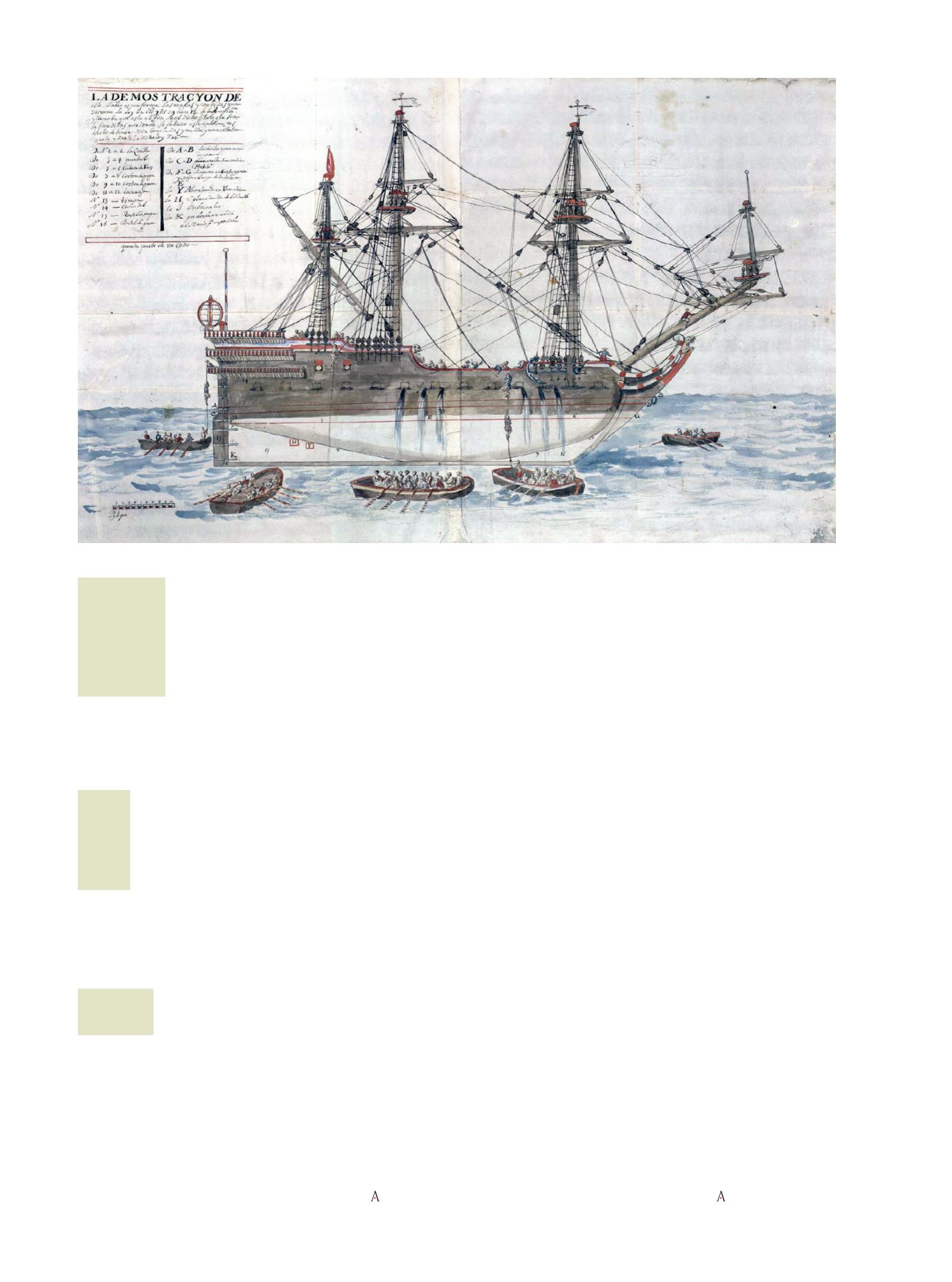
3.Laexpediciónde
MiguelLópezde
Legazpi,estableció
elconceptodel
“tornaviaje”que
continuaríaelGaleón
deManila./
Theexpeditionof
MiguelLopezde
Legazpiestablished
theconceptof“the
tornaviaje”that
followedtheManila
Galleon
.
QerToOBKeT •
characters
1
2
3