93
especies •
species
·amura·
oviparous and only eat plankton and tiny fish. Their
mouth, which is enormous, contains rows of tiny
teeth with which they tear apart their small prey.
In spite of their large size and appearance, they
are totally harmless to man, although humans are
capable of killing them to get their meat, fins, skin
and liver (which can weigh up to a quarter of their
total weight).
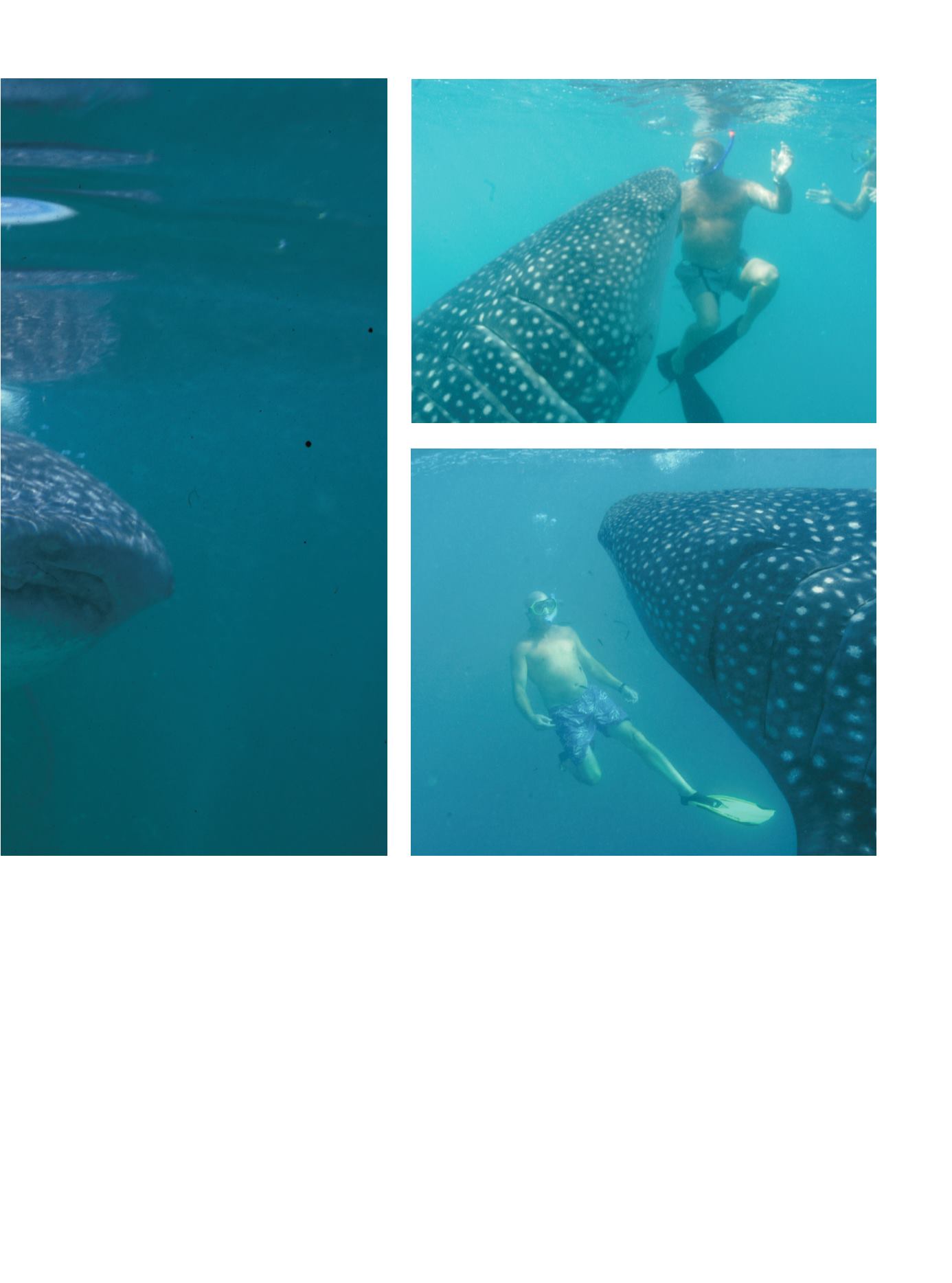
You can live the adventure of swimming with a
whale shark, totally content and with your nerves on
edge. It is important to heed the suggestions of
experts about what you should and should not do in
their presence.
In order to study these marvels of our blue planet
in their natural habitat you have to wait until they
come up to the surface to feed. When that happens,
the first thing you see is their enormous fin, which
they move parsimoniously while they swim, their
hugemouth open, filtering thousands and thousands
of gallons of water to get their food.
y se alimentan exclusivamente de plancton y de peces muy
pequeños. Su boca, que es enorme, presenta unas filas de
pequeños dientecillos con los que desmenuza a sus peque-
ñas presas.
A pesar de su gran tamaño y apariencia es totalmente
inofensivo para el ser humano, aunque éste a cambio es capaz
de matarlo para poder obtener carne, aletas, piel e hígado
(el cual llega a pesar hasta una cuarta parte del peso total
del pez).
Así, se puede vivir la aventura de nadar con uno de ellos,
con la alegría y los nervios a flor de piel. Para ello es impor-
tante tomar en cuenta la explicación de los expertos sobre
lo que se debe hacer y lo que no se debe cuando se esté an-
te su presencia.
Para observar a estas maravillas del planeta azul en su
ambiente natural hay que esperar a que emerjan a la superfi-
cie a comer. Cuando esto sucede, lo primero que se divisa es
su enorme aleta caudal, a la que mueve parsimoniosamente
mientras va nadando con la enorme boca abierta filtrando mi-
les y miles de litros de agua para poder obtener su alimento.


