75
·amura·
compás int •
compass int
sus necesidades de vestido, alimento y vivienda.
Nació así la leyenda del «feliz salvaje» que tanto
atraería en los siglos posteriores en Europa.
Los pueblos polinesios ignoraban las artes del
hilado y del tejido y fabricaban sus vestimentas con
la suave corteza de algunas plantas, cuyas fibras
batían y encolaban hasta formar una especie de
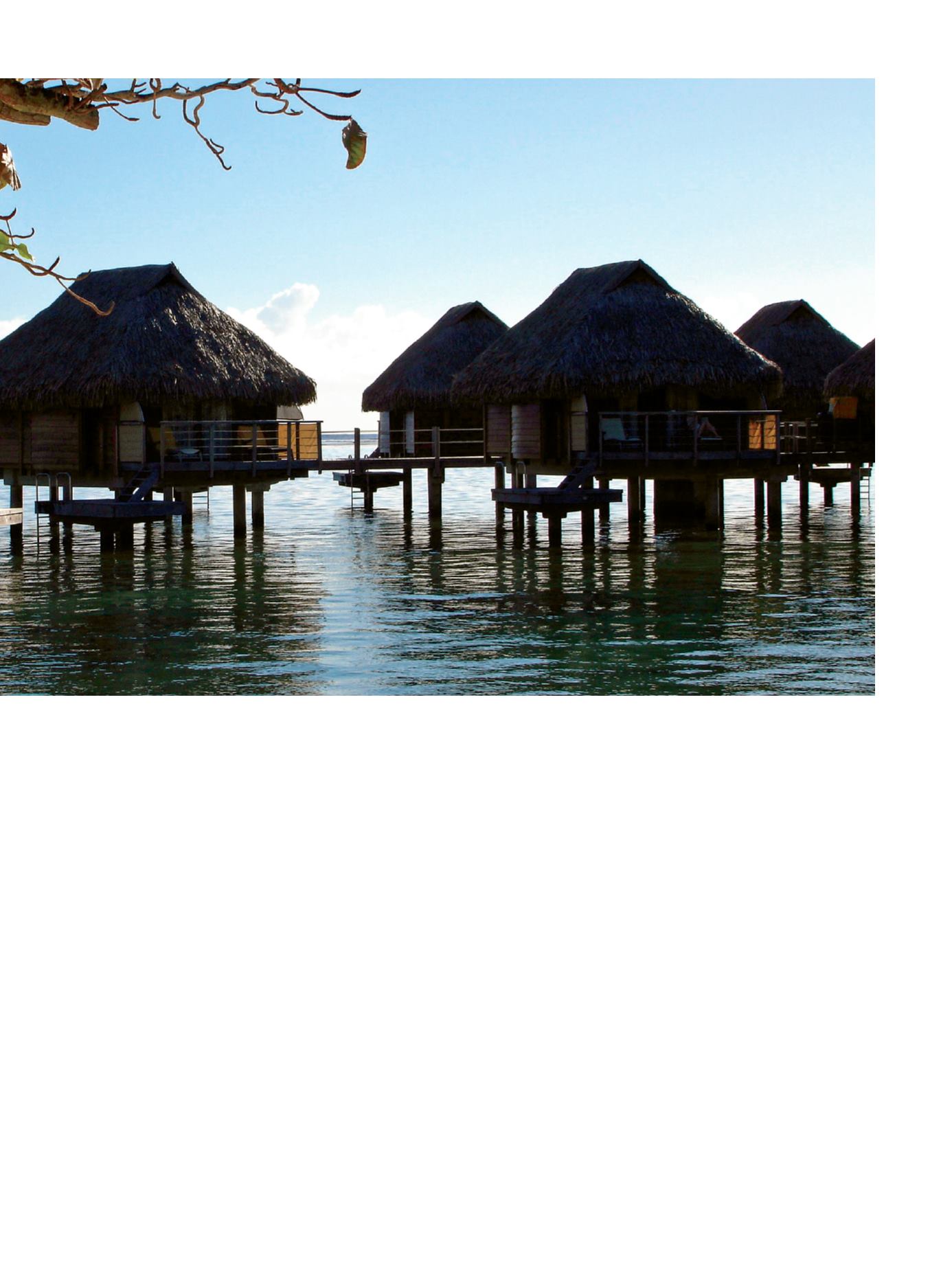
papel. Las casas se construían con caña y tejados de
hoja de palmera. El canto, el baile y los juegos (boxeo,
lucha libre, andar sobre zancos, tiro con arco y surf)
eran sus formas de expresión.
Las danzas son probablemente lo más llamativo.
Forman parte de la vida social de los polinesios, a
quienes les encanta reunirse. En las festividades
indígenas (basadas siempre en criterios religiosos),
destaca la
vahine
, la típica muchacha joven, que al
son del tamure (la danza tradicional) o la
kaina pori-
netia
(música contemporánea polinesia), se contor-
nea en un rito del que participa todo el pueblo. Los
europeos vieron siempre en esta danza un fuerte
componente sensual que sin embargo no existía en
la intención de los polinesios. Entre las danzas se dis-
tinguen las llamadas timorodee, las upaupa (que se
bailan en parejas), el otea (de connotaciones guerre-
ras), el aparima (de air cómico) y el hivinau (que se
baila en grupo).
En cuanto a las manifestaciones artísticas, des-
tacan los tejidos de pandanus que se utilizan para la
fabricación de bolsas, sombreros y manteles (los
legend was born which became very popular during the
next centuries in Europe.
The Polynesian villages ignored the yarn and
weave arts and elaborate their clothes with the soft
bark of some plants, fibers of which they whip and glue
until it forms some kind of paper. The houses were
built with canes and sheds of palm tree leafs. The
singing, the dancing and the games (boxing, wrestling,
walking on stilts, bow shooting and surf) were their
forms of expression.
The dances are probably the most garish. They are
part of the social life of the Polynesians, who love to
gather in social occasions. In the Indian festivities
(always based on religious criteria), the vahine stands
out, the typical young woman, who to the sound of the
tamure (the traditional dance) or the kaina porinetia
(Polynesian contemporary music), goes around in a
ceremony in which the whole town participates. The
European always saw in this dance a strong sensual
component that however did not exist in the intention
of the Polynesians. Among the dances the ones called
timorodee, the upaupa (which is danced in couples),
the otea (of warlike connotations), the aparima (of
comedic value) and the hivinau (which is danced in
group) are distinguished.
In regard to artistic expressions, the pandanus
weaves are outstanding. They are used for the manu-
facture of handbags, hats and tablecloths (the best
examples come from Rurutu, in the Austral Islands)


