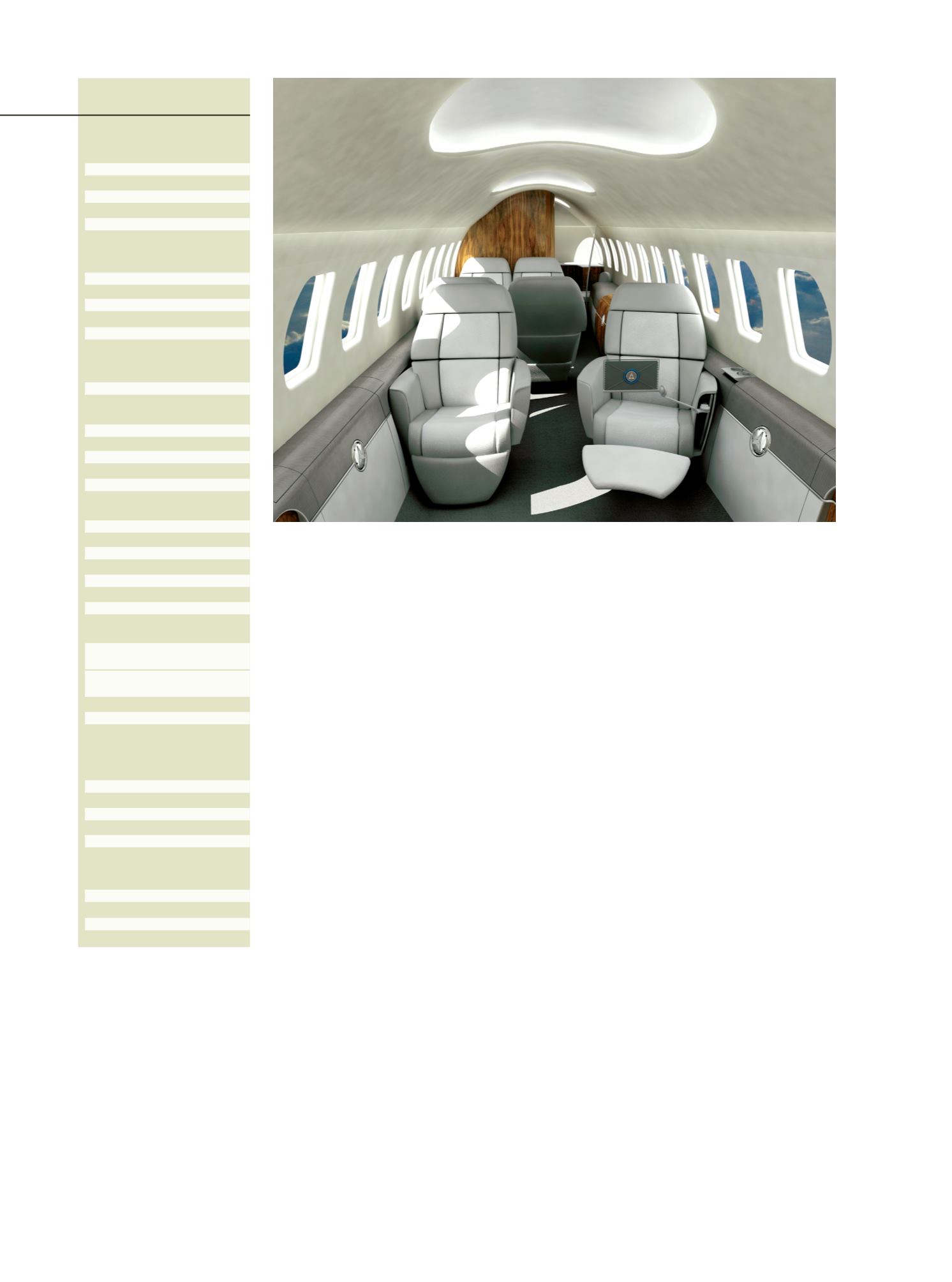
Datos técnicos
MEDIDAS
Exterior
Longitud
41.3 m
Envergadura
19.6 m
2
Área del ala
111.5 m
2
Interior
Altura máxima
1.80 m
Ancho máximo
2 m
Largo
9.1 m
Desempeño
Velocidad crucero (máx.)
1.6 Mach
Velocidad crucero (supersónica)
1.5 Mach
Velocidad crucero sin impacto
(supersónica)
1.1 Mach
Máxima velocidad crucero (subsónica)
0.99 Mach
Rango máximo de crucero
(subsónica)
0.95
Velocidad de aproximación
222.2 km / h
Distancia para despegue
1,828.8 m
Distancia para aterrizaje
1,524 m
Rango de distancia (NBAA)
Supersónico 4,000 millas náuticas
(7,408 km) a 1.5 Mach
Subsónico 4,000 millas náuticas
(7,408 km) a 0.95 Mach
Altura
15,524 m
Peso
Máximo al despegue
40,823 kg
Peso básico de operación
20,457 kg
Combustible al máximo
20,593 kg
Planta de poder
Motores
2, PW JT8D-219
Empuje
87.2 kN
toys collection ›› business jets
100
·amura·
La hora de aterrizaje es a las 10:45 hora local
(cinco horas y 42 minutos después del despegue).
El Secreto del ala
El diseño de un ala supersónica de flujo laminar natu-
ral (NFL), acoplado a los probados motores Pratt &
Whitney, permiten una velocidad crucero supersóni-
ca sostenida y eficiente hasta 1.6 Mach. El diseño de
un ala supersónica de flujo laminar natural de Aerion
reduce totalmente la resistencia de la estructura
hasta en 20% contra la tecnología del ala delta.
Esa reducción crea un círculo virtuoso, permitien-
do que el jet Aerion navegue con menos potencia,
requiriendo menos combustible y, por lo tanto, dismi-
nuyendo el peso total. El ala NFL provee suficiente
combustible a velocidades crucero subsónicas, efi-
cientes entre 0.95 y 0.99 Mach, y permite navegar
sostenidamente hasta 1.1 Mach.
Para lograr la rigidez estructural y el peso el ala
se fabrica con una avanzada mezcla de carbón epóxi-
co, similar al de los de usos militares y civiles de últi-
ma generación, con un borde de ataque de titanio.
Esta fuerte y delgada estructura ha sido analiza-
da respecto a la vibración y no muestra divergencia
dentro de la cobertura del vuelo. El espesor de la
lámina se va adelgazando a través del ancho del ala,
y esta notable estructura pesa menos de 862 kilos.
La construcción del fuselaje es totalmente de alumi-
nio convencional, y los estabilizadores son una com-
binación de aluminio y composite.
El Aerion es impulsado por motores JT8D de Pratt
& Whitney de última generación, que incorporan la
tecnología más recientemente desarrollada y paten-
tada para la supresión del ruido y así lograr los reque-
rimientos de ruido de Nivel 4.
El JT8D-219 tiene un empuje estático máximo de
21,700 libras (9,842 kg), pero está reducido a 19,600
The Secret of the wing
The natural laminar flow (NFL) design of a
supersonic wing, coupled with the proven Pratt &
Whitney engines allow a sustained and efficient
supersonic cruising speed of up to Mach 1.6.
Aerion’s natural laminar flow design of a super-
sonic wing totally reduces the resistance of the
structure by up to 20% as compared to delta wing
technology.
This reduction creates a virtuous circle, which
allows the Aerion jet to fly at a lower power output
and using less fuel and therefore, a lighter total
weight.
The NFL wing provide enough fuel at subsonic
cruising speeds, efficient between Mach 0.95 and
0.99, as well as allowing sustained flight up to
Mach 1.1.
The wing is manufactured from an advanced
carbon-epoxy composite material in order to
achieve the desired structural rigidity and weight,
similar to military and the latest-generation civil
aviation wings, with a titanium leading edge.
This strong and slim structure has been ana-
lyzed for vibration and shows no divergence
throughout the flight. The thickness of the sheet
reduces throughout the width of the wing and this
notable structure weighs less than 862 kg. The
entire construction of the fuselage is conventional
aluminum and the stabilizers are a combination of
aluminum and a composite material.
The Aerion is propelled by the latest genera-
tion Pratt & Whitney JT8D engines that boast the
newest technology developed and patented for
noise suppression, therefore complying with Level
4 noise requirements.
The JT8D-219 has a maximum static thrust of
21,700 lb (9,842 kg) but is reduced to 19,600 lb


