


 168 / 184

·amura·
162
IereOciB cVMtVrBM •
culture and heritage
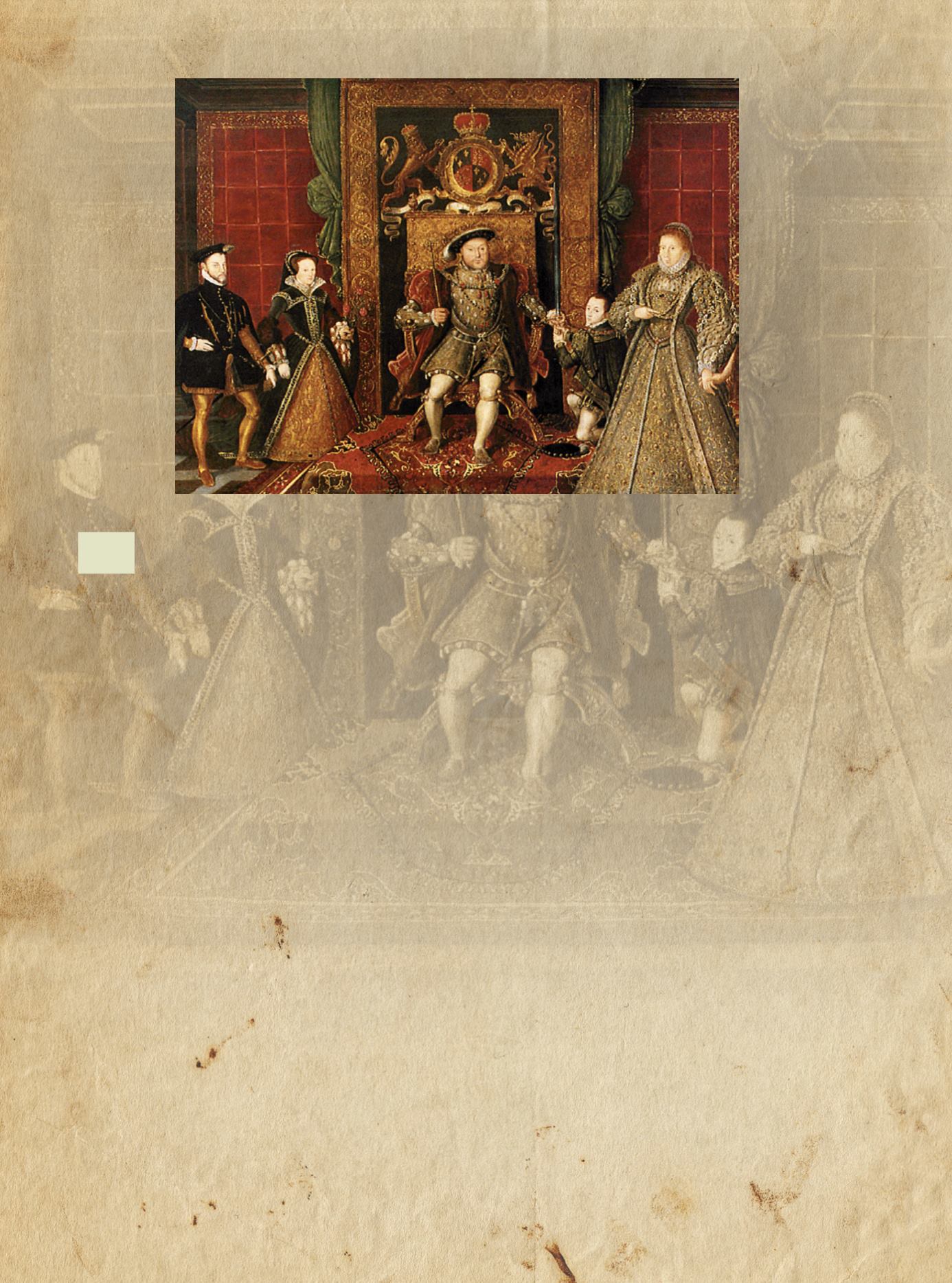
9. Los Tudors. /
TheTudors.
9
The glory of Scotland
The Stuarts would thus become the last dynasty of
Scottish Kings This dynasty had, however, an Eng-
lish origin. In the twelfth century Walter and Wil-
liamFitzAlan supported the EmpressMathilda inher
struggle against Stephen I for the throne of England.
When she was finally defeated, the FitzAlans took
refuge in Scotland under the protection of King Da-
vid I Atholl, whom gave them land in Renfrewshire
and the title of Earls of Steward. Soon they changed
their surname to Steward, which then led to Stuart.
The Stuarts staged the most glorious era in
Scotland. The first Kings of the dynasty were Robert
II (1371-1390), Robert III (1390-1406), James I (1406-
1437), James II (1437-1460) and James III (1460-
1488). They brought the Kingdom to a time of pros-
perity, although not without some fighting against
the English. However, the conflicts that England
had against France in the so-called Hundred Years
War (in which Scotland supported France) as well as
the civil war between the Lancaster and York houses
for the English throne made the border conflicts no
more than simple skirmishes. With this, Scotland
understood the importance of the alliance with
France to confront a common enemy: the British.
The accession in 1485 to the English throne by a
new dynasty, the Tudors, marked the beginning of a
new conflict between the two Kingdoms; it would end
in the early seventeenth century with a completely
unexpected ending. The Tudors took advantage of
the strife between the two main branches of English
royalty, the Lancaster and the York, to gain access to
the throne. Actually their right to the throne was very
doubtful. King Henry V was married to Princess Cathe-
rineof FrancewiththeFrenchKing’spromise to inherit
the throne to him at his death, passing over the rights
of the dolphin Charles, the rightful heir to the French
throne. But Henry V died soon after marrying, leaving
a newborn child as his heir, HenryVI. Catherine left the
court and secretly married one of her servants, Owen
Tudor, a rundownWelshnobleman.
La gloria de Escocia
Los Estuardo se convertirán así en la última dinastía de
reyes escoceses. Se trataría de una nueva sangre que,
sin embargo, era de origen inglés. En el siglo XII, Walter y
(uillermo Fit[Alan apoyaron a la emperatri[ Matilde en su
lucha contra Esteban I por el trono de Inglaterra. Cuando
finalmente nsta fue Wencida, los Fit[Alan se refugiaron
en Escocia bajo la protección del rey David I Atholl, quien
les dio tierras en Renfrewshire y un título nobiliario, el de
condes de Steward. Al poco tiempo, éstos cambiaron su
apellido por el de Steward, que luego derivó en Estuardo.
Los Estuardo protagonizaron la época más gloriosa
de Escocia. Los primeros reyes de la dinastía fueron Ro-
berto ** 1371-1390 , Roberto *** 1390-1406 , +acobo *
1406-1437 , +acobo ** 1437-1460 y +acobo *** 1460-
1488 . cstos lleWaron al reino a una npoca de prospe-
ridad, aunque no exenta de algunos enfrentamientos
contra los ingleses. Sin embargo, los conflictos que
*nglaterra tenra contra Francia en la llamada (uerra de
los Cien Avos en la Rue Escocia apoyw a Francia , asr
como la guerra civil entre los Lancaster y los York por
el trono inglés, hicieron que los conflictos fronterizos
no pasaran de simples escaramuzas. Con ellos, Escocia
comprendiw la importancia de la alian[a con Francia
para enfrentar al enemigo común: los ingleses.
El adWenimiento en 1485 al trono inglns de una
nueva dinastía, los Tudor, marcó el inicio de un nuevo
conflicto entre los dos reinos, mismo que terminará a
comienzos del siglo XVII con un final completamente
inesperado. Los Tudor aprovecharon las rencillas entre
las dos ramas principales de realeza inglesa (los Lan-
caster y los York), para acceder al trono. En realidad,
su derecho a éste era bastante dudoso. El rey Enrique
7 se habra casado con la princesa Catalina de Francia,
con la promesa del rey francés de heredarle el trono a su
muerte, pasando sobre los derechos del delfín Carlos, el
legítimo heredero del trono francés. Pero Enrique Vmu-
rió al poco tiempo de casado, dejando como heredero a
un niño recién nacido, Enrique VI. Catalina se retiró de
la corte y se casó en secreto con uno de sus sirvientes,
Owen Tudor, un noble galés venido a menos.