121
tips & tops
·amura·
•
The island of Mona is located 72 km (44.7 m) west
of Puerto Rico. With an area of only 54 square km
(20.8 square m), this spot features amazing
panoramic views of the nearby islands and is now
under the protection of the Department of Natural
and Environmental Resources of Puerto Rico. Here,
visitors can observe the prehistoric Mona iguana,
Taino art in maze-like caves, a century-old light-
house, hawksbill turtles and native species of
flora and fauna.
•
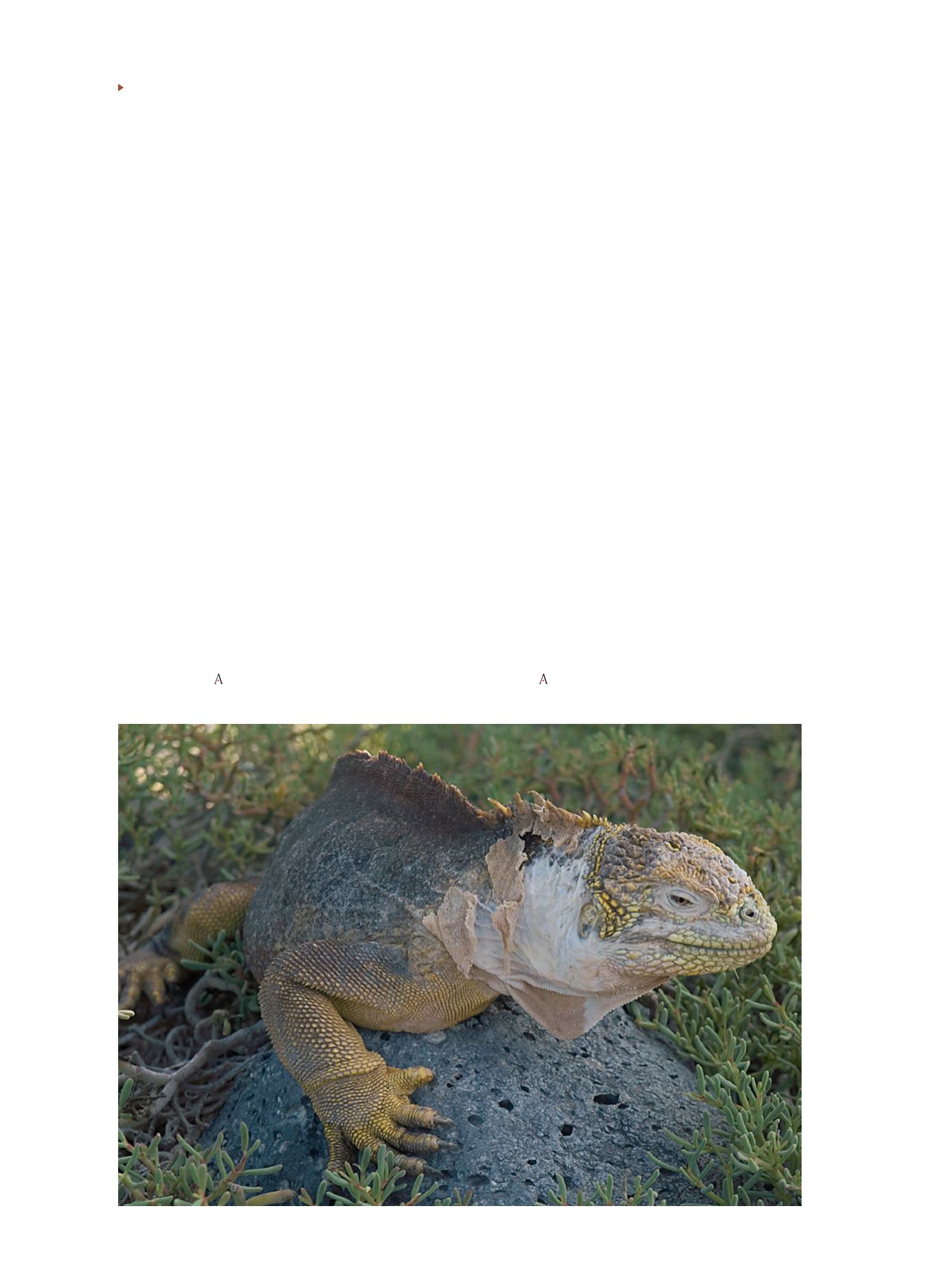
A very special monster lives on this island. It is
Mona’s biggest invertebrate and, at three months, it
breaks its shell and starts its fight for life. It is the
Mona iguana, which reaches up to a meter (3.3 feet)
in length and weighs up to eight kilos (18 pounds).
Male iguanas can be seen fighting for the territory
occupied by females and the right to mate, while
females fight for a place to nest.
•
Puerto Rico’s biggest freshwater lagoon is located in
Reserva de Tortuguero. The marshlands that sur-
round it are the habitat of many carnivorous plants,
caimans and other rare or endemic species of flora
and fauna. Caves and springs are some of the attrac-
tions of this natural reserve located in the karstic
region in northern Puerto Rico. Unfortunately, the
reserve is being threatened by urban developments
and shoppingmalls as well as the extraction of silica
sand and subterranean water.
•
Laguna Tortuguero’s adjoining lands have many
species of carnivore plants such as the
Drosera
Capilaris
, which lives in silica sand areas, and the
Utricularia Gibba
, an aquatic flesh eater that lives
in the marshes. However, the only way to watch
their feeding methods is with the use of a micro-
scopic camera.
• La Isla de Mona está localizada a 72 km al oeste de
Puerto Rico, con una superficie de 54 km
2
. Este sitio
brinda impresionantes vistas panorámicas de las is-
las cercanas, y ahora se encuentra bajo la protección
del Departamento de Recursos Naturales y Ambien-
tales de Puerto Rico. Aquí es posible apreciar a la pre-
histórica iguana de Mona, arte taíno en cuevas
laberínticas, un faro centenario, las tortugas de carey,
así como la flora y fauna nativas.
• En esta isla vive un monstruo muy especial, el verte-
brado más grande nativo de Mona, que a los tres me-
ses rompe el cascarón y comienza la lucha. La iguana
de Mona llega a medir hasta un metro de largo y pue-
de pesar hasta ocho kilos, es decir, hasta 18 libras.
Pueden observarse peleas entre machos disputándo-
se el territorio ocupado por hembras, así como el apa-
reamiento y a las hembras luchando por un sitio
donde anidar.
• En la Reserva de Tortuguero se encuentra la laguna de
agua dulce más grande de Puerto Rico. Los humedales
que la bordean sirven de hábitat para varias especies
de plantas carnívoras, caimanes y otras especies raras
o endémicas de fauna y flora. Cuevas y manantiales
son algunos de los atractivos de esta reserva natural
localizada en la zona cárstica al norte de la isla de Puer-
to Rico. La Reserva se ve amenazada por desarrollos de
urbanizaciones y centros comerciales, así como por la
extracción de arena silícea y de agua subterránea.
• En los terrenos alrededor de la Laguna Tortuguero se
encuentran varias especies de plantas carnívoras. La
Drosera Capilaris
habita en áreas de arena silícea, y la
Utricularia Gibba
, planta carnívora acuática, habita en
los humedales. Sin embargo, es posible observar sus
métodos alimenticios únicamente por medio de una
cámara microscópica.
Tesoros /
Treasures


