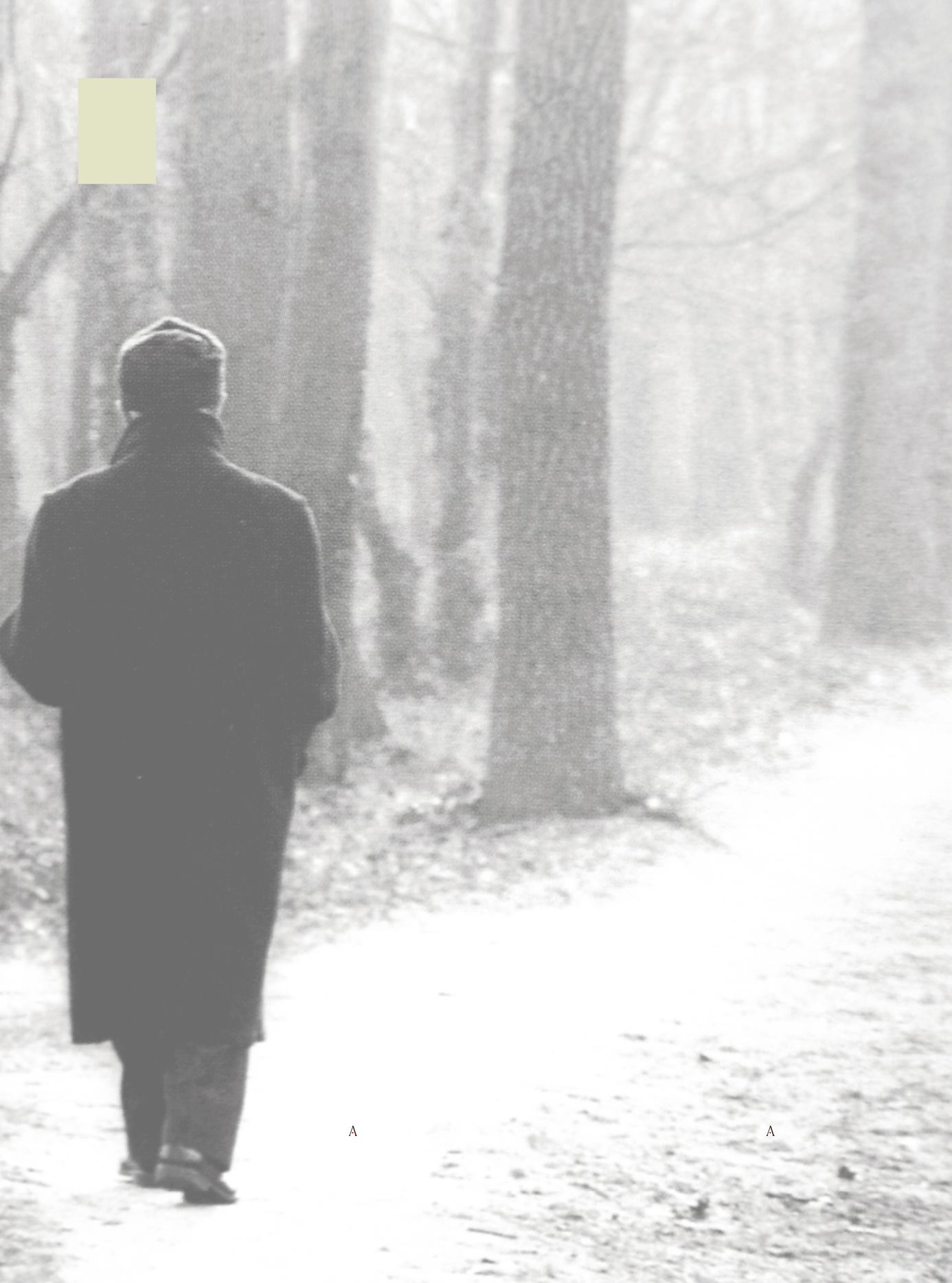
Einojuhani Rautavaara
nació en Helsinki en 1928
y después de Jean Sibelius, es el compositor más im-
portante nacido en Finlandia. Estudió en la Academia
Sibelius siendo su maestro principal Aarre Merikanto.
Entre 1948 y 1952 asiste al Juilliard School of Music en
Nueva York trabajando con luminarias como Vincent
Persichetti, Roger Sessions y Aaron Copland. Fue ga-
nador del certamen Thor Johnson por su composición
Un réquiem para nuestro tiempo
(1964). Entre 1957
y 1959 imparte su cátedra en la Academia Sibelius y
es archivista musical de la Orquesta Filarmónica de
Helsinki. Lo nombran profesor de Composición en la
Academia Sibelius, otro reconocimiento importante
(1976-1990).
Padece una disección aórtica en 2004 y estuvo en
cuidado intensivo por seis meses. Ya recuperado con-
tinuó creando obras fascinantes.
Rautavaara es hoy día unmúsico de nuestro tiempo,
accesible y creador de sonoridades de una fina textura,
hasta explosiones orquestales que parecen describir
todo el universo. Es unmúsico versátil y prolífico que
cultiva una variedad de formas y estilos. Después
de experimentar en la técnica serial optó por
crear su propio mundo sonoro: místico, ex-
pansivo, melodioso, cuestionante y cuya
orquestación es una maravilla de inventiva.
Usa títulos místicos para muchas de
sus composiciones sinfónicas, podemos
citar
Ángeles y visitaciones, Ángel de la luz
(Sinfonía No. 7),
Anunciaciones y Vigilia.
Cantus Articus Op. 61
Concierto para aves y orquesta
Los Cantus Articus
(Cantos del Ártico) fue-
ron comisionados por la Universidad del Ártico
de Oulu para una ceremonia de obtención de gra-
dos escolares. En lugar de escribir una cantata fes-
tiva convencional para coro y orquesta, escribió un
“Concierto para aves y orquesta”
. Los sonidos de las
voces de las aves fueron grabadas en el círculo ártico
y los pantanos de Liminka.
El primer movimiento, Suo (
El pantano
), abre
con dos solos de flauta. Gradualmente se les
unen otros instrumentos de aliento y los sonidos
de los pájaros del pantano en la primavera. Final-
mente las cuerdas entran con una amplia melodía
que podría interpretarse como la voz y estado aní-
mico que camina en estos lugares salvajes. En
Me-
lankolia
, el pájaro seleccionado es la alondra de pla-
ya, cuyo canto ha sido modificado para que resulte
un “pájaro fantasma”. Jout muuttavat (
Migración de
cisnes
) presenta a cuatro grupos instrumentales
diferentes en forma aleatoria. La textura se torna
complicada y los sonidos de los cisnes migrantes se
multiplican también hasta que se pierde en la dis-
tancia. Basta cerrar los ojos y dejarse llevar por la
increíble imaginación de Rautavaara y el Ártico abre
sus portales
.
Einojuhani Rautavaara
was born in Helsinki
in 1928 y after Jan Sibelius, is considered the most
importante Finnish composer. He studied at the Si-
belius Academy under the guidance iof Aare Meri-
kanto. Between 1948 and 1952 he wento to the Juil-
liard School of Music inNewYorkworkingwith such
uminaries as Voncent Persichetti, Roger Sessions
and Aaron Copland. We won the Thor Johnson award
for his composition A Réquiem for Our Time1964).
He dedicated 1957 to 1959 to teaching at the Sibe-
lius Adademy and as musical archivist of the Hel-
sinki Philharmonic Orchestra. He was appointed
Profesor of Composition at the Sibelius Academy,
another great honor. (1976-1990).
He suffers an aortic disection in 2004 and was in
intensive care for sixmonths. OPnce recuperated he
continued composing fascinating Works.
Today Rautavaar is an accesible musicial of
our times and produced of sonorities that in-
clude fine textures and orchestral explosions
than seem to describe the universo. He is versa-
tuile and prolific presenting a variety of forms
and styles. After experimenting with the serial
technique he created his own sound world: mys-
tic, expansive, melodious, original and whose
orchestration is a wonder of inventiveness.
He uses mystical titles for many of his sym-
phonic composition and we can mention Angels
and Visitations, Angel of Light (Symphony No. 7),
Anunciations and Vigilia.
Cantuis Articus, Op. 61
Concerto for Birds and Orchestra(1872)
The Cantus Articus (Songs of the Arctic) were
comisioned by the University of the Arctic of
Oulu for a ceremony for the obtention of a profe-
sional degree. Instead of writing a convention-
al Cantata for chorus and orchestra, he write a
“Concerto for Birds and IOrchestra”. The sonidos
of the voices of the birds were recorded at the
Arctic Circle and the mershlands of liminka.
The first movemento, Suo (The Marshes),opens
with two flute solos. Gradually other wind instru-
ments anter and the sounds of the birds of the
mersh lift their voices to Spring. Finally the string
section appears with a broad melody which cound
seem to be the voice and emotions of one who
walks amaong these savage places, in Melanko-
lia, the bird selected is a beach lark, whose song
as been modified in order to resemble a “
phantom
bird”. Jout muuttavat
(Migration of the swans) four
instrumental goups are presented in an to produce
a contrasting effect. The texture becomes com-
plicated and the sounds of the migrating swans
become multiplied until they are lost in the dis-
tance., It takes only the effort of closing ones eyes
to sabor the incredible imagination of Rautavaara
and the Arctic will open its portales.
Meet the music • Música
·amura·
134
6.CantusArticus.
/
CantusArticus.
6


