


 133 / 142

los conquistadores •
the conquerors
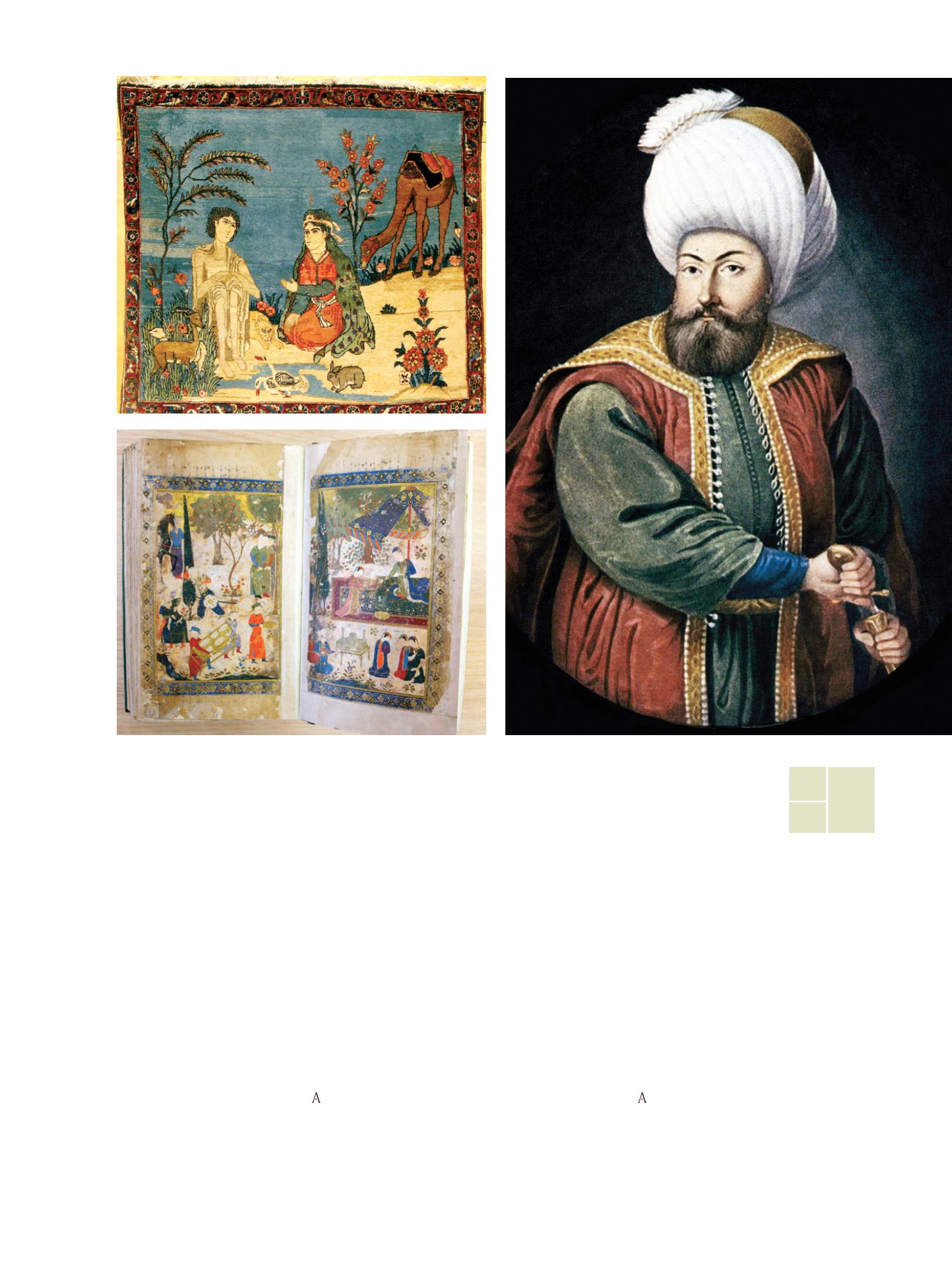
4. Arte azerbaiyano
basado en Leyla y
Majnum, novela de Nizamí
Ganyaví.
/
Azerbaijani art based on
the Layla and Majnum,
novel of Nizamí Ganjaví.
5.
Sultán turco. /
Turkish Sultan.
6. Manuscritos de
poesía persa. /
Persian poetry
manuscripts
.
·amura·
131
4
5
6
Como dato curioso, Nizamí se casó tres veces,
pero cada vez que terminaba una de sus famosas
obras épicas, moría su esposa, por lo que el gran poeta
llegó a escribir lo siguiente: “¡Dios, qué es esto que por
cada mathnavi debo de sacrificar una esposa!”.
Son sus obras principales: Hamsa, un largo poema
que contiene veinte historias de contenido ético y re-
ligioso; Khosrow y Shirin; Layla y Majnun, basada en
una antigua leyenda árabe sobre dos amantes; las Sie-
te Bellezas, una biografía en forma de poema de uno
de los más célebres emperadores persas sasánidas,
Bahram-e Gur; y Eskandar-Nameh (Libro de Alejan-
dro), que contiene diversos mitos árabes desarrolla-
dos en torno a la figura de Alejandro Magno, además
de ser su obra más larga. Estos textos son llamados
“Los Cinco Tesoros” por los iraníes y los azerbaiyanos.
Nizamí murió en Ganja en el año 1209 y hasta la fe-
cha es considerado como uno de los poetas más impor-
tantes de la literatura persa, y su legado es compartido
por Afganistán, Azerbaiyán, Irán y Tayikistán.
As a curiosity, Nizamí married three times, but
every time he finished one of his famous epics, his
wife died, so the great poet wrote the following:
“God, why is it that for every mathnavi I must sac-
rifice a wife?”.
This are hismajor works: Hamsa, a long poemcon-
taining twenty stories of ethical and religious con-
tent; Khosrow and Shirin; Layla andMajnun, based on
an ancient Arabic legend about two lovers; the Seven
Beauties, a biography written as a poem about one of
the most famous Persian Sassanian emperors, Bah-
ram-e Gur; and Eskandar-Nameh (The Book of Alexan-
der), which contains various Arab myths developed
around the figure of Alexander the Great, besides it be-
ing his longest work. These texts are called “The Five
Treasures” by Iranians andAzerbaijanis
Nizamí died in Ganja in 1209, and even today he
is considered one of themost important poets of Per-
sian literature, and his legacy is shared by Afghani-
stan, Azerbaijan, Iran and Tajikistan.