


 132 / 142

·amura·
130
los conquistadores •
the conquerors
1. Tapiz moderno
mostrando al poeta
Nizamí Ganyaví.
/ Modern carpet
showing the poet
Nizamí Ganjaví.
2. Estatua de bronce
de Nizamí Ganjaví.
/
Bronze statue of
Nizamí Ganyaví.
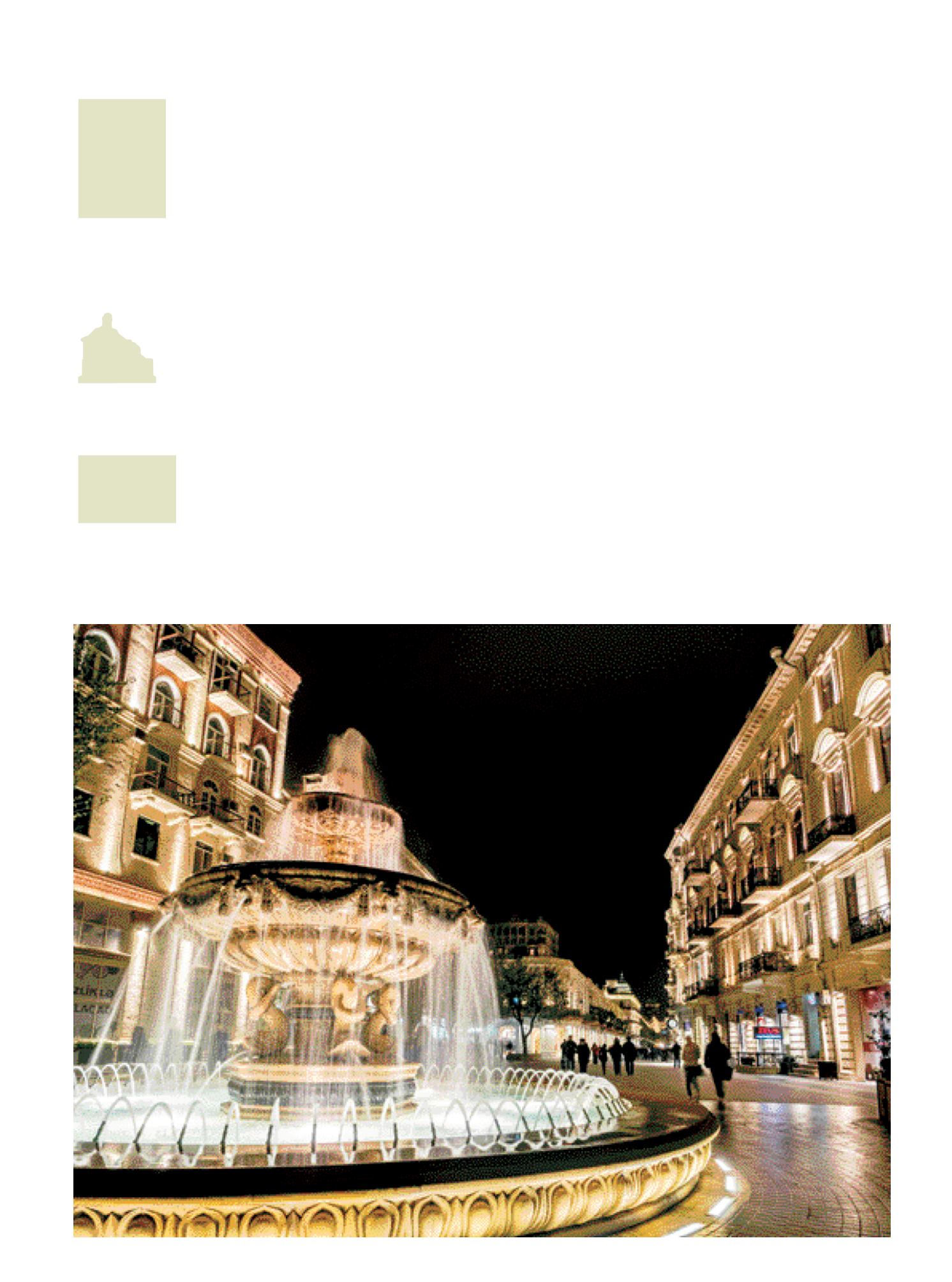
3. Fuente en la calle
Nizamí Ganyaví. /
Fountain in Nizamí
Ganjaví street.
1
2
3
Texto /
Text
: XX • Foto /
Photo
: XX
Este extraordinario personaje era uno de esos sa-
bios que de vez en cuando produce la humanidad. Ha-
blaba con soltura en turco, persa, árabe y griego, ade-
más de su lengua materna, el azerí. Su conocimiento
sobre matemáticas, historia, filosofía, astronomía, as-
trología, música, alquimia, medicina, geometría y de-
recho era notable. Pero a pesar de poseer tan gran cul-
tura, nunca quiso convertirse en un sabio de palacio,
medrando a la sombra de los emperadores, pues pre-
firió quedarse toda su vida en su natal Ganja, leyendo,
escribiendo y enseñando, sus tres grandes pasiones.
Esto, sin embargo, no le impidió aceptar el mecenazgo
de muchos gobernantes locales a los que dedicaba sus
obras a cambio de protección. Eran tiempos convulsos
y había que ganarse la vida.
Uno de sus maestros fue el gran poeta Abolqasem
Firdawsi, autor del célebre Shahnamah (Libro de los
Reyes), del cual Nizamí hizo una versión.
This extraordinary man was one of those wise
men occasionally produced by mankind. He was flu-
ent in Turkish, Persian, Arabic and Greek, in addition
tohismotherlanguaje,Azeri.Hisknowledgeofmath-
ematics, history, philosophy, astronomy, astrology,
music, alchemy, medicine, geometry and lawwas re-
markable. But despite possessing such great culture,
he never wanted to become a palace sage, thriving
under the shadow of the emperors, as he preferred to
stay all his life in his native Ganja, reading, writing
and teaching, his three great passions. This, however,
did not prevent him from accepting the patronage of
many local rulers to whom he devoted his works in
exchange for protection. Those were turbulent times
and he had tomake a living.
One of his teacherswas the great poet Abolqasem
Firdawsi, author of the famous Shahnamah (Book of
Kings), of which Nizamí made a version.