



 128 / 142

A los seguidores del Mazdeísmo se les nombró
parsis
porque provienende Persia; emigraron a India debido a la
llegada del Islam a su territorio, desplazándose tambien
hacia Irán. Son comunidades pequeñas pero poderosas
ya que se mantienen unidos por fuertes lazos solidarios,
viviendo de acuerdo a los siguientes preceptos: igualdad
para todos; respeto a todas las formas de vida; rechazo
de la crueldad y el sacrificio de animales; caridad social;
ética del trabajo; lealtad y fidelidad con uno mismo, la
familia, la sociedad, el país y el mundo.
Sus influencias espirituales siguen presentes en
el pensamiento humano y su conexión con una fuente
de luz y conciencia. Julio Verne describe a los
parsis
,
en su novela
La Vuelta al Mundo en 80 días
, publicada
en 1873. La fiesta del nuevo día o
novruz
está vincu-
lada al zoroastrismo. La celebración tiene presencia
en varios países, siendo un momento para la reconci-
liación, la renovación del espíritu y de la naturaleza.
Zoroastro fue glosado por Friedrich Nietzsche en su
libro más importante, escrito entre 1883 y 1885, ca-
lificado como un preámbulo de la filosofía occidental:
Así habló Zaratustra
, donde relata una enigmática ver-
sión imaginaria del personaje histórico.
“Hay en mí algo inmune, inhumano, insurrecto:
mí voluntad. Muda e inalterable,
ella transita los años”
(Así habló Zaratustra,
Friedrich Wilhelm Nietzsche)
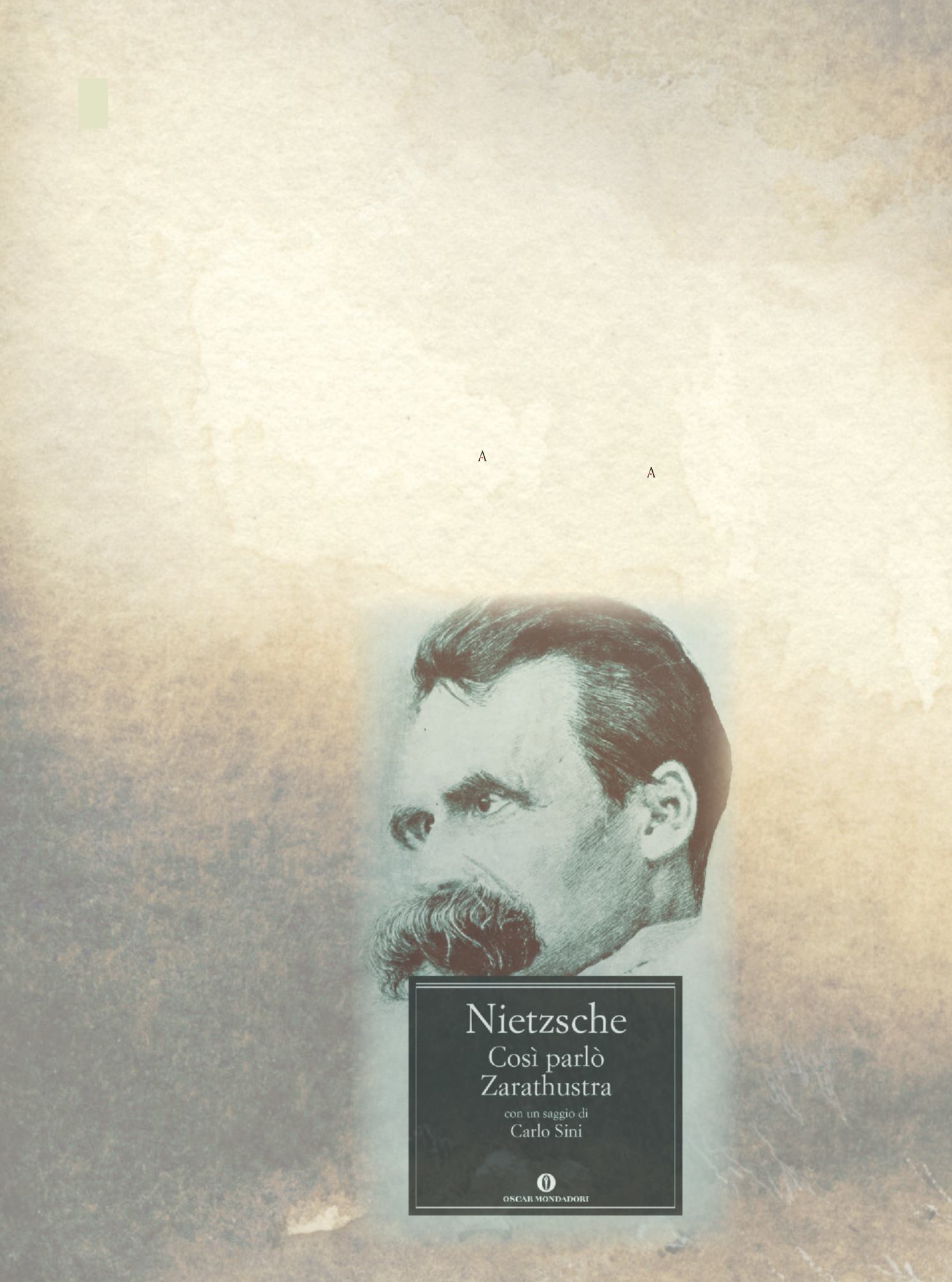
13.Edición Italianade
asíhabloZaratustrapor
FriederichNietzche./
Italian edition of Thus
Spoke Zarathustra by
Friedrich Nietzsche.
beneficial” (Zarathustra)
Followers of Mazdaism were named Parsis, as
they came from Persia. They emigrated to India
when Islam began to take hold in the region. They
also made their way to Iran. These are small, yet
powerful communities that are bonded by strong
traditions. They live according to the following pre-
cepts: equality for all, respect for all forms of life, re-
jection of cruelty and animal sacrifice, social char-
ity, work ethic, loyalty and fidelity to one’s own,
one’s family, society, the country, and the world.
Their spiritual influence are still present in the
human thought, and its connection with a source
of light and consciousness. Jules Verne described
the Parsis in his novel “Around the World in 80
Days,” published in 1873. The new day celebra-
tion, or “novruz,” is linked to Zoroastrianism. The
celebration takes place in various conutires, and
it is a moment of reconciliation, the renovation of
the spirit, and of nature. Zoroaster was praised by
Friedrich Nietzsche in his most important book:
“Thus Spoke Zarathustra” in which he describes
and imaginary and enigmatic version of the his-
torical figure.
“There is in me somthing immune, something
inhuman, insurgent: my will. Mute and unalterable,
she transcends the years.”
(Thus Spoke Zarathustra,
Friedrich Wilhelm Nietzsche)
13
personajes •
characters
·amura·
126